Meeting Stricter Emission Standards: How Weixin High-Efficiency Filter Media Helps You Comply
Around the world, environmental regulations are tightening. From Europe's Industrial Emissions Directive (IED) to China's Ultra-Low Emission requirements, from the US EPA's National Emission Standards for Hazardous Air Pollutants (NESHAP) to India's increasingly strict norms, industrial facilities face mounting pressure to reduce emissions.
The numbers tell the story:
| Region | Standard | Emission Limit |
|---|---|---|
| China | Ultra-low emission | <10 mg/Nm³ (dust) |
| EU | IED/BAT conclusions | <5–10 mg/Nm³ |
| USA | NSPS (New Source Performance Standards) | <0.03 lb/MMBtu |
| India | Revised emission norms | <30–50 mg/Nm³ (depending on industry) |
For many facilities, meeting these standards requires more than just good intentions—it requires advanced filtration technology.
At Weixin, we have dedicated ourselves to developing high-efficiency filter media that help industrial facilities meet and exceed regulatory requirements. This article explores how our filtration technologies enable ultra-low particulate emissions, reduce PM2.5 discharge, and ensure compliance—even as standards continue to tighten.
The Challenge: From mg to μg
The evolution of emission standards represents a dramatic increase in filtration demands:
| Era | Typical Standard | Filtration Challenge |
|---|---|---|
| Pre-2000 | 150–200 mg/Nm³ | Basic dust collection |
| 2000–2010 | 50–100 mg/Nm³ | Improved efficiency needed |
| 2010–2015 | 20–30 mg/Nm³ | High-efficiency filters required |
| 2015–2020 | 10–15 mg/Nm³ | Ultra-fine particle capture essential |
| 2020–present | 5–10 mg/Nm³ | Near-zero emission technology |
| Future trend | <5 mg/Nm³ | Absolute filtration, PM2.5/PM1 capture |
This progression represents a 10–40x reduction in allowable emissions over two decades. Traditional filter media that performed adequately in the 1990s are now completely inadequate.
Why Traditional Filters Fall Short
Standard industrial filter media face several limitations when challenged with ultra-low emission requirements:
| Limitation | Impact | Why It Matters |
|---|---|---|
| Insufficient fine particle capture | PM2.5 and PM1 particles pass through | These particles are most harmful to health and strictly regulated |
| Initial efficiency gap | New filters allow higher emissions before dust cake forms | Compliance required immediately, not after conditioning |
| Permeability degradation | Pressure drop increases over time | Higher energy costs, reduced throughput |
| Thermal instability | Efficiency drops at high temperatures | Many industrial processes operate at elevated temperatures |
| Chemical sensitivity | Performance degrades in acidic/alkaline environments | Common in cement, steel, chemical industries |
Weixin's High-Efficiency Filter Media Solutions
Weixin offers a comprehensive range of high-efficiency filter media engineered for ultra-low emission compliance.
Solution 1: Membrane Lamination (Surface Filtration)
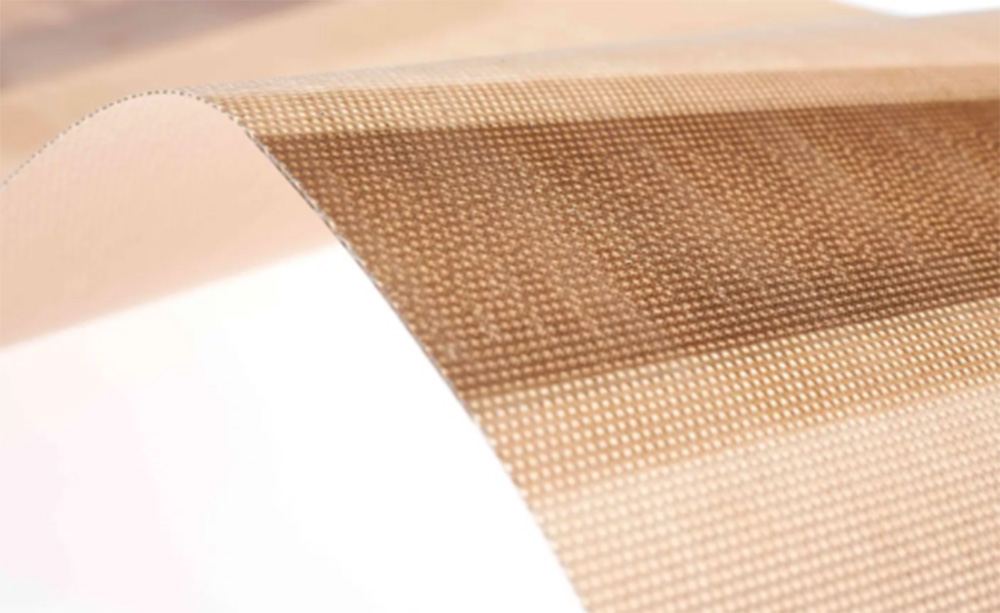
What it is: A microporous PTFE (polytetrafluoroethylene) membrane laminated onto a support fabric.
How it works:
The PTFE membrane has pores smaller than the particles being captured
Particles collect on the membrane surface, not within the fabric
"Surface loading" allows easy cleaning and consistent pressure drop
Emission Performance:
| Parameter | Standard Felt | PTFE Membrane (Weixin) |
|---|---|---|
| Initial efficiency | 50–70% | 99.9%+ |
| Stable emission | 10–30 mg/Nm³ | <5 mg/Nm³ |
| PM2.5 capture | Poor | Excellent (>99.5%) |
| Pressure drop stability | Variable | Consistent |
Best Applications:
Cement kilns
Steel plants
Waste incineration
Power generation
Any application requiring <10 mg/Nm³
Solution 2: Ultra-Fine Fiber Technology
What it is: Filter media manufactured with microfibers and nanofibers that create a dense, efficient filtration layer.
How it works:
Fibers with diameters of 1–5 microns create smaller pore structures
Particles are captured within the dense fiber matrix
Combines high efficiency with good permeability
Fiber Comparison:
| Fiber Type | Diameter | Filtration Efficiency | Permeability |
|---|---|---|---|
| Standard fiber | 15–25 μm | Moderate | High |
| Microfiber | 5–10 μm | High | Moderate |
| Nanofiber | 0.1–1 μm | Very high (>99.9%) | Moderate-low |
Best Applications:
High-temperature applications where PTFE membrane may be unsuitable
Facilities requiring 10–15 mg/Nm³ compliance
Cost-effective upgrade from standard felts
Solution 3: Advanced Needled Felt with Fine Fiber Layer
What it is: A multi-layer felt construction with a fine fiber top layer for enhanced surface capture.
How it works:
Fine fiber layer captures particles at the surface
Support layers provide strength and permeability
Combines depth filtration and surface filtration benefits
Layer Structure:
| Layer | Function | Fiber Type |
|---|---|---|
| Top (fine) | High-efficiency capture | Microfiber or nanofiber |
| Middle | Depth filtration, strength | Standard fiber |
| Bottom | Support, stability | Standard or scrim |
Best Applications:
General industrial dust collection
Facilities transitioning to stricter standards
Applications with abrasive dust
Solution 4: Chemical-Resistant High-Efficiency Media
What it is: Filter media engineered with fibers and treatments that resist chemical degradation while maintaining high efficiency.
Chemical Resistance Options:
| Fiber/Treatment | Chemical Resistance | Temperature Rating |
|---|---|---|
| PTFE | Excellent (all chemicals) | 260°C |
| PPS (Ryton) | Good (acids, moderate alkalis) | 190°C |
| Acrylic coating | Moderate (acids) | 130°C |
| PTFE coating | Excellent | 260°C |
Best Applications:
Chemical plants
Hazardous waste incineration
Smelters (acidic gases)
Coal-fired boilers (SO₂ present)
Technology Comparison: Which Solution for Your Application?
| Application | Emission Target | Recommended Weixin Solution |
|---|---|---|
| Cement kiln | <10 mg/Nm³ | PTFE membrane on P84 or Nomex |
| Steel plant (electric arc furnace) | <5 mg/Nm³ | PTFE membrane with anti-static treatment |
| Coal-fired boiler | <10 mg/Nm³ | PPS with PTFE membrane or fine fiber layer |
| Waste incinerator | <5 mg/Nm³ | PTFE membrane on PTFE scrim |
| Chemical processing | <10 mg/Nm³ | Chemical-resistant felt with PTFE membrane |
| Asphalt plant | <15 mg/Nm³ | Silicone-treated polyester or Nomex |
| Biomass boiler | <10 mg/Nm³ | PTFE membrane on fiberglass or P84 |
| Foundry | <10 mg/Nm³ | Nomex with fine fiber layer |
The Weixin Compliance Advantage
Advantage 1: Consistent Performance from Day One
Traditional filter media rely on dust cake formation to achieve high efficiency. This means emissions can be higher than allowed during the break-in period.
| Media Type | Initial Efficiency | Time to Stable Efficiency |
|---|---|---|
| Standard felt | 50–70% | Days to weeks |
| Weixin membrane | 99.9%+ | Immediate |
Benefit: Compliance from the moment of startup.
Advantage 2: Stable Pressure Drop
High efficiency should not come at the cost of high energy consumption.
| Media Type | Pressure Drop Stability | Cleaning Frequency |
|---|---|---|
| Standard felt | Increases as dust penetrates | Frequent |
| Weixin membrane | Stable (surface loading) | Less frequent |
Benefit: Lower energy costs and longer bag life.
Advantage 3: Reliable Under Variable Conditions
Industrial processes are not always stable. Temperature spikes, moisture, and chemical upsets can destroy standard filter media.
| Condition | Standard Felt | Weixin Solution |
|---|---|---|
| Temperature spike | Melting, degradation | Engineered for spikes |
| Condensation | Hydrolysis, failure | Treated for moisture |
| Chemical upset | Rapid degradation | Chemical-resistant options |
Benefit: Reliable compliance even during process upsets.
Advantage 4: Extended Service Life
Frequent filter changes mean downtime, labor costs, and disposal expenses.
| Media Type | Typical Service Life | Weixin Performance |
|---|---|---|
| Standard polyester | 6–12 months | Not applicable |
| Standard aramid | 12–24 months | 24–36 months |
| Standard PTFE membrane | 24–36 months | 36–48 months |
Benefit: Lower total cost of ownership.
Case Study: Cement Plant Emission Compliance
The Challenge:
A cement kiln operating at 200–220°C needed to reduce emissions from 25 mg/Nm³ to below 10 mg/Nm³ to meet new ultra-low emission standards. The existing Nomex filter bags were unable to achieve the required efficiency.
Weixin Solution:
PTFE membrane laminated on P84 needled felt
260°C temperature rating with chemical resistance
Optimized bag design for the existing baghouse
Results:
| Parameter | Before (Standard Nomex) | After (Weixin PTFE/P84) |
|---|---|---|
| Emission level | 22–28 mg/Nm³ | 3–5 mg/Nm³ |
| Pressure drop | 1,200–1,500 Pa | 800–1,000 Pa |
| Bag life | 18 months | 36 months (and still running) |
| Compliance status | Marginal | Fully compliant |
Customer ROI: Payback period of 8 months through reduced maintenance, lower energy, and avoided penalties.
Case Study: Steel Plant EAF Dust Collection
The Challenge:
An electric arc furnace (EAF) steel plant faced emissions of 18–22 mg/Nm³, exceeding the new standard of 10 mg/Nm³. The dust was extremely fine (high PM2.5 content) and abrasive.
Weixin Solution:
PTFE membrane on Nomex with anti-static treatment
Reinforced construction for abrasion resistance
Optimized pulse cleaning settings
Results:
| Parameter | Before | After (Weixin) |
|---|---|---|
| Emission level | 18–22 mg/Nm³ | 4–6 mg/Nm³ |
| PM2.5 capture | Poor | >99% |
| Bag life | 12 months | 24 months |
| Compliance status | Non-compliant | Fully compliant |
Preparing for Future Standards: Beyond Today's Requirements
Emission standards will continue to tighten. Weixin's filtration technology is designed with the future in mind.
| Future Standard (Expected) | Required Efficiency | Weixin Ready Solution |
|---|---|---|
| <5 mg/Nm³ | 99.99%+ capture | Double-membrane technology |
| <3 mg/Nm³ | Near-absolute filtration | Advanced nanofiber + membrane |
| PM1 capture | Capture of sub-micron particles | Specialized nanofiber media |
Weixin's Commitment:
We continuously invest in research and development to ensure our filter media remain ahead of regulatory requirements.
Implementation Support: From Selection to Compliance
Weixin provides comprehensive support to ensure successful compliance:
Phase 1: Assessment
Review current emission levels and standards
Analyze dust characteristics (size, chemistry, temperature)
Evaluate existing baghouse configuration
Phase 2: Selection
Recommend optimal filter media for application
Provide performance projections
Quote media and installation
Phase 3: Installation
Supply high-quality filter bags
Provide installation guidance
Offer training for maintenance staff
Phase 4: Verification
Conduct emission testing after installation
Verify compliance achievement
Establish monitoring protocols
Phase 5: Ongoing Support
Regular performance reviews
Technical support for troubleshooting
Replacement planning assistance
Why Weixin for Emission Compliance?
| Reason | Benefit |
|---|---|
| Proven technology | Thousands of successful installations worldwide |
| Comprehensive range | Solution for every industry and application |
| Technical expertise | Deep understanding of filtration science |
| Quality manufacturing | Consistent, reliable filter media |
| Regulatory knowledge | Familiar with standards across multiple regions |
| Customer support | Responsive, knowledgeable assistance |
Conclusion: Compliance Made Achievable
Meeting tightening emission standards does not have to be a struggle. With the right filter media, industrial facilities can achieve ultra-low emissions, reliable performance, and long service life.
At Weixin, our high-efficiency filter media are engineered to help you:
Achieve compliance with current standards
Prepare for future regulatory requirements
Reduce operating costs through longer life and lower pressure drop
Operate with confidence knowing your emissions are controlled
Whether you operate a cement kiln, steel plant, power boiler, waste incinerator, or chemical facility, Weixin has the filtration solution to help you breathe easier.
Choose Weixin. Choose clean air. Choose compliance.
Our Expertise – Carcass Fabric & Dipped Fabric Solutions
As a professional manufacturer and solution expert, we specialize in Carcass Fabric for Automotive Tires, Dipped Fabric for Conveyor Belts, Dipped Fabric for Fishing Nets, and Grade C Cord Fabric. With years of R&D and production experience, we provide high-strength, heat-resistant, and durable industrial fabrics tailored to global clients' specific requirements. Our products are widely used in tire reinforcement, conveyor belt carcass, fishing net manufacturing, and other industrial applications. Explore full product range →
Also check our Tire Cord Fabric, Conveyor Belt Dipped Fabric, and Fishing Net Dipped Fabric pages.