Case Study: Reducing Dip Pick-Up Variation Through Automated Process Control
Authored by: Quality Assurance & Automation Engineering Team, Weixinfabric
Technical Focus: Closed-Loop Process Automation, Resorcinol-Formaldehyde-Latex (RFL) Precision Coating, and Statistical Process Control (SPC)
Executive Summary
In high-tenacity industrial cord fabric manufacturing, the consistency of the Resorcinol-Formaldehyde-Latex (RFL) adhesive layer—measured as Dip Pick-Up (DPU)—directly determines the rubber-to-fabric adhesion strength in tire carcasses and conveyor belts. Traditional dipping lines reliant on manual sampling often experience DPU fluctuations of ±2.5%, leading to adhesion inconsistencies and increased scrap rates. This case study details how Weixinfabric integrated closed-loop automated process control, real-time beta-gauge coating sensors, and automated tension regulation to stabilize DPU variation within a strict ±0.3% range, setting a benchmark for quality assurance in technical textiles.
1. The Problem: DPU Instability in Heavy Industrial Dipping Lines
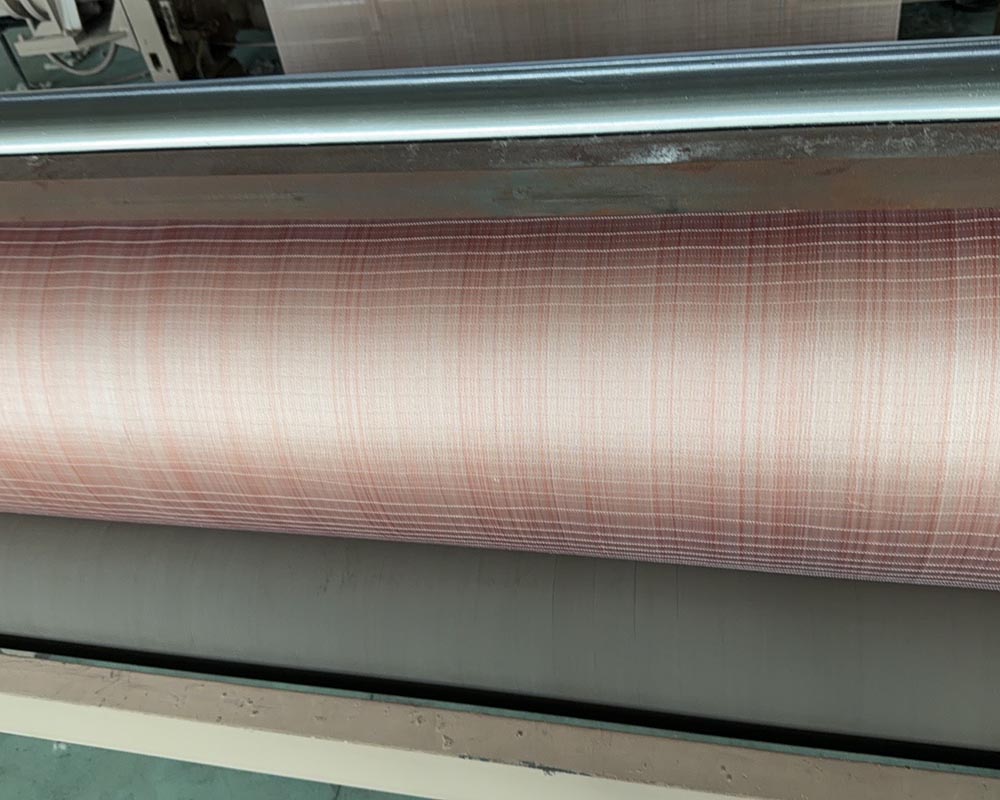
A global rubber product manufacturer partnered with Weixinfabric to resolve recurring adhesion failures in their heavy-duty conveyor belting line. Investigation revealed that the primary root cause was local Dip Pick-Up variation across wide-width fabric rolls (3.2 meters):
- Low DPU Zones (< 4.0%): Resulted in insufficient RFL chemical encapsulation around core yarn filaments, leading to interfacial peeling under dynamic shear stress.
- High DPU Zones (> 6.5%): Created a brittle, thick outer resin crust that reduced flex-fatigue endurance during high-frequency pulley bending cycles.
- Process Instabilities: Fluctuations in line speed, bath viscosity shifts due to ambient temperature changes, and micro-variations in squeeze roller hydraulic pressure created unmonitored coating drift.
2. Engineering the Solution: Closed-Loop Automation Architecture
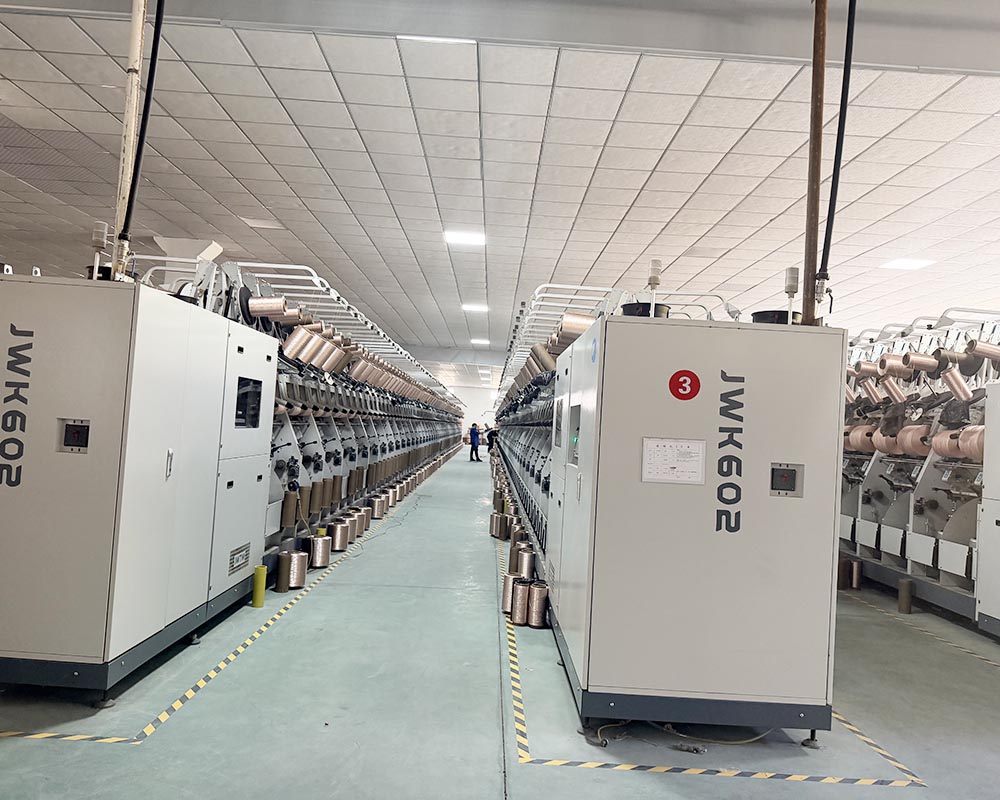
To achieve uniform DPU across millions of meters of fabric, Weixinfabric designed and retrofitted an advanced automated process control framework on its high-speed RFL dipping lines.
Core Automation Components Implemented by Weixinfabric
- Non-Contact In-Line Mass Transducers: Dual-scanning nuclear/infrared sensors measure pre-dip greige fabric mass and post-dip wet mass continuously across the entire width of the web.
- Closed-Loop Squeeze Roller Regulation: Real-time mass data is fed directly into a Programmable Logic Controller (PLC) that adjusts hydraulic squeeze roller pressure within milliseconds to correct coating weight deviations.
- Multi-Zone Dynamic Tension Control: Automated load-cell creels maintain constant warp line tension (±1 N per cord), preventing yarn bundle opening or compaction that artificially alters liquid absorption.
- Automated Bath Viscosity & Temperature Stabilization: Continuous chemical recirculation loops with automated inline dosing keep RFL solids content (±0.2%) and bath temperature (±0.5°C) strictly constant.
Process Parameter Comparison
| Process Parameter | Legacy Manual Control Method | Weixinfabric Automated Control Standard |
|---|---|---|
| DPU Tolerance Range | ±2.0% to ±2.5% | ±0.3% to ±0.5% |
| Sampling Frequency | Offline lab test once per 1,000 meters | In-line continuous scanning (100 Hz) |
| Squeeze Roller Adjustment | Manual operator valve tweak | Closed-loop PLC automated feedback |
| Warp Tension Variation | ±8.0% across roll width | < ±1.0% multi-zone closed-loop |
3. Results & Performance Validation
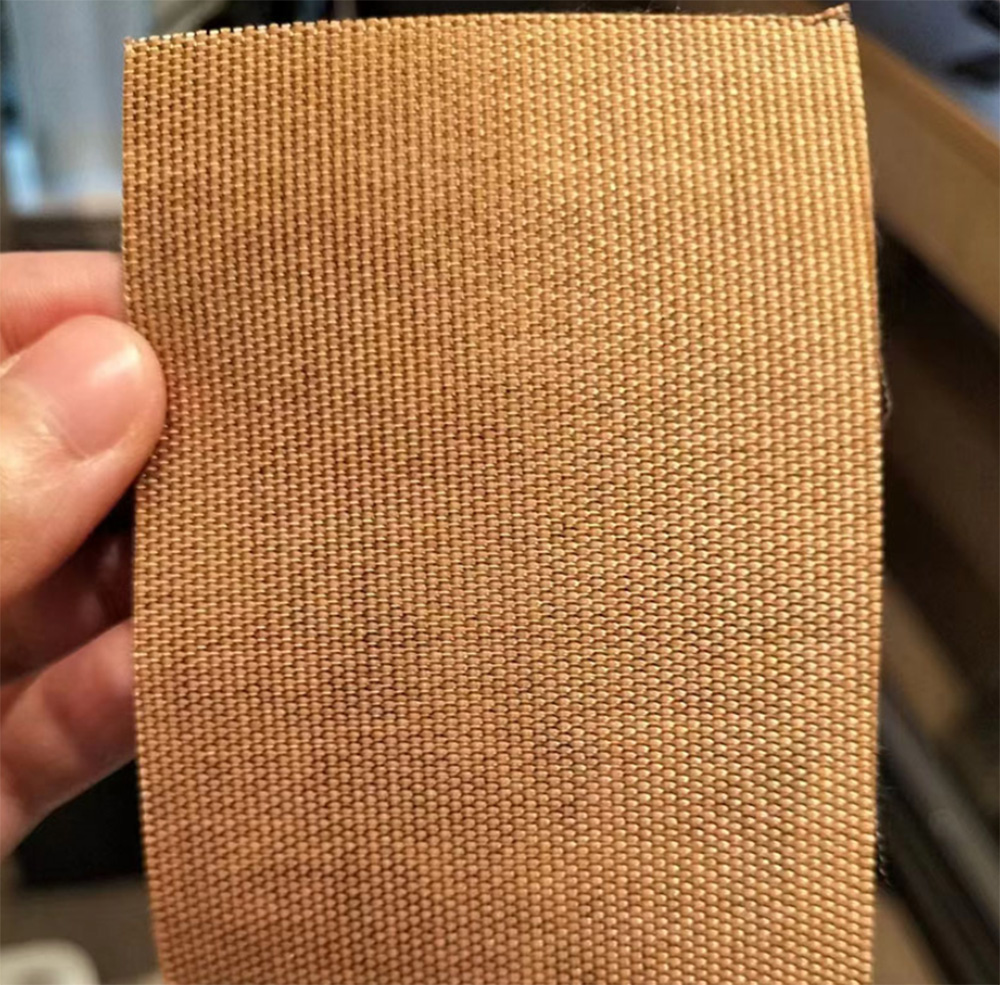
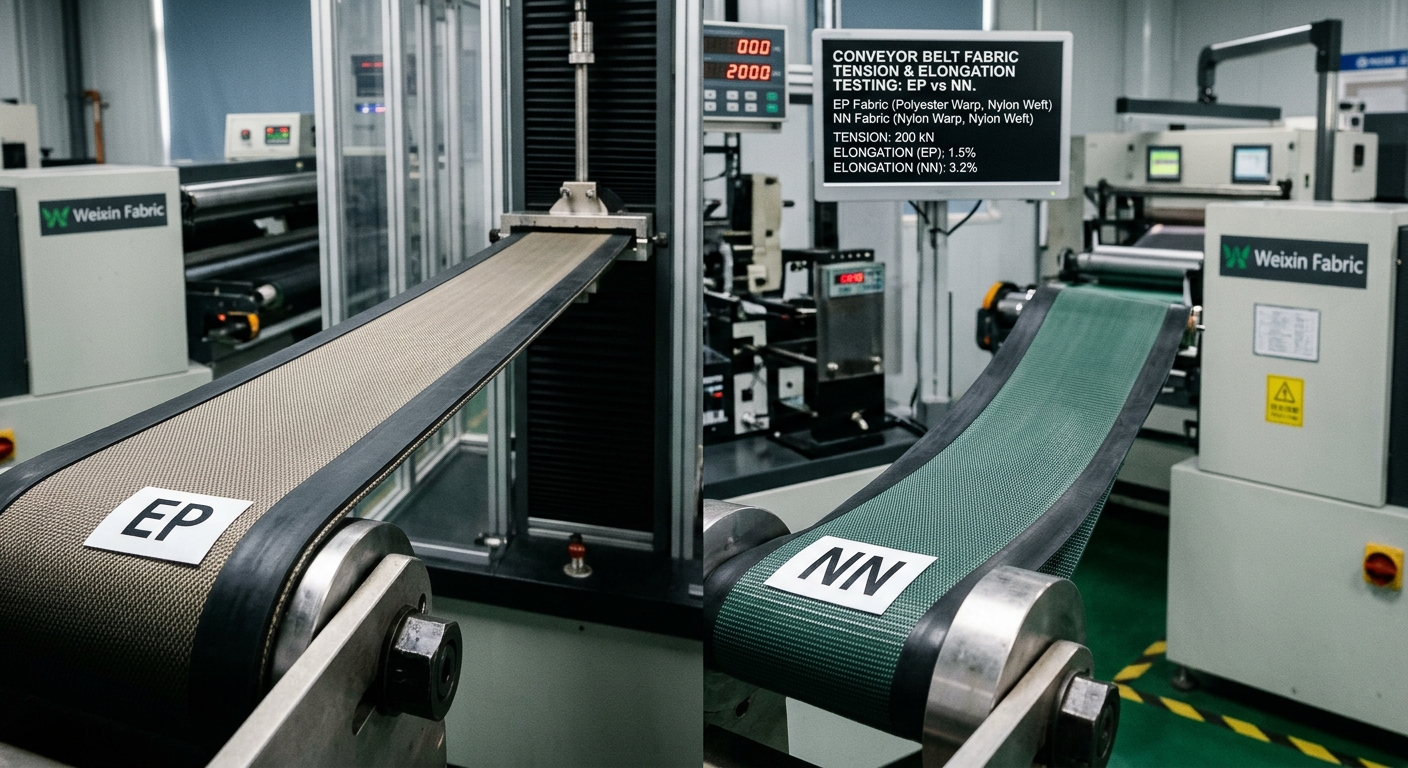
Implementing closed-loop process automation transformed product quality and structural reliability across trial batches of Polyester/Nylon (EP) and Nylon/Nylon (NN) fabrics:
- Elimination of Out-of-Spec DPU Batches: DPU variation was compressed from ±2.3% down to ±0.35%, virtually eliminating out-of-spec fabric rolls.
- Adhesion Consistency: H-pull and strap-peel adhesion test values demonstrated a 98.5% capability index (Cpk > 1.67), ensuring uniform rubber coverage during vulcanization.
- Flex Fatigue Lifespan: Dynamic flex testing showed a 22% increase in cycle life before initial micro-crack initiation in the bonding layer.
4. Partner with Weixinfabric: Your Solution Provider for Precision Cord Fabrics
This case study illustrates Weixinfabric's systematic approach to technical textile manufacturing. As a specialized Chinese cord fabric solution provider, we combine chemical synthesis expertise with advanced industrial automation to deliver dipped Nylon 6, Nylon 66, HMLS Polyester, and custom hybrid fabrics that perform flawlessly under extreme dynamic loads.
5. Conclusion and Technical Service
Controlling Dip Pick-Up variation through closed-loop automated process control is essential for producing high-grade industrial textiles. By removing human error and continuously regulating coating conditions, Weixinfabric guarantees exceptional rubber-to-fabric adhesion and batch-to-batch consistency for tire and conveyor belt manufacturers worldwide.
Contact Weixinfabric today to discuss custom fabric specifications, review technical audit reports, or request automated-dipped fabric samples.