Dip Pick-Up Control: Why 1-2% Variation Determines Conveyor Belt Adhesion Consistency
Authored by: Chemical & Quality Engineering Department, Weixinfabric
Technical Focus: Resorcinol-Formaldehyde-Latex (RFL) Coating Dynamics, Dip Pick-Up (DPU) Tolerances, and Rubber-to-Fabric Interfacial Adhesion
1. The Precision Imperative in Conveyor Belt Carcass Dipping
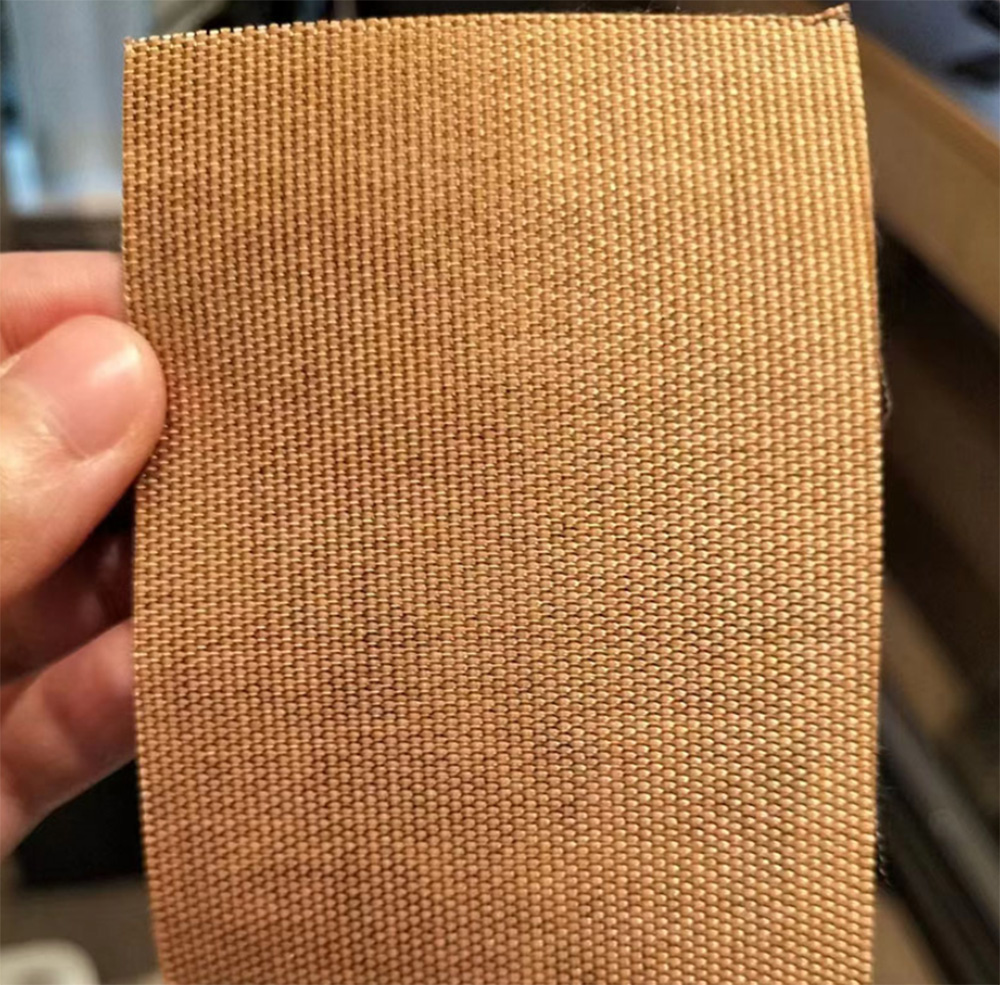
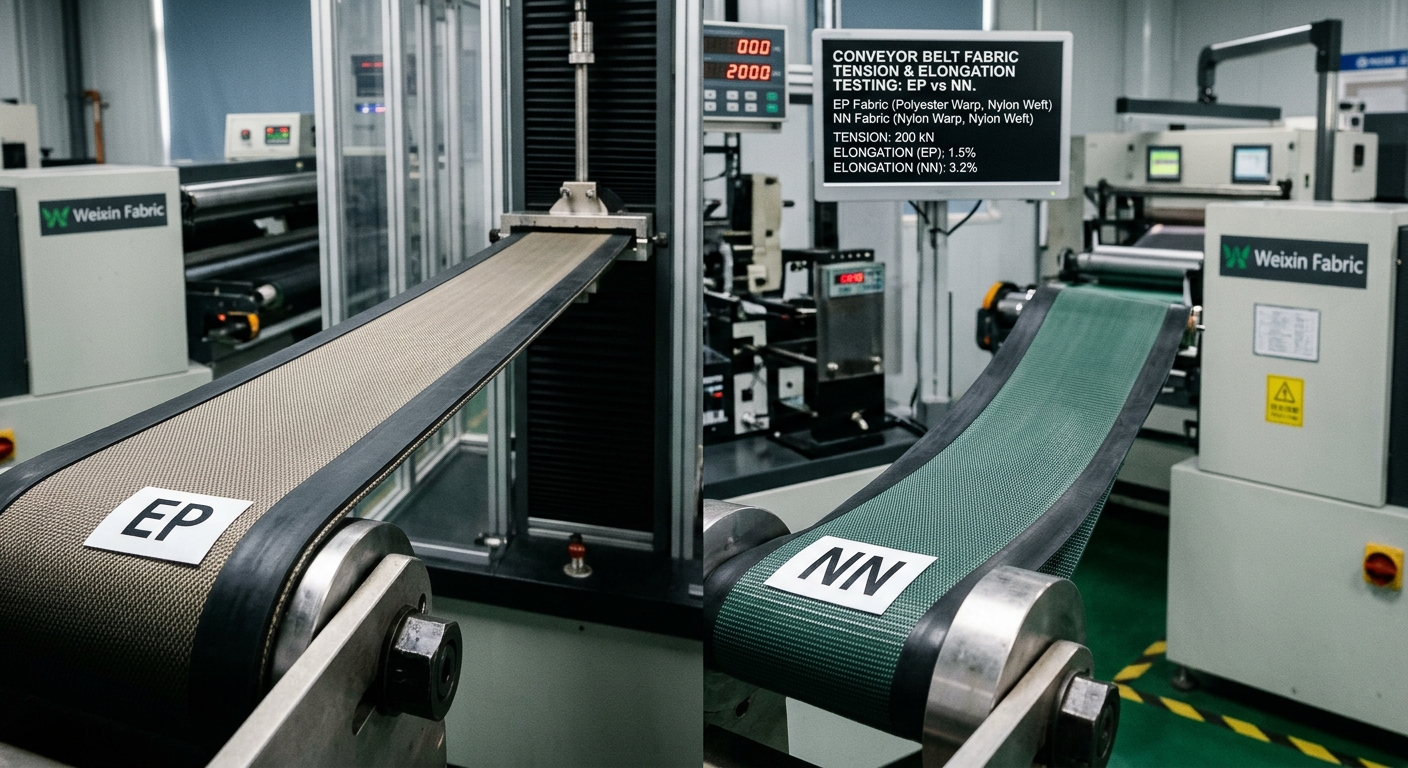
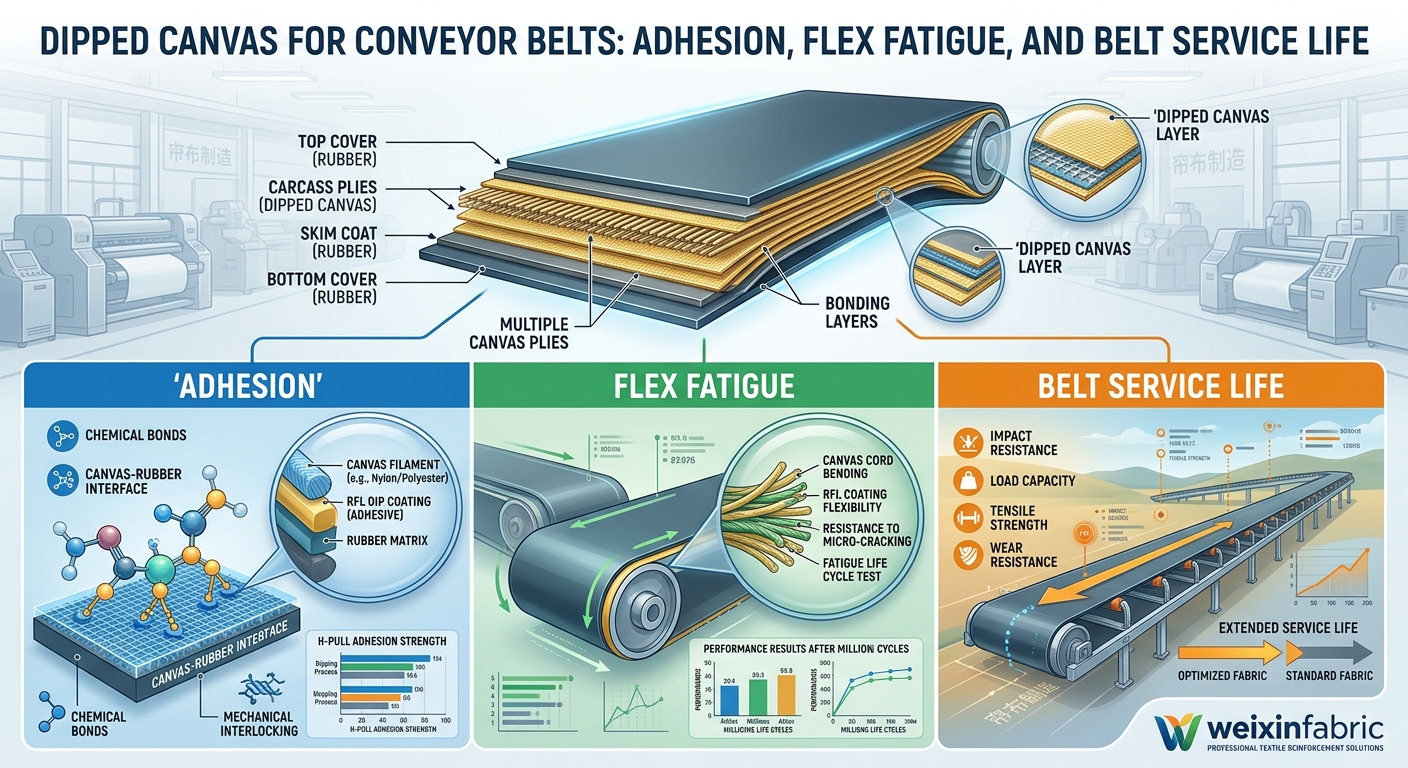
In heavy-duty industrial conveyor belting—specifically fabrics woven from Polyester/Nylon (EP) and Nylon/Nylon (NN)—structural reliability hinges on the interface between synthetic filaments and the rubber matrix. While yarn tensile strength and weave density establish baseline mechanical specs, dynamic durability is dictated by the chemical bonding layer applied during dipping.
At Weixinfabric, a premier Chinese specialized cord fabric solution provider, our quality engineering teams monitor Dip Pick-Up (DPU) as a primary control metric. In high-tension, continuous-flex conveyor applications, even a minor 1% to 2% shift in DPU can cause premature delamination, reduced flex fatigue life, or rubber penetration failure. Maintaining tight chemical coating tolerances is essential for producing reliable conveyor belt fabrics.
2. Understanding Dip Pick-Up (DPU) and Micro-Interface Physics
Dip Pick-Up (DPU) represents the dry weight percentage of the Resorcinol-Formaldehyde-Latex (RFL) adhesive coating relative to the dry weight of the untreated greige fabric:
DPU (%) = [(Wdipped - Wgreige) / Wgreige] × 100
Achieving optimal DPU requires a precise physical balance:
- Insufficient DPU (< 1-2% below nominal target): Results in incomplete filament encapsulation. Uncoated fiber bundles create micro-voids, causing low static peel strength and accelerated rubber-to-fabric delamination under heavy dynamic impact.
- Excessive DPU (> 1-2% above nominal target): Forms a thick, overly rigid shell around warp and weft yarns. This rigid layer compromises cord flexibility, inducing localized stress concentrations during pulley flexing and leading to micro-cracking within the RFL film.
Impact of DPU Variance on Conveyor Belt Performance Parameters
| DPU Deviation Level | Micro-Structural Impact | Adhesion & Dynamic Performance Result | Failure Mode |
|---|---|---|---|
| Below Target (-2%) | Incomplete chemical coverage; exposed synthetic fibers. | Drastic drop in H-pull and strap peel adhesion values. | Interfacial delamination under dynamic shear. |
| Nominal Range (Target ±0.5%) | Uniform filament anchoring; balanced elastomeric flexibility. | Optimal rubber tear strength (100% rubber coverage on peel). | Cohesive failure within rubber (ideal bond). |
| Above Target (+2%) | Brittle exterior resin crust; restricted inner cord movement. | Reduced flex fatigue endurance; stiff fabric hand. |
3. Key Engineering Factors Influencing DPU Consistency
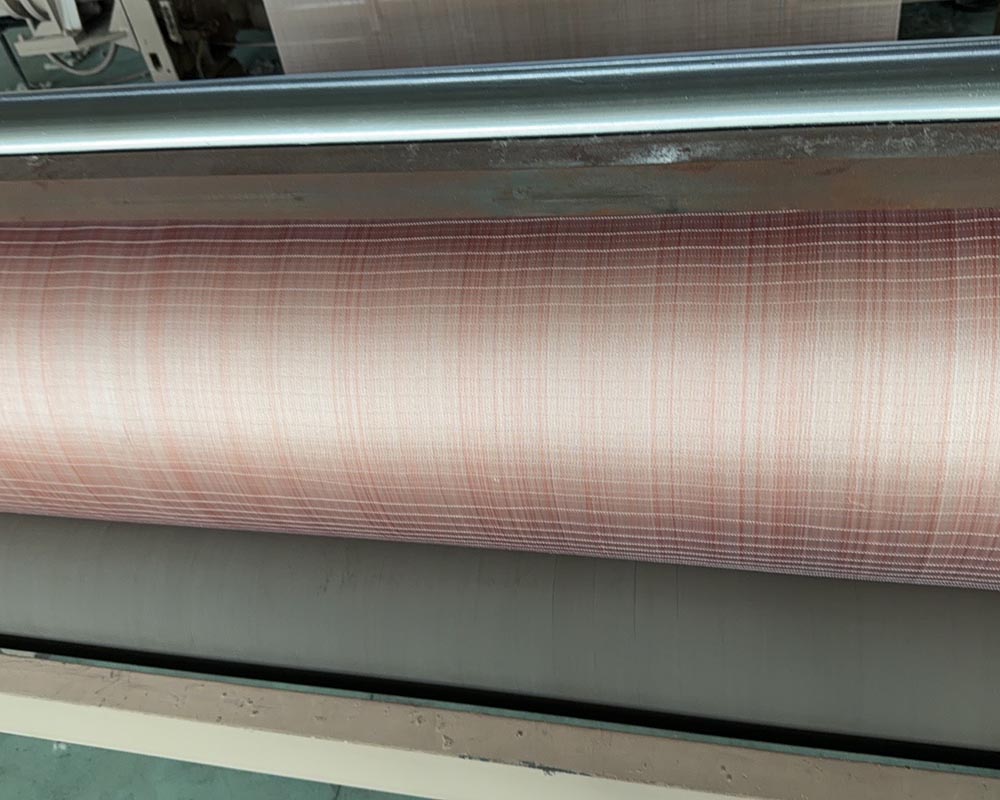
Controlling DPU within a narrow ±0.5% tolerance window across wide-width industrial fabric rolls (up to 3.2 meters) requires continuous control across chemical and mechanical process variables:
- Immersion Zone Hydrodynamics & Viscosity: RFL dip bath solids content, temperature, and age must be tightly controlled. Minor changes in resin viscosity alter liquid pick-up rates during high-speed dipping operations.
- Precision Vacuum & Squeeze Roller Pressure: Multi-stage squeeze rollers equipped with automated load-cell pressure regulation remove excess surface dip, ensuring uniform chemical distribution into the interior of heavy EP/NN woven cords.
- In-Line Multi-Zone Tension Control: Warp line tension directly influences yarn bundle porosity. Higher tension closes gaps within twisted yarns, reducing dip absorption, whereas slack tension allows excessive chemical entrapment.
- Oven Temperature Profile: Zone-controlled thermal curing dries moisture uniformly without inducing skinning effects, ensuring proper cross-linking between the RF resin and latex phases.
4. Weixinfabric's Zero-Defect DPU Assurance Protocol
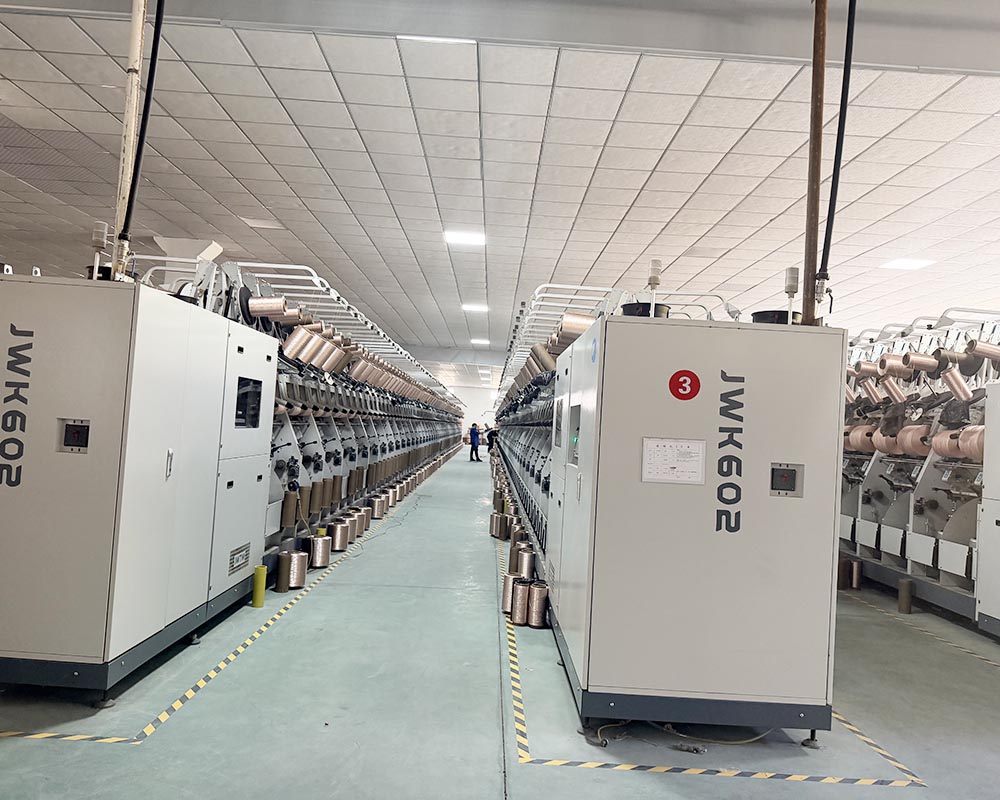
As an industrial textile partner for global belting manufacturers, Weixinfabric utilizes advanced online and offline monitoring systems to eliminate DPU variance:
- Continuous Online Mass Monitoring: Nuclear or infrared sensor arrays track wet coat weight continuously across the fabric web, making real-time automated adjustments to squeeze-roll pressure.
- Gravimetric Verification & Analytical Testing: Every production lot undergoes rigorous burn-off gravimetric testing and analytical chemical checks to verify DPU percentage.
- Standardized Adhesion Testing: Strip peel testing (ASTM D4393 / ISO 252) is performed on every batch to confirm rubber-to-fabric bond strength prior to global shipment.
5. Conclusion and Technical Service
In high-tenacity conveyor belt applications, dynamic durability depends on precision manufacturing controls. Managing Dip Pick-Up within a tight ±0.5% window prevents premature delamination, preserves flex fatigue resistance, and guarantees consistent rubber-to-fabric adhesion across long belt runs.
Partner with Weixinfabric for technical expertise, custom EP/NN fabric constructions, and high-performance dipping solutions. Contact our engineering team today to request technical datasheets or order custom-dipped fabric samples.