RFL Dipping Fundamentals: How Resorcinol-Formaldehyde-Latex Systems Bond Nylon and Polyester Fabrics
Authored by: Advanced Chemical & Applied Materials Department, Weixinfabric
Technical Focus: Polymer Interface Chemistry, Adhesive Dip Formulations, and Thermal Activation for Industrial Textiles
1. The Critical Interface: Bridging Synthetic Fibers and Elastomers
In high-performance industrial applications such as automotive tires, conveyor belts, hydraulic hoses, and mechanical drive belts, synthetic cord fabrics—primarily Nylon 6, Nylon 66, and High-Modulus Low-Shrinkage (HMLS) Polyester—provide vital structural reinforcement. However, synthetic fibers are inherently smooth, hydrophobic, and chemically non-reactive, offering virtually no natural adhesion to sulfur-cured rubber compounds.
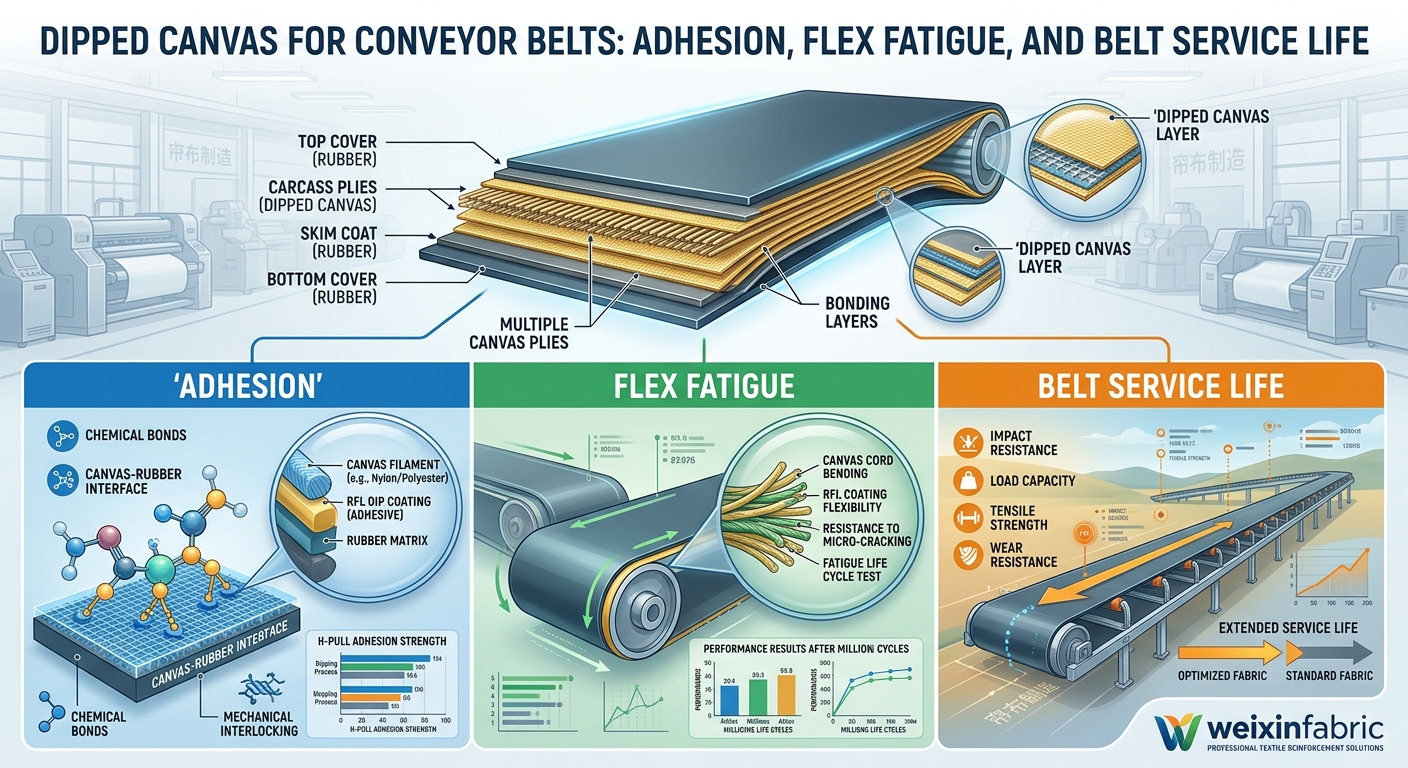
To establish a durable, dynamic bond capable of withstanding continuous fatigue, severe shear forces, and thermal flexing, fabrics must undergo chemical surface modification. The industry standard for achieving superior rubber-to-fabric bonding is the Resorcinol-Formaldehyde-Latex (RFL) dipping system. As a premier Chinese manufacturer specializing in high-tenacity industrial fabrics, Weixinfabric leverages advanced dual-bath RFL coating architectures to deliver industry-leading H-pull adhesion strengths across demanding global applications.
2. Chemical Architecture: How RFL Bonding Works
An RFL coating functions as a dual-action molecular bridge. It simultaneously creates hydrogen and covalent bonds with synthetic polymer filaments while co-vulcanizing with the surrounding rubber matrix during tire molding.
A. The Resorcinol-Formaldehyde (RF) Resin Phase (Textile Affinity)
Resorcinol reacts with formaldehyde under controlled alkaline conditions (pH 8.5–9.5) to form a water-soluble RF resin condensate consisting of hydroxymethyl phenols and methylene-bridged oligomers. During thermal curing:
- Hydrogen Bonding: Hydroxyl groups (-OH) on the RF resin form strong hydrogen bonds with amide groups (-CONH-) along Polyamide (Nylon 6 and Nylon 66) polymer chains.
- Chemical Interlocking: The heat-cured RF resin forms a tough, rigid thermoset film that mechanically interlocks within the micro-voids of the twisted yarn bundle.
B. The Latex Phase (Rubber Affinity)
The elastomer latex phase, typically composed of Vinyl Pyridine (VP) latex blended with Styrene-Butadiene Rubber (SBR) or Natural Rubber (NR) latex, provides the bridge to the elastomeric matrix:
- Co-Vulcanization: Unsaturated double bonds within the latex polymer chains migrate and cross-link with sulfur during the tire or belt vulcanization process.
- Pyridine Ring Interactions: Active nitrogen atoms in the VP latex ring structure enhance compatibility with both the RF resin matrix and rubber vulcanization accelerators.
3. Substrate-Specific Dipping Strategies: Nylon vs. Polyester
Different synthetic polymers exhibit distinct chemical surface energies, requiring tailored dipping processes to optimize adhesion performance:
| Fabric Material | Surface Energy & Reactivity | Required Dipping Configuration | Critical Quality Parameters |
|---|---|---|---|
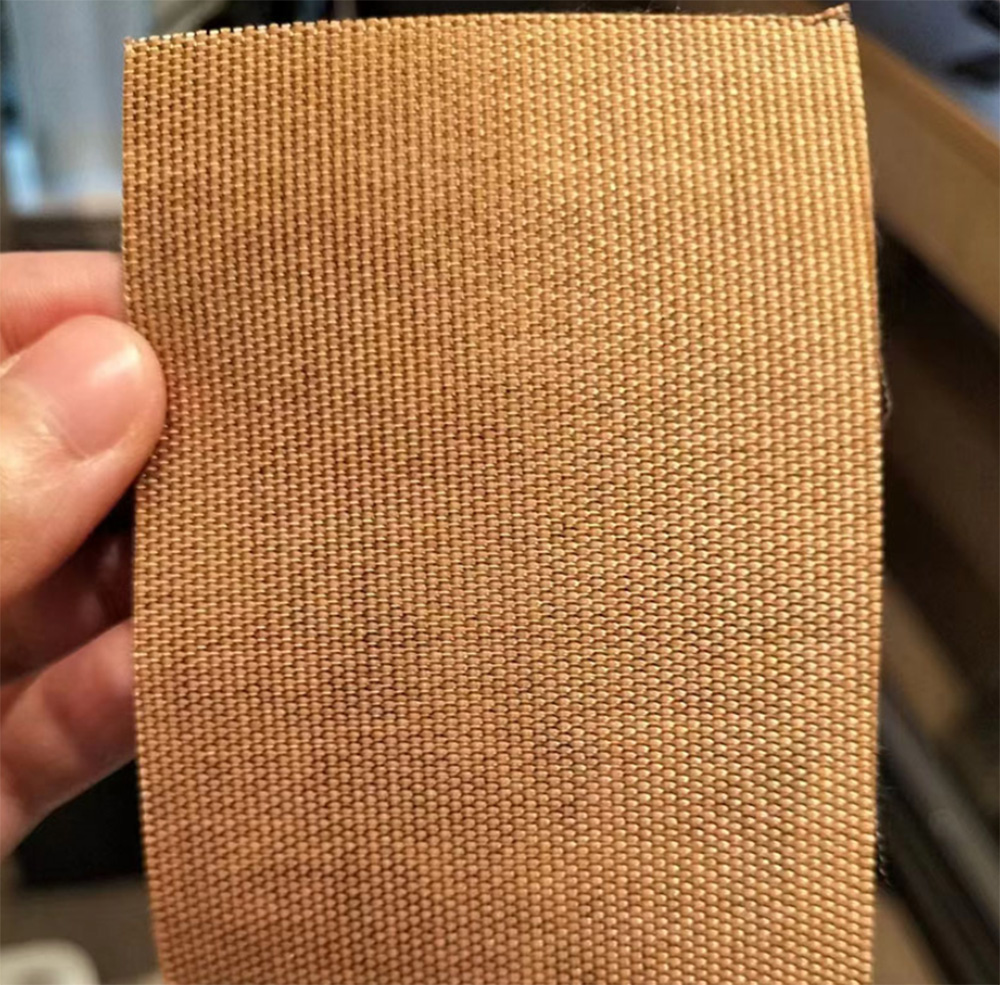
| Nylon 6 & Nylon 66 Fabric | High reactivity due to abundant polar amide (-CONH-) groups. | Single-Bath RFL Dip: Direct application of standard RF resin and VP-latex emulsion. | Controlled Pick-Up Rate (DPU 4.5%–6.0%), precise moisture drying, balanced flex fatigue resistance. |
| HMLS Polyester (PET) Fabric | Low reactivity; lacks active polar hydrogen sites; highly inert ester bonds. | Dual-Bath / Activation Dip: Pre-treatment with Isocyanate or Epoxy sub-dip, followed by standard RFL main dip. | Strict baking temperatures in zone 1 (>220°C) for activation, uniform sub-dip penetration, HAS control. |
| Aramid Hybrid Fabric | Ultra-high modulus, highly crystalline structure with low chemical reactivity. | Multi-Stage Reactive Dip: Surface pre-activation combined with specialized high-temperature RFL formulations. | High thermal resistance, precise tension control to prevent modulus degradation during baking. |
4. Precision Thermal Curing: The Three-Zone Oven Profile
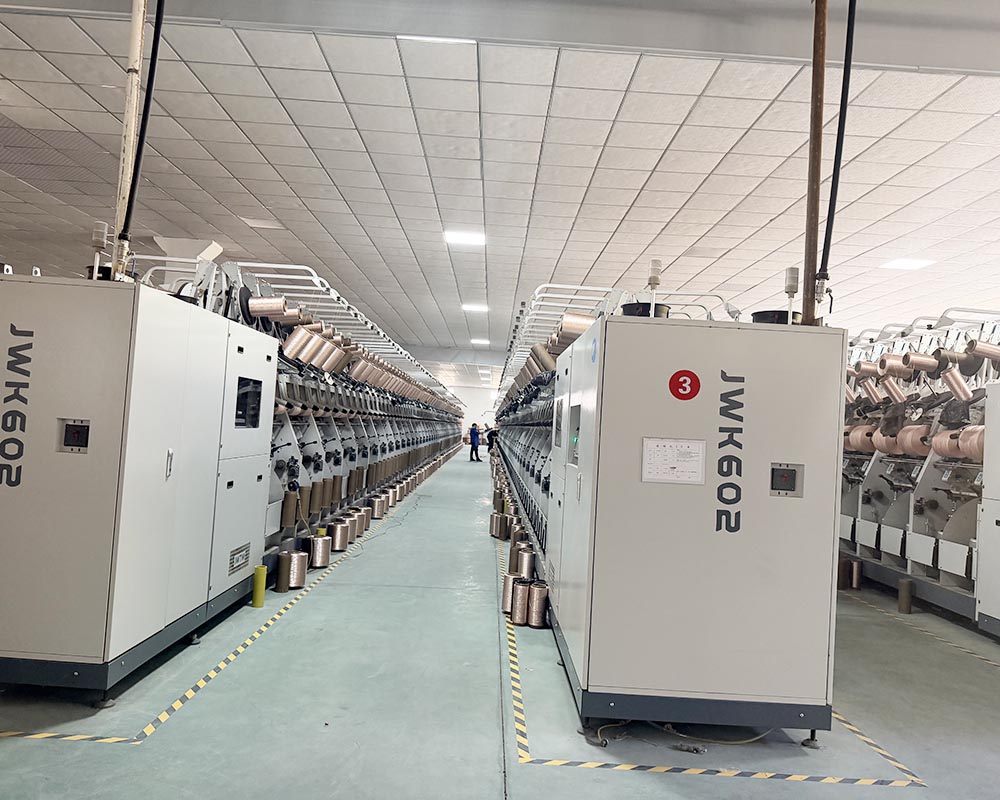
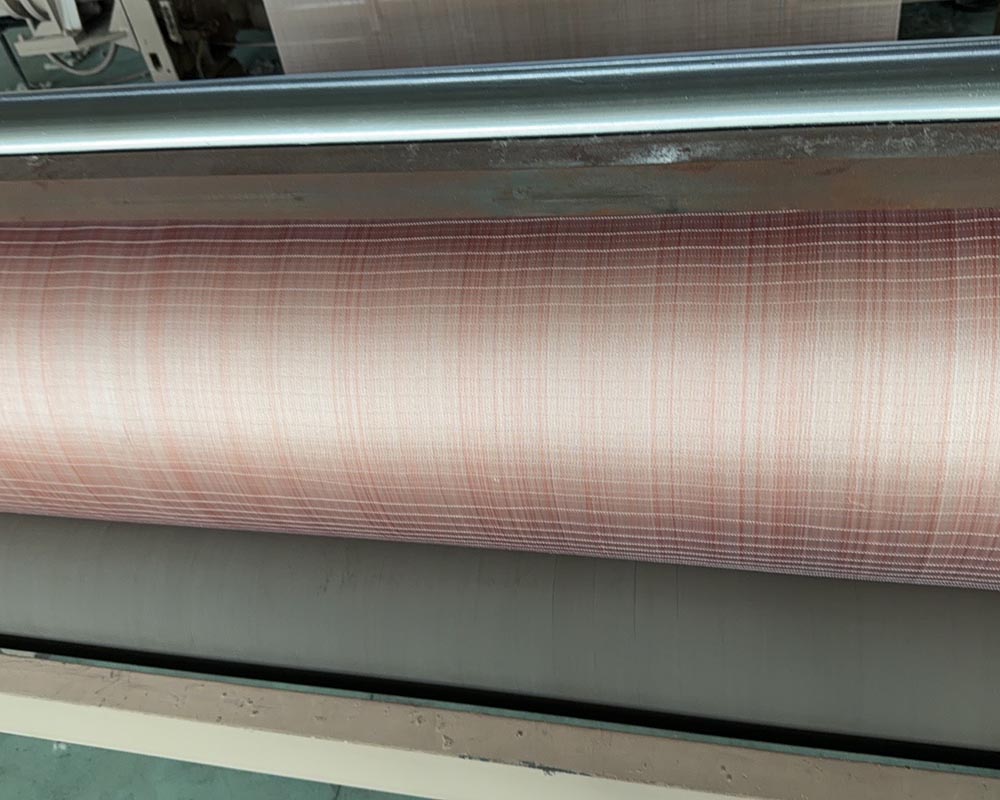
Chemical formulation is only half the equation; thermal processing parameters dictate the structural performance of the dip coating. At Weixinfabric, our state-of-the-art dipping lines utilize multi-zone computer-controlled ovens with real-time tension monitoring:
- Zone 1: Drying Phase (120°C – 150°C): Gently removes water from the dipped fabric without causing skin-formation or micro-cracking in the un-cured latex layer.
- Zone 2: Thermal Activation & Heat-Setting (180°C – 235°C): Triggers the condensation reaction of the RF resin, cures the sub-dip activation layer on polyester, and stabilizes the structural heat shrinkage (HAS) of the fabric.
- Zone 3: Tension Normalization & Cooling: Relieves internal cord stress while locking in the high-modulus orientation of the filaments under controlled stretch ratios.
5. Quality Testing Protocols for Dipped Fabrics at Weixinfabric
To guarantee zero-defect performance in demanding application environments, Weixinfabric subjects every production lot of dipped fabric to rigorous analytical and mechanical testing:
- H-Pull Adhesion Test (ASTM D4776): Evaluates the static force required to pull a single embedded cord from a standardized vulcanized rubber block (target values >180 N/cm).
- Strap Peel Adhesion Test (ASTM D4393): Measures interfacial peel strength between carcass plies under dynamic flex conditions.
- Dip Pick-Up (DPU) Analysis: Gravimetric testing ensuring exact chemical coating mass percentage across wide-width rolls.
- Hot Air Shrinkage (HAS): Thermal testing at 177°C for 2 minutes to confirm dimensional stability prior to tire calendering.
6. Why Weixinfabric is Your Trusted Dipped Cord Solution Partner
As a leading Chinese industrial fabric manufacturer, Weixinfabric brings together deep expertise in fiber chemistry, precision cabling and weaving, and state-of-the-art dipping technology. Whether your application demands high-tenacity dipped Nylon 6, heat-resistant Nylon 66, HMLS Polyester carcass fabric, or customized hybrid cord reinforcement, we deliver engineered solutions tailored to your exact manufacturing parameters.
7. Conclusion and Technical Service
Mastering RFL dipping fundamentals is essential for producing high-durability rubber composite products. By matching polymer chemistry with tailored adhesive formulations and precise multi-zone thermal curing, Weixinfabric sets the standard for technical textile reinforcement.
Contact the technical engineering team at Weixinfabric today to request technical datasheets, order custom-dipped fabric samples, or consult on specialized adhesive solutions for your tire or industrial rubber programs.