How to Choose a Reliable Carcass Fabric, Conveyor Belt Fabric, and Fishing Net Fabric Manufacturer in China
Authored by: Technical Procurement & Global Supply Engineering Team, Weixinfabric
Focus Domain: Sourcing Quality Assessment, Industrial Textile Auditing, and Polymer Reinforcement Engineering
1. Navigating the Chinese Technical Textile Manufacturing Landscape
China stands as the global hub for technical textile manufacturing, producing the majority of the world's high-tenacity industrial reinforcement fabrics. However, the market presents significant variation in manufacturing capabilities, raw material purity, thermal processing standards, and chemical dipping quality.
For international buyers sourcing tire carcass fabric, conveyor belt reinforcement (EP/NN fabrics), and high-tenacity fishing net textiles, selecting the right partner requires a rigorous evaluation framework. At Weixinfabric, a premier Chinese specialized cord fabric solution provider, we empower global OEMs and distributors with high-performance, precision-engineered industrial textile solutions designed to exceed strict international quality standards.
2. Key Criteria for Evaluating Industrial Fabric Manufacturers
A. Raw Material Integrity and Polymer Spinning Control
The foundational strength of any technical fabric depends on virgin yarn quality. Reputable manufacturers must enforce stringent incoming quality control (IQC) for synthetic filaments, including High-Tenacity Nylon 6, Nylon 66, High-Modulus Low-Shrinkage (HMLS) Polyester, and Polyethylene.
- Denier Uniformity: Tight tolerance on linear density (dtex/denier) prevents structural weight variations across fabric rolls.
- Intrinsic Viscosity (IV): Consistent molecular weight distribution ensures high tensile breaking strength and dynamic fatigue endurance.
- Finish Oil Control: Controlled spin finish levels prevent interference during downstream Resorcinol-Formaldehyde-Latex (RFL) dip penetration.
B. Advanced Weaving Equipment and Tension Management
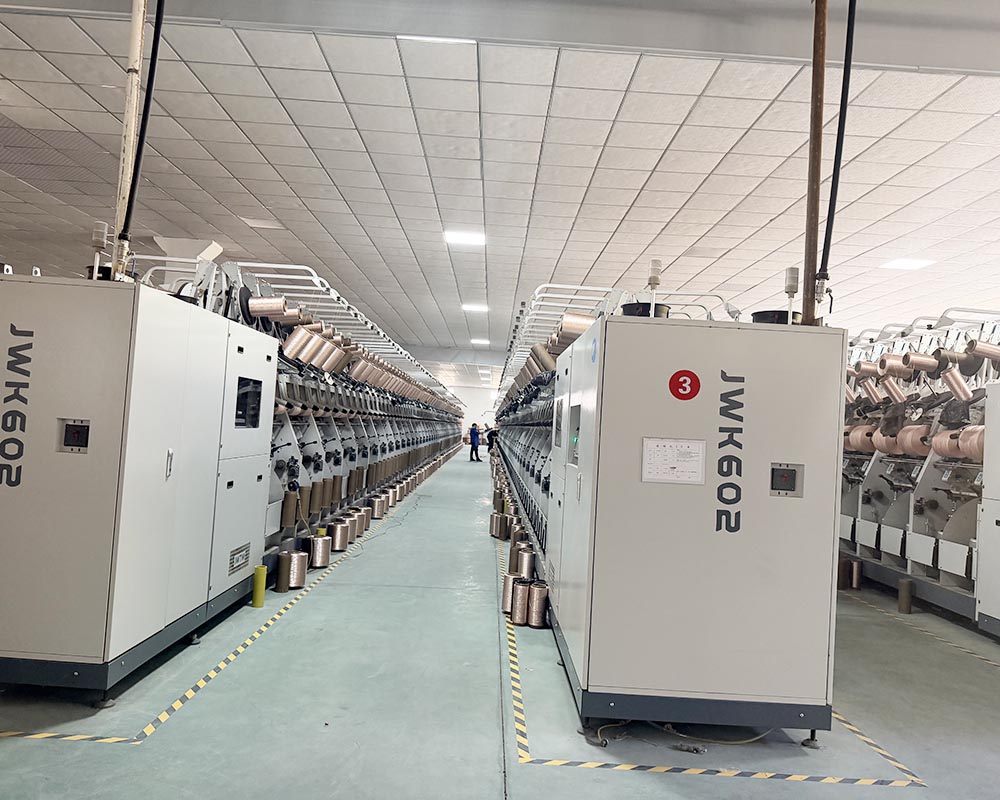
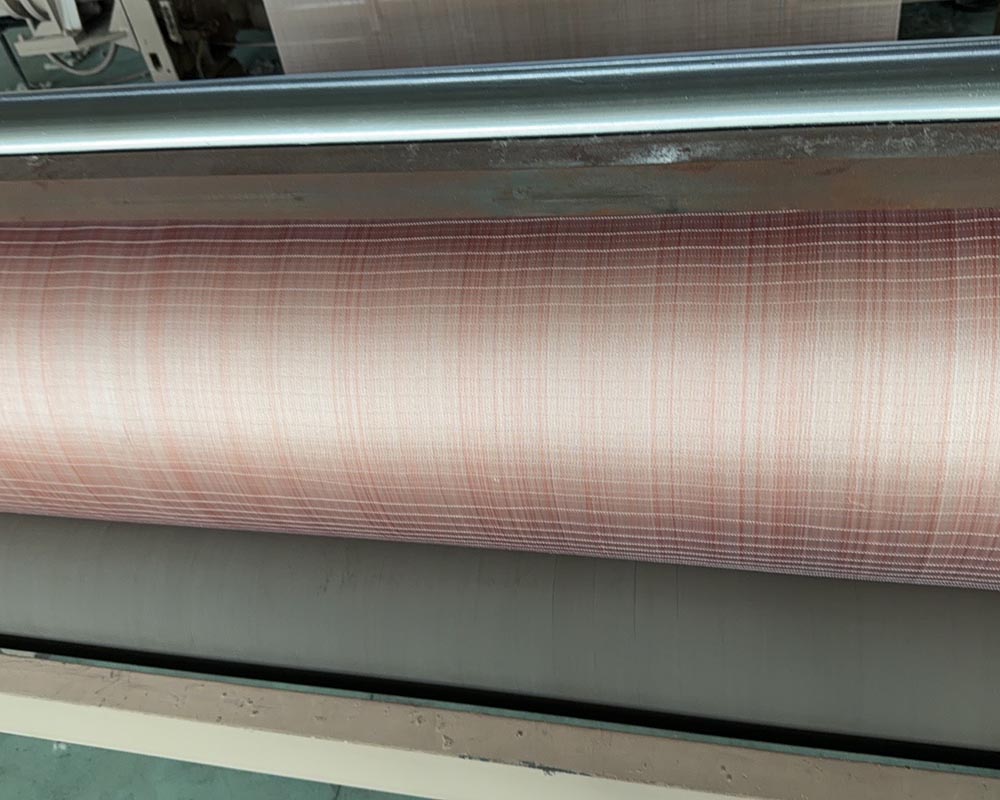
High-performance reinforcement fabrics require uniform cord spacing, controlled pick density, and zero warp tension variance across wide widths (up to 3.2 meters or more). Leading manufacturers utilize modern rapier and air-jet looms equipped with electronic creel tensioners to eliminate slack cords and weave distortion.
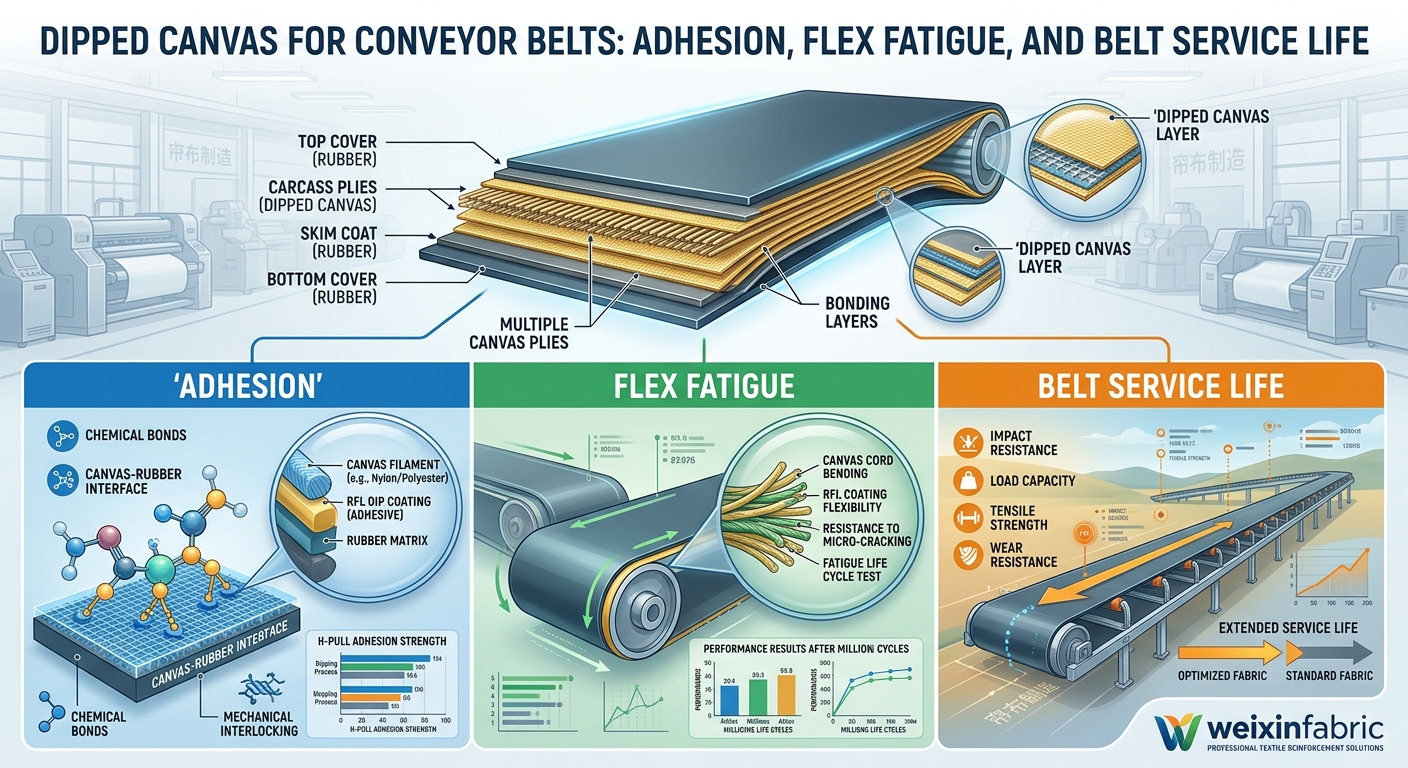
C. Multi-Zone Thermal Fixing and Chemical Dipping Infrastructure
Dynamic applications demand specialized chemical bonding and heat-setting treatment:
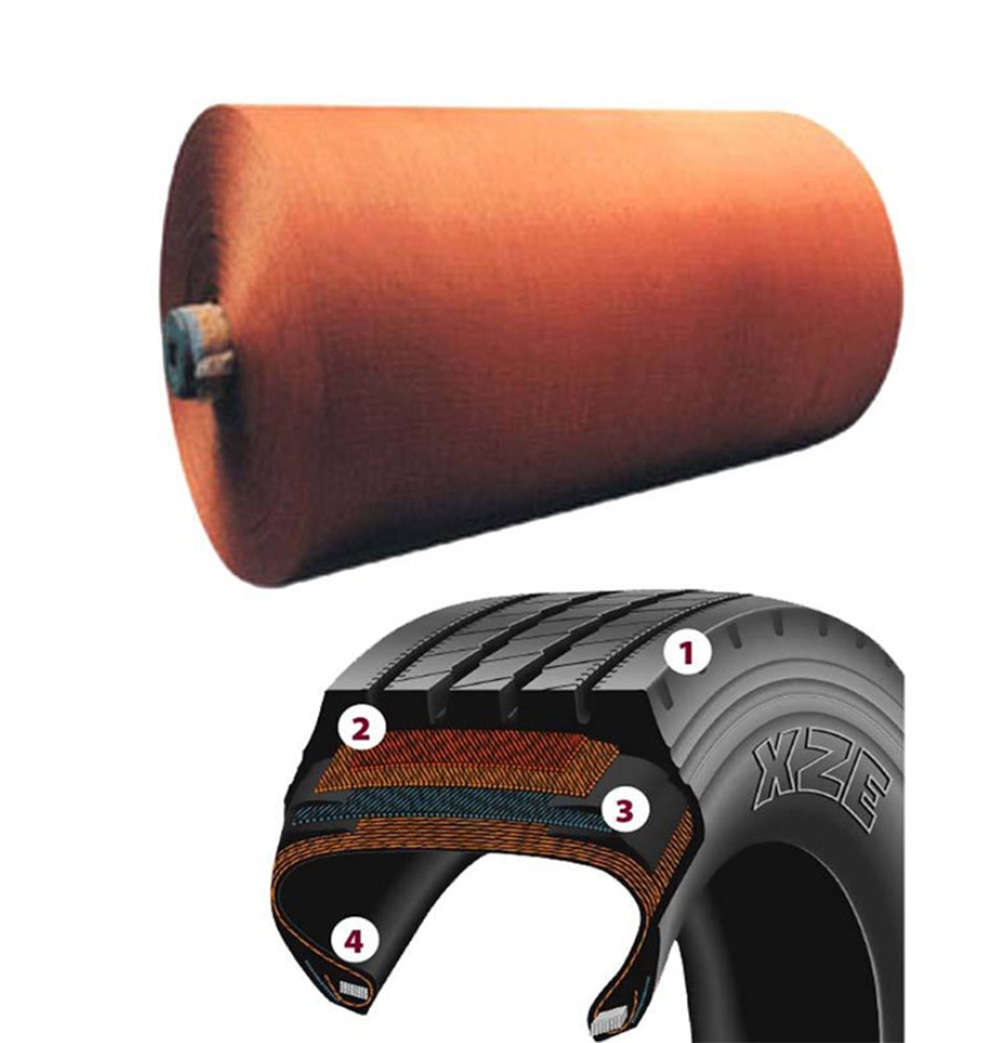
- Tire Carcass & Conveyor Belt Fabrics: Must undergo multi-zone baking ovens with precision tension control to achieve target High-Modulus Low-Shrinkage (HMLS) properties and uniform RFL adhesive pickup.
- Fishing Net & Marine Textiles: Require specialized resin or polyurethane treatments to deliver exceptional abrasion resistance, UV protection, and sea-water durability.
3. Technical Requirements Across Core Industrial Sectors
Evaluating a supplier's expertise requires checking their engineering capabilities against specific sector demands:
| Product Sector | Core Materials Used | Critical Technical Parameters | Application Focus |
|---|---|---|---|
| Tire Carcass Fabric | HMLS Polyester, Nylon 66, Nylon 6, Aramid Hybrids | High H-pull adhesion (>180 N/cm), low thermal shrinkage (<1.5%), high dynamic flex fatigue endurance. | Passenger Car Radial (PCR), Commercial Truck Tires (TBR), EV High Load Capacity (HL) Tires. |
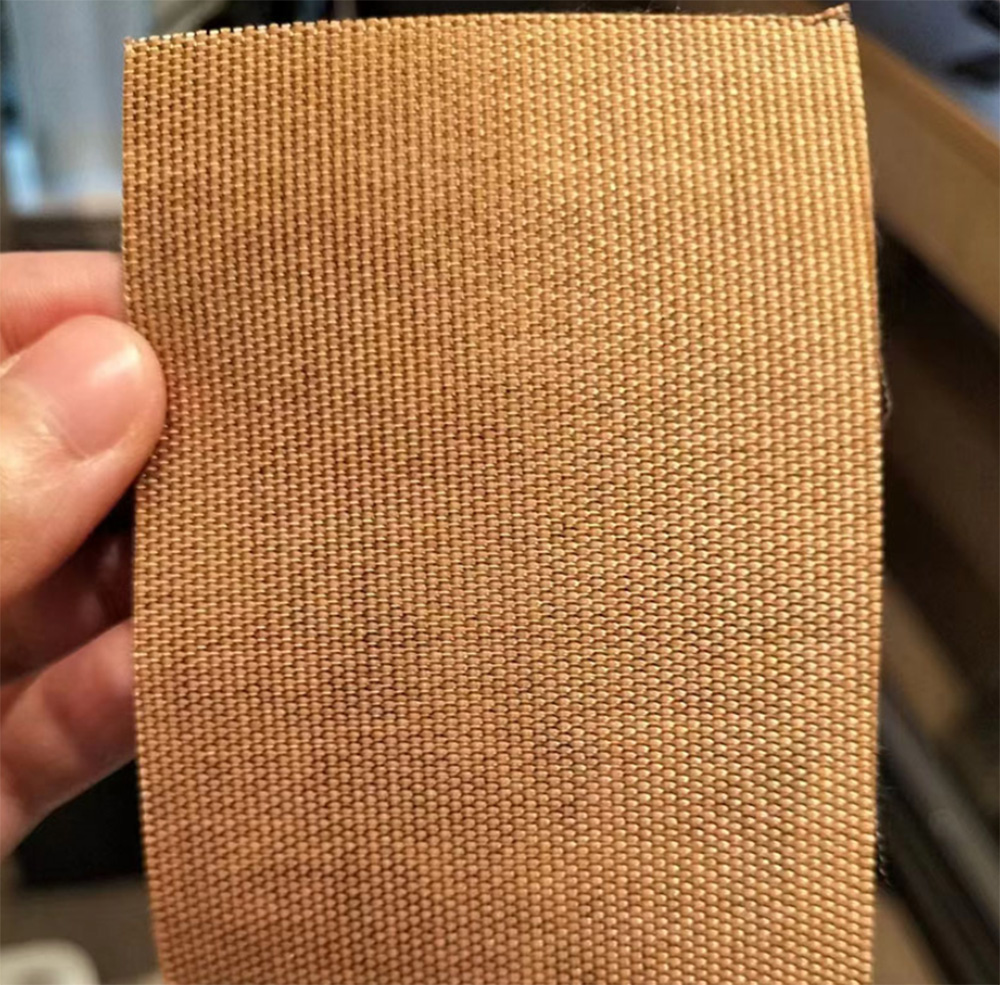
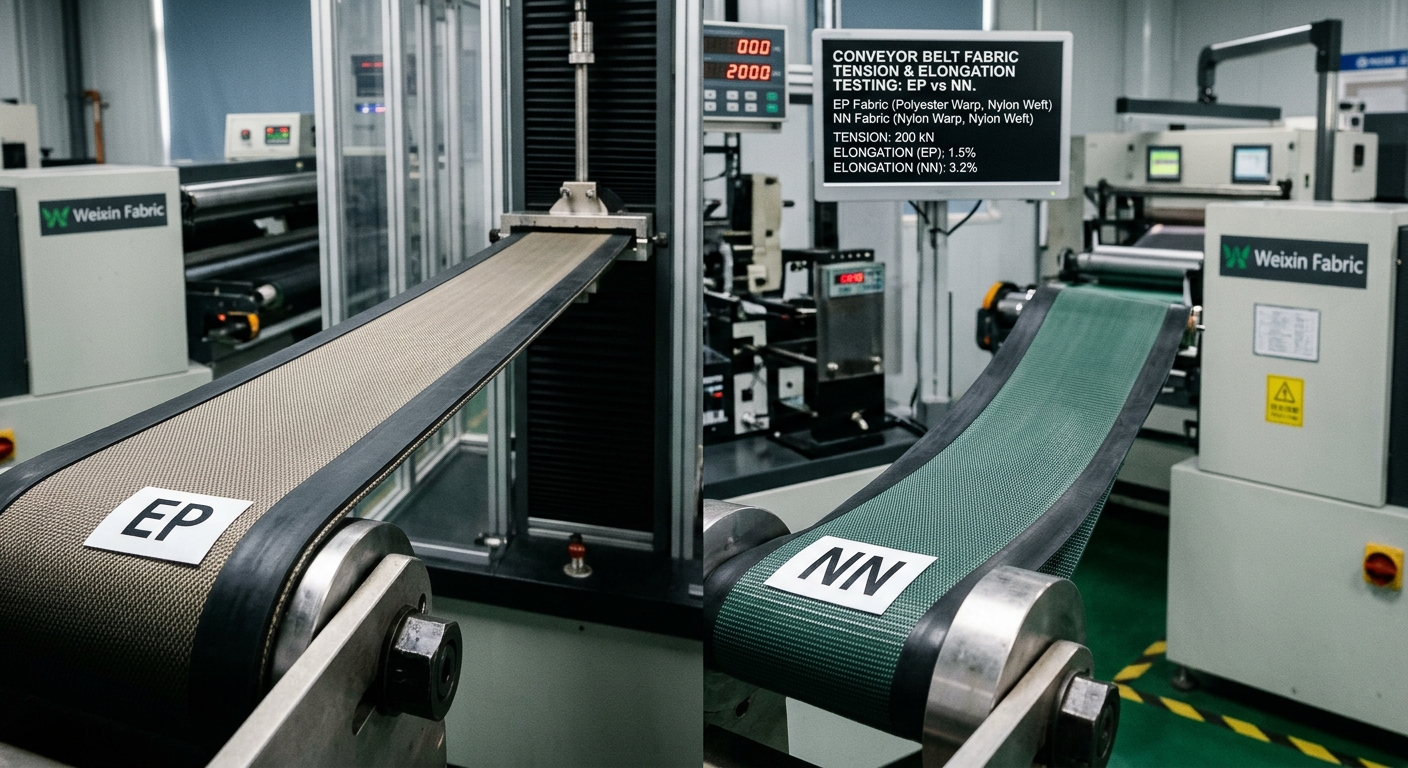
| Conveyor Belt Fabric | EP (Polyester Warp / Nylon Weft), NN (Nylon/Nylon) | Low operational elongation, high impact resistance, superior troughability, high rubber adhesion. | Mining conveyor systems, industrial port handling, heavy material logistics lines. |
| Fishing Net Fabric | High-Tenacity Nylon 6, Ultra-High Molecular Weight Polyethylene | High wet-knot strength, superior abrasion resistance, low hydrodynamic drag, UV stability. | Deep-sea commercial trawling, marine aquaculture containment, heavy-duty industrial cordage. |
4. On-Site and Technical Quality Audit Checklist
When conducting a factory audit on a potential Chinese supplier, global procurement teams should verify the following capabilities:
- Laboratory Testing Infrastructure: In-house testing facilities equipped for tensile testing (Instron/Zwick), H-pull adhesion testing, hot air shrinkage meters (HAS), and chemical dip pick-up (DPU) analysis.
- In-Line Automated Flaw Detection: Optical inspection systems on winding frames to log and tag weaving defects (such as slubs, broken ends, or oil spots) in real time.
- Traceability & Quality Certifications: Full ISO 9001, ISO 14001, and IATF 16949 compliance, with end-to-end batch tracking from raw yarn lot numbers to finished fabric rolls.
- Environmental Compliance: Fully compliant wastewater treatment and exhaust gas scrubbers for RFL dipping lines, guaranteeing sustainable long-term manufacturing operations.
5. Why Weixinfabric is Your Trusted Industrial Textile Partner in China
As a leading Chinese industrial fabric manufacturer, Weixinfabric integrates raw material selection, high-precision cabling, custom weaving, and advanced RFL dip technology under one unified quality architecture.
Our engineering team works directly with tire manufacturers, conveyor belting producers, and marine netting distributors worldwide to create tailored constructions—adjusting denier, twist per meter (TPM), pick density, and chemical formulations to match exact operational demands.
6. Partner with Weixinfabric for Precision Reinforcement Solutions
Choosing the right industrial fabric manufacturer in China comes down to technical capability, consistency, and transparent quality assurance. By partnering with a specialized expert like Weixinfabric, you ensure long-term structural reliability and superior end-product performance across your tire, conveyor, and marine product lines.
Contact Weixinfabric today to request technical datasheets, order custom samples, or schedule a technical consultation with our engineering team.