Polyester vs. Nylon Dipped Cord for Fishing Nets: Which Offers Better UV Resistance and Knot Strength?
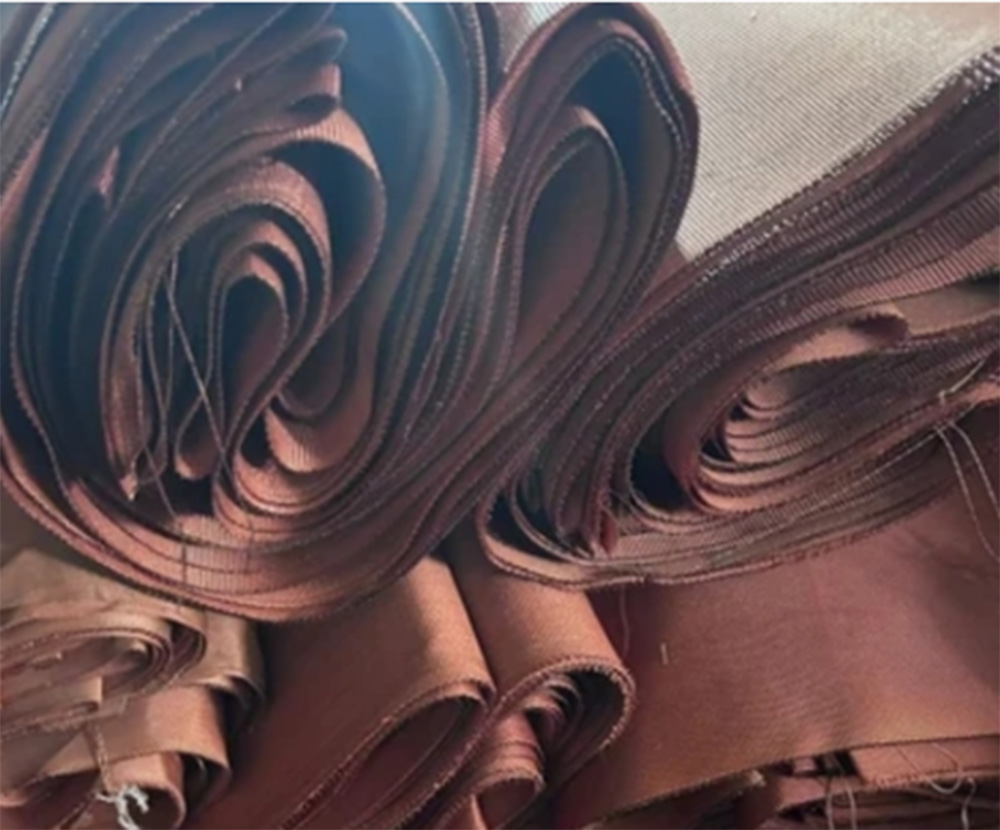
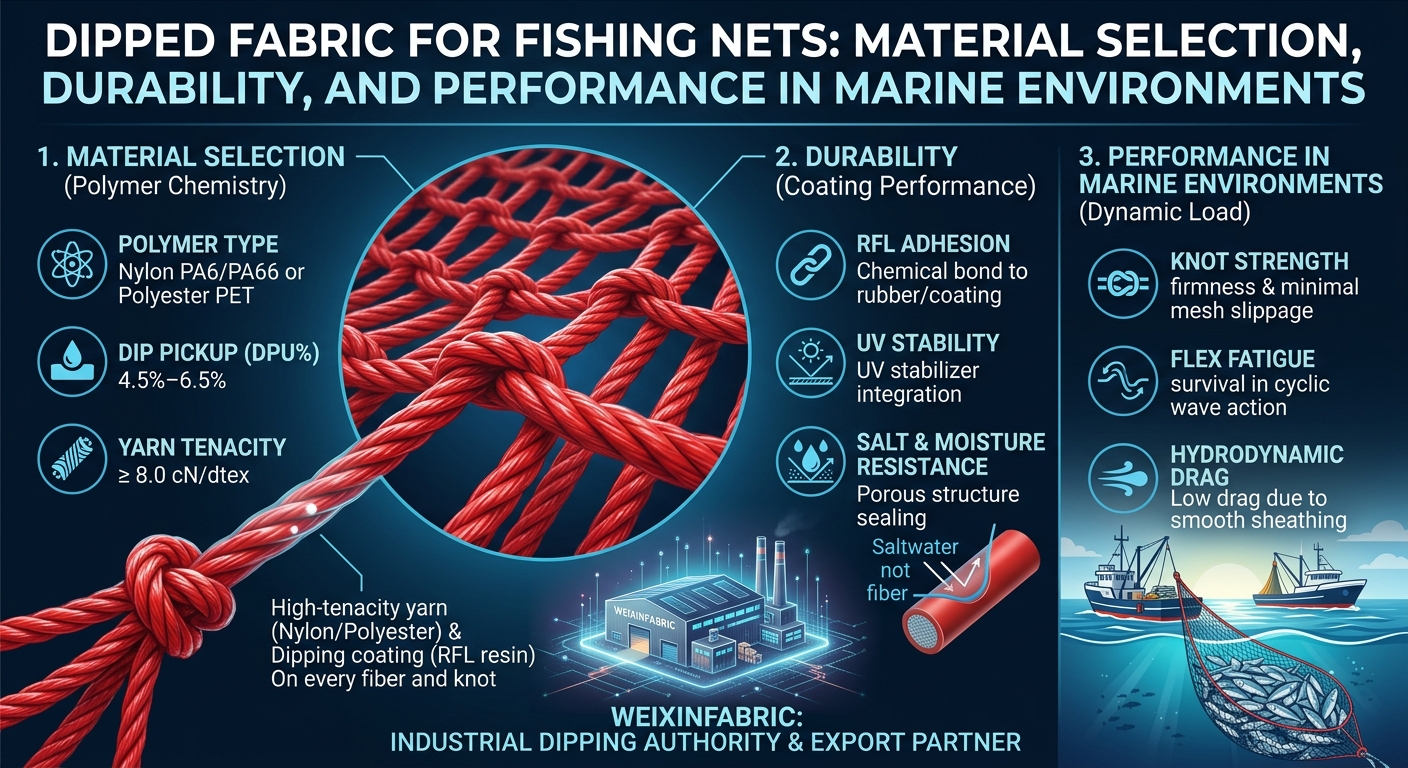
Choosing the right dipped cord fabric for fishing nets is a critical decision that impacts catch efficiency, net longevity, and operational costs. The two dominant materials — polyester (PET) and nylon (polyamide) — each offer distinct advantages and trade-offs. For commercial fisheries and net manufacturers, the key performance factors are UV resistance and knot strength, alongside moisture absorption and abrasion resistance. This article provides a data-driven comparison to help you select the optimal material for your specific fishing application.
1. Understanding the Marine Environment Challenge
Fishing nets operate in one of the most demanding environments on earth. They endure:
- Intense UV radiation: Continuous sunlight exposure degrades polymer chains.
- Saltwater immersion: Constant moisture affects strength and dimensional stability.
- Dynamic loading: Sudden stress from fish strikes and hauling operations.
- Abrasion: Contact with seabed, rocks, and other vessels.
The dipped cord fabric must resist these forces while maintaining knot integrity — the most vulnerable point in any net structure.
2. UV Resistance: Polyester vs Nylon
UV radiation is the primary cause of fishing net degradation. Both materials degrade when exposed to sunlight, but at very different rates:
- Polyester (PET): Contains aromatic rings in its molecular structure that absorb UV energy without breaking the polymer backbone. After 500 hours of accelerated UV exposure (simulating one year of tropical sun), polyester retains 85-90% of its original strength.
- Nylon (Polyamide): The amide groups in nylon are more susceptible to UV-induced chain scission. After the same exposure, nylon retains only 50-65% of its original strength without UV stabilizers, and 70-75% with stabilizers.
For fisheries operating in high-sunlight regions (tropical and subtropical waters), polyester's superior UV resistance provides a significant longevity advantage.
3. Knot Strength: The Critical Performance Factor
In fishing nets, knot strength — the force required to break a knotted cord — is often the limiting factor. Nylon has a natural advantage in knot strength due to its higher elasticity and ability to distribute stress more evenly around the knot.
| Parameter | Polyester (PET) | Nylon (PA) |
|---|---|---|
| Straight Tensile Strength (cN/dtex) | 7.0-8.5 | 7.5-9.0 |
| Knot Strength Retention | 80-85% | 85-92% |
| Elongation at Break | 10-15% | 18-25% |
| Impact Absorption | Moderate | Excellent |
| Knot Slippage Resistance | Good | Excellent |
Nylon's higher elongation (18-25% vs 10-15% for polyester) allows the cord to stretch and absorb shock loads at the knot, reducing the peak stress that causes breakage. This makes nylon the preferred material for trawls, seine nets, and any application involving sudden dynamic loads.
4. Moisture Effects: A Critical Differentiator
Both materials are exposed to continuous moisture in marine environments, but their responses differ dramatically:
- Polyester: Absorbs less than 0.5% moisture by weight. Strength and dimensions remain essentially unchanged in wet conditions. This stability makes polyester ideal for nets that remain deployed for long periods.
- Nylon: Absorbs 3.5-4.5% moisture by weight. Wet strength retention is approximately 85% of dry strength. The absorbed water also causes dimensional changes (swelling), which can affect mesh size consistency.
✅ Polyester Advantages
- Superior UV resistance — retains 85-90% strength after long exposure
- No strength loss in wet conditions — ideal for permanent deployment
- Stable dimensions — consistent mesh size
- Lower cost than nylon
⚠️ Polyester Limitations
- Lower knot strength retention (80-85%)
- Less impact absorption — not ideal for sudden heavy loads
- Less flexible — may be more difficult to knot
✅ Nylon Advantages
- Superior knot strength (85-92% retention) — crucial for net integrity
- Excellent impact absorption — handles sudden loads
- High flexibility — easy to knot and splice
- Excellent abrasion resistance
⚠️ Nylon Limitations
- Susceptible to UV degradation — requires stabilizers or darker colors
- Strength loss when wet (approx. 85% retention)
- Dimensional changes from moisture absorption
- Higher cost than polyester
5. Application Recommendations
🎣 Choose Polyester For:
- Gillnets and trammel nets — long-term deployment in high-UV conditions
- Aquaculture pens and cages — continuous immersion requiring dimensional stability
- Surface nets — constant sunlight exposure
- Cost-sensitive applications — where budget is a primary constraint
🎣 Choose Nylon For:
- Trawls and seine nets — high-impact, dynamic loading conditions
- Deep-sea fishing — where knot strength is critical
- Nets subject to heavy shock loads — sudden fish strikes or snagging
- Applications requiring maximum knot reliability
6. Real-World Case: Indonesian Tuna Fishery
A tuna fishery operating in the tropical waters of Eastern Indonesia tested both materials on identical gillnets over two years. The polyester nets maintained 92% of original strength after 18 months of continuous deployment, while the nylon nets (with UV stabilizers) had dropped to 68% in the same period. However, the nylon nets exhibited fewer knot failures during the first 6 months, demonstrating superior initial knot strength. The fishery ultimately selected polyester for surface gillnets (high UV exposure) and nylon for deep-set nets (higher loads, less UV).
7. Why Weixin Fabric Offers Both Materials
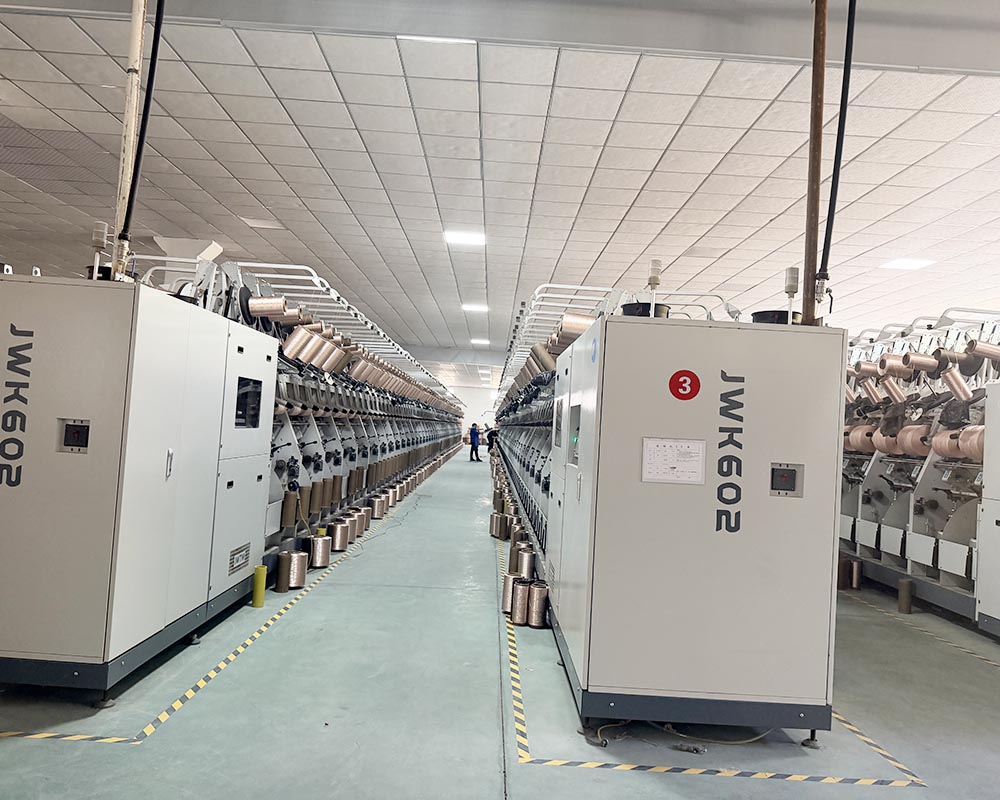
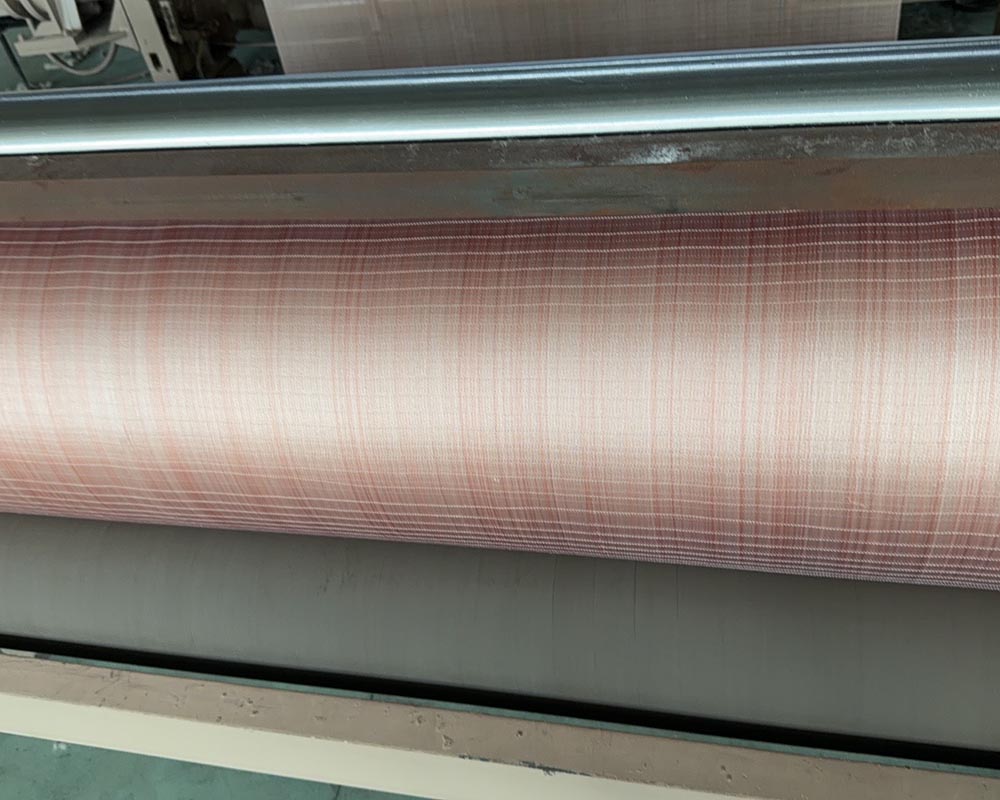
As a specialized manufacturer of dipped cord fabric for fishing nets, Weixin Fabric supplies both high-quality polyester and nylon options. Our dipping process ensures:
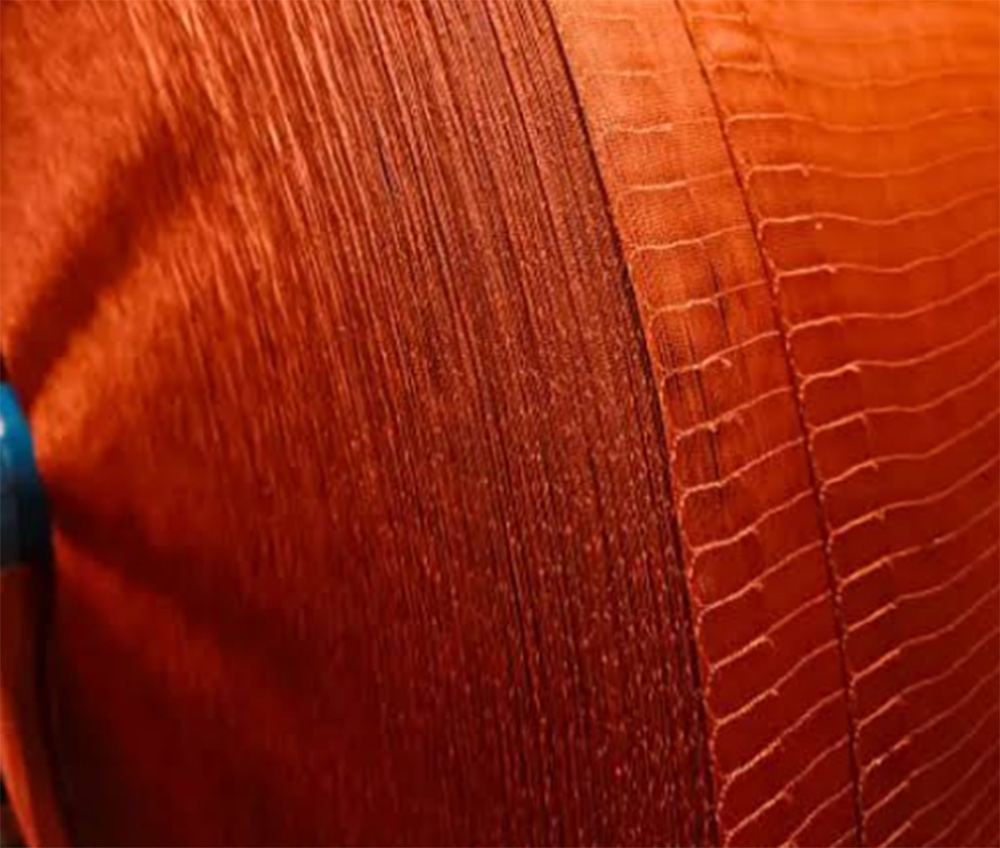
- Uniform RFL coating — consistent adhesion and UV protection
- Precision tension control — uniform properties across every meter
- UV stabilizers available — for enhanced nylon UV resistance
- Full test reports — UV retention, knot strength, and tensile data for every batch
Whether your priority is long-term UV resistance or maximum knot strength, Weixin Fabric has the dipped cord solution to match your fishing requirements.