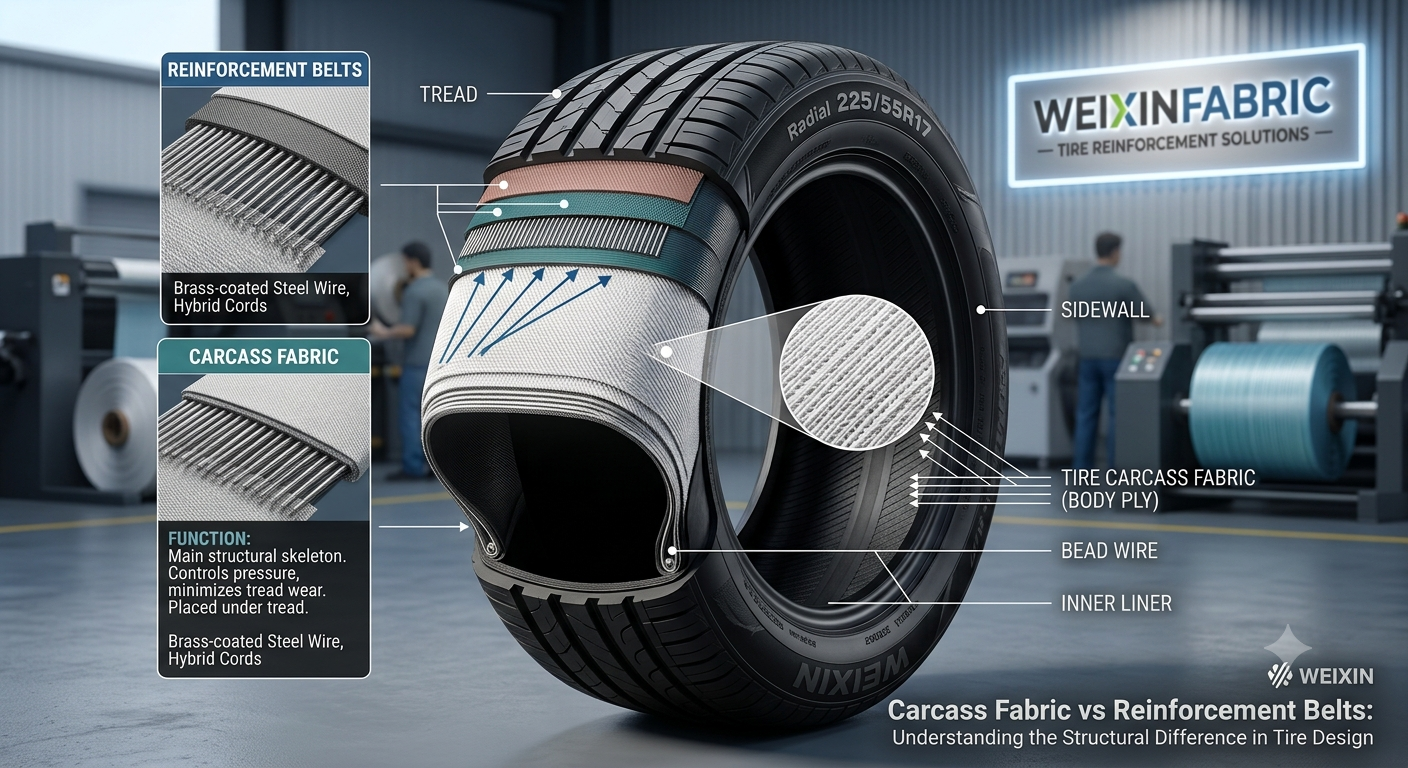
Carcass Fabric vs Reinforcement Belts: Understanding the Structural Difference in Tire Design
Modern automotive tires are complex engineering marvels composed of elastomeric compounds, chemical additives, and high-tenacity textile and metallic reinforcements. While a tire may appear to be a single piece of molded rubber, its mechanical performance, load capacity, and high-speed stability are governed by internal structural components.
Among these internal layers, two critical components are frequently confused: Carcass Fabric (Body Plies) and Reinforcement Belts (Breaker Belts). Although both serve to reinforce the rubber matrix, they differ fundamentally in material composition, structural placement, mechanical orientation, and operational purpose.
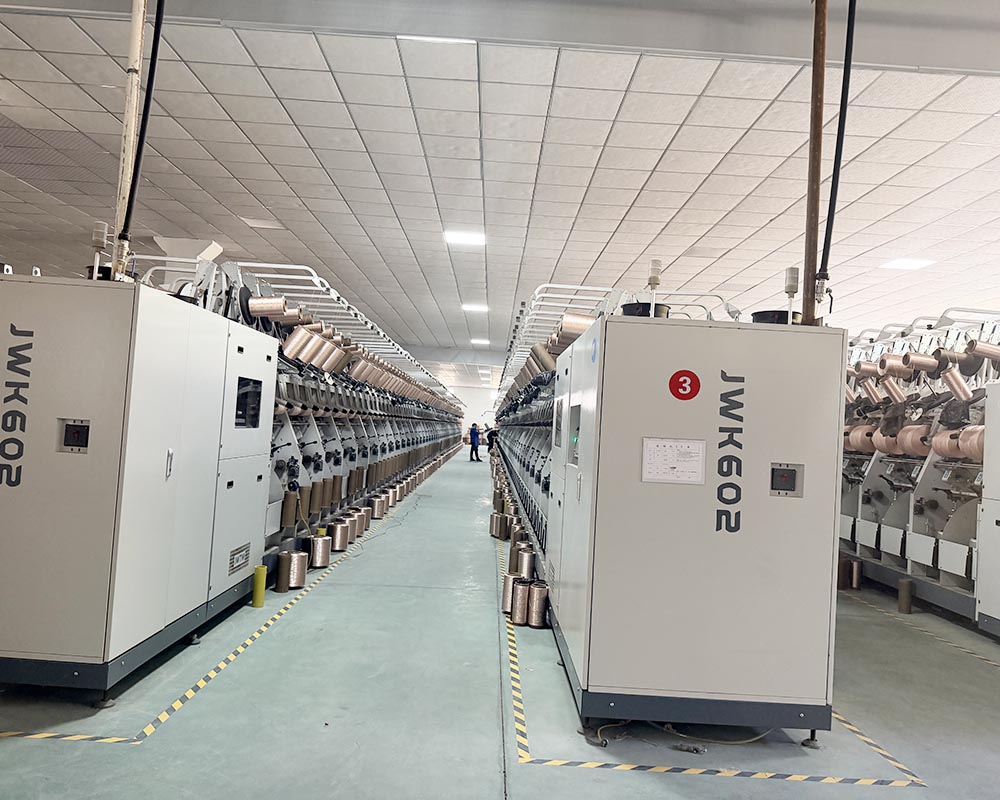
As a specialized Chinese manufacturer of high-performance tire carcass fabrics, Weixin Fabric provides this technical analysis to clarify the structural distinction between these two key layers and demonstrate how engineered fabric solutions drive modern tire durability.
1. What Is Tire Carcass Fabric?
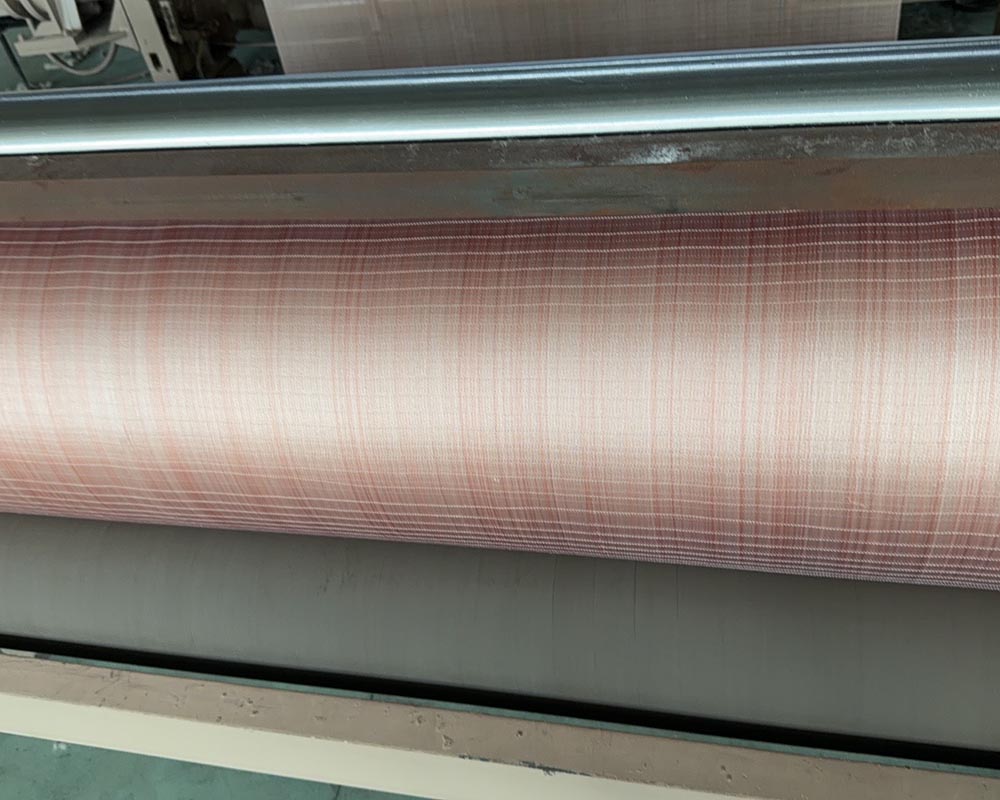
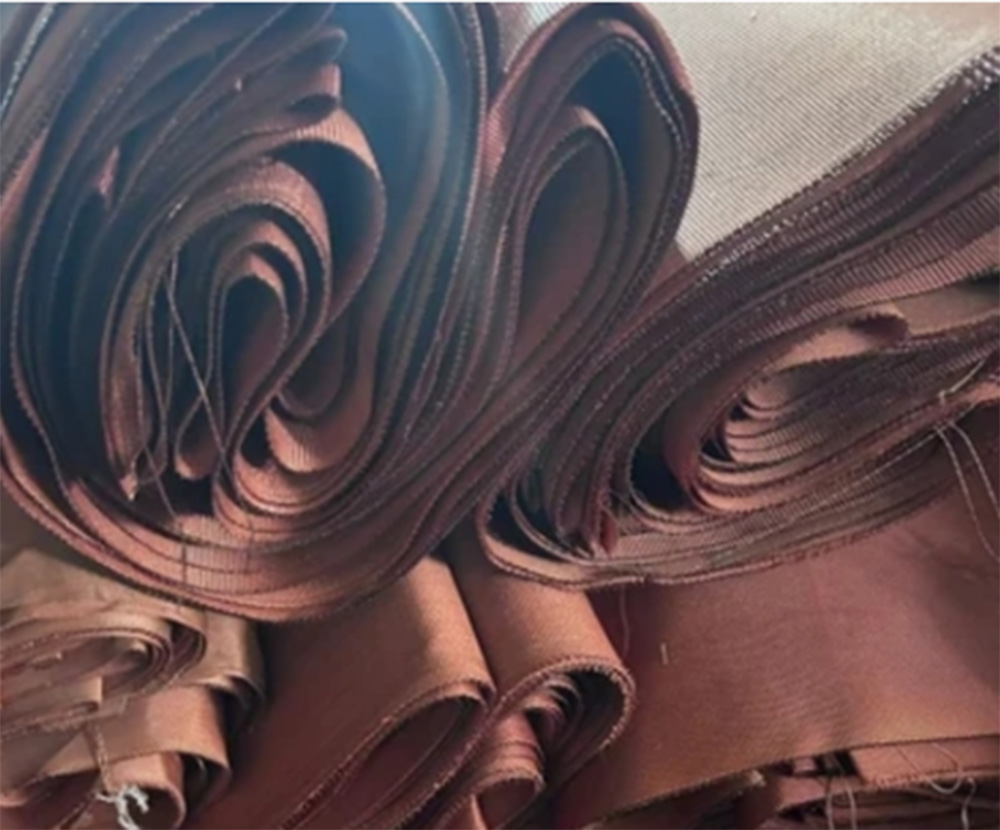
The carcass fabric—also known as the body ply or tire cord fabric— forms the inner structural framework of the tire. It wraps around the bead wires at the inner rim and extends continuously across the sidewalls and under the crown area.
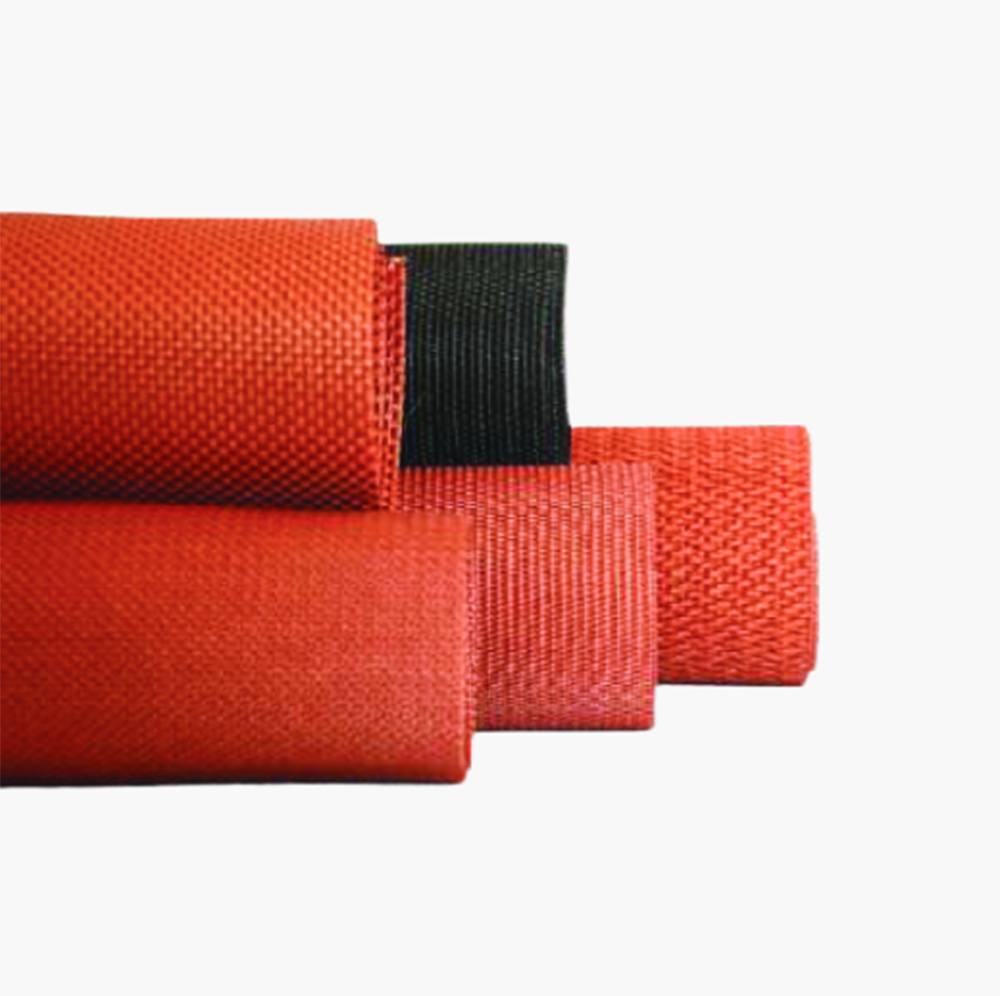
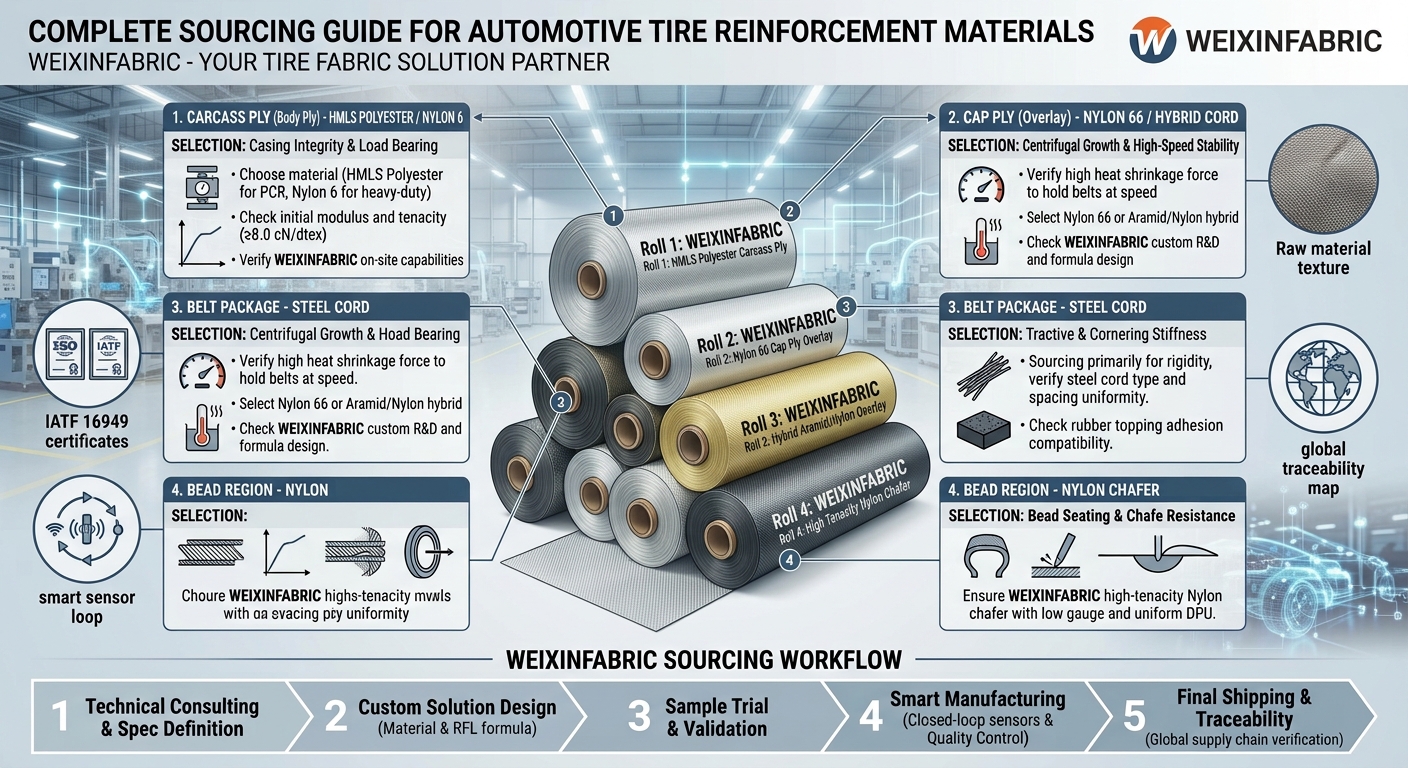
Fabricated primarily from high-tenacity synthetic filament yarns such as Dipped Polyester (HMLS), Nylon 6, and Nylon 66, carcass fabric functions as a flexible pressure vessel. Its primary responsibilities include:
- Containing Internal Inflation Pressure: Withstanding burst pressure under heavy vehicle loading and extreme temperatures.
- Providing Sidewall Flexibility: Absorbing road impacts, bumps, and lateral flexing without permanent deformation.
- Fatigue & Flex Resistance: Resisting millions of cyclical flexural deformations over the tire's operational lifespan.
2. What Are Reinforcement Belts?
Positioned directly beneath the tread rubber and above the carcass plies, reinforcement belts (commonly referred to as steel belts or crown breakers) are narrow layers designed to provide circumferential rigidity across the tread area.
In modern radial passenger and commercial tires, reinforcement belts are typically constructed from high-tensile brass-coated steel cords or high-modulus aramid/hybrid fabrics. Their core functions include:
- Stabilizing the Tread Footprint: Preventing tread squirm and maintaining maximum contact area with the road surface during high-speed cornering.
- Puncture Protection: Shielding the inner carcass and air chamber from sharp debris and road hazards.
- Improving Wear Resistance: Ensuring uniform pressure distribution across the tread width to prevent irregular tread wear.
3. Comparative Structural Analysis: Carcass Fabric vs. Belts
To understand how tire designers balance flexibility and rigidity, the table below highlights the key technical differences between carcass fabric and reinforcement belts:
| Parameter | Tire Carcass Fabric | Reinforcement Belts |
|---|---|---|
| Primary Materials | Dipped Polyester (HMLS), Nylon 6, Nylon 66 | High-Tensile Steel Cord, Aramid, Hybrid Cord |
| Structural Location | Inner casing layer wrapping from bead to bead | Crown area, localized directly underneath the tread |
| Cord Angle / Orientation | 90 degrees (Radial) or 30–45 degrees (Bias) | 15 to 25 degrees relative to circumferential direction |
| Primary Stress Vector | Radial tension, inflation hoop stress, side bending | Circumferential shear stress, lateral cornering force |
| Mechanical Profile | High fatigue resistance, high flexibility, elasticity | High modulus, extreme tensile stiffness, low elongation |
| Chemical Interface | RFL (Resorcinol-Formaldehyde-Latex) dipped coating | Brass plating with sulfur/cobalt vulcanization bonding |
4. Synergistic Performance in Radial Tire Design
In modern radial tires, the carcass fabric and reinforcement belts do not work in isolation; they function as a synergistic dynamic system:
- The Radial Carcass (90-Degree Plies): Allows the sidewall to flex freely, producing a smooth ride and lower rolling resistance.
- The Belt Package (Low-Angle Belts): Restrains the carcass radially, preventing radial growth at high rotational speeds and stabilizing the contact patch.
If the carcass fabric lacks sufficient tensile modulus or dynamic fatigue endurance, the interface between the top carcass layer and the steel belt will experience inter-layer delamination, leading to premature tire failure.
5. Weixin Fabric: Engineered Tire Carcass Solutions for Global Manufacturers
At Weixin Fabric, we specialize exclusively in the research, development, and high-precision manufacturing of premium automotive tire carcass fabrics. Our advanced production capabilities address the strict structural demands of global tire OEMs:
- HMLS Polyester Carcass Fabrics: Engineered for minimal thermal shrinkage and superior dimensional stability in high-speed passenger car radial (PCR) tires.
- High-Tenacity Nylon 6 & Nylon 66 Fabrics: Customized linear densities (including 840D, 1260D, 1680D, and 1890D) optimized for heavy truck tires, OTR mining casings, and agricultural tires.
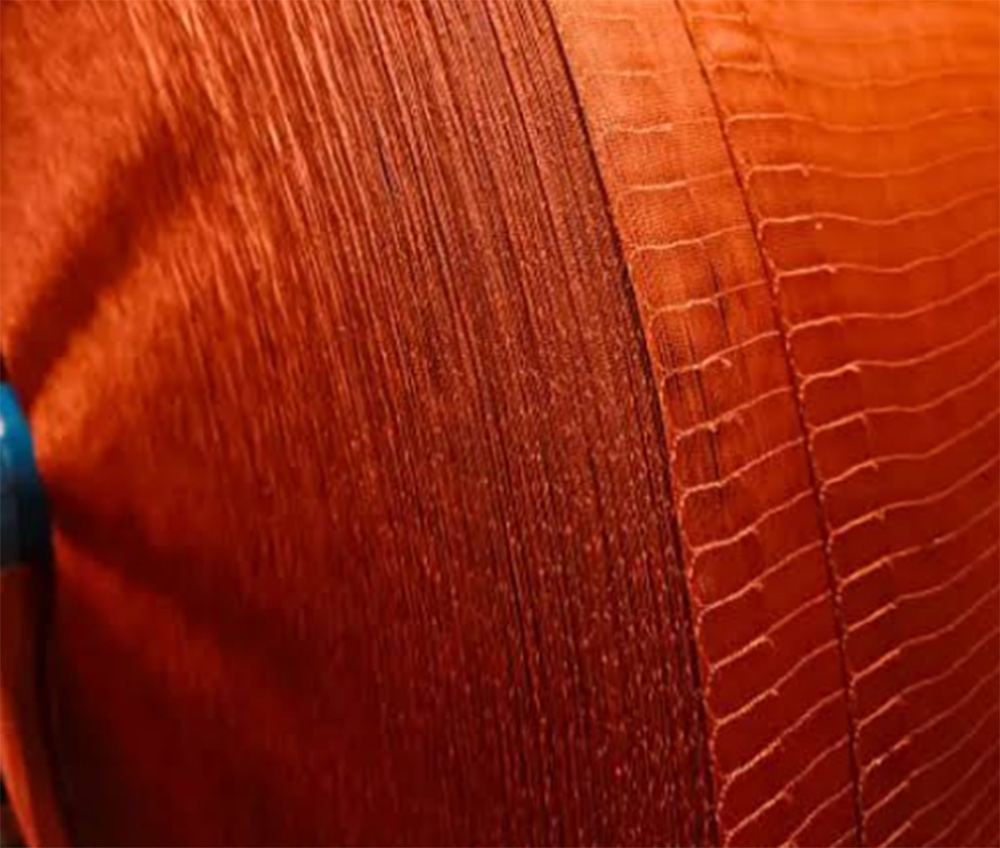
- State-of-the-Art RFL Dipping Technology: Precision dip formulation ensuring ultra-high rubber adhesion, thermal degradation resistance, and extended dynamic fatigue life.
- EV-Optimized Carcass Reinforcement: Tailored fabric constructions designed to handle the higher torque, instant acceleration, and extra battery mass of Electric Vehicles (EVs).