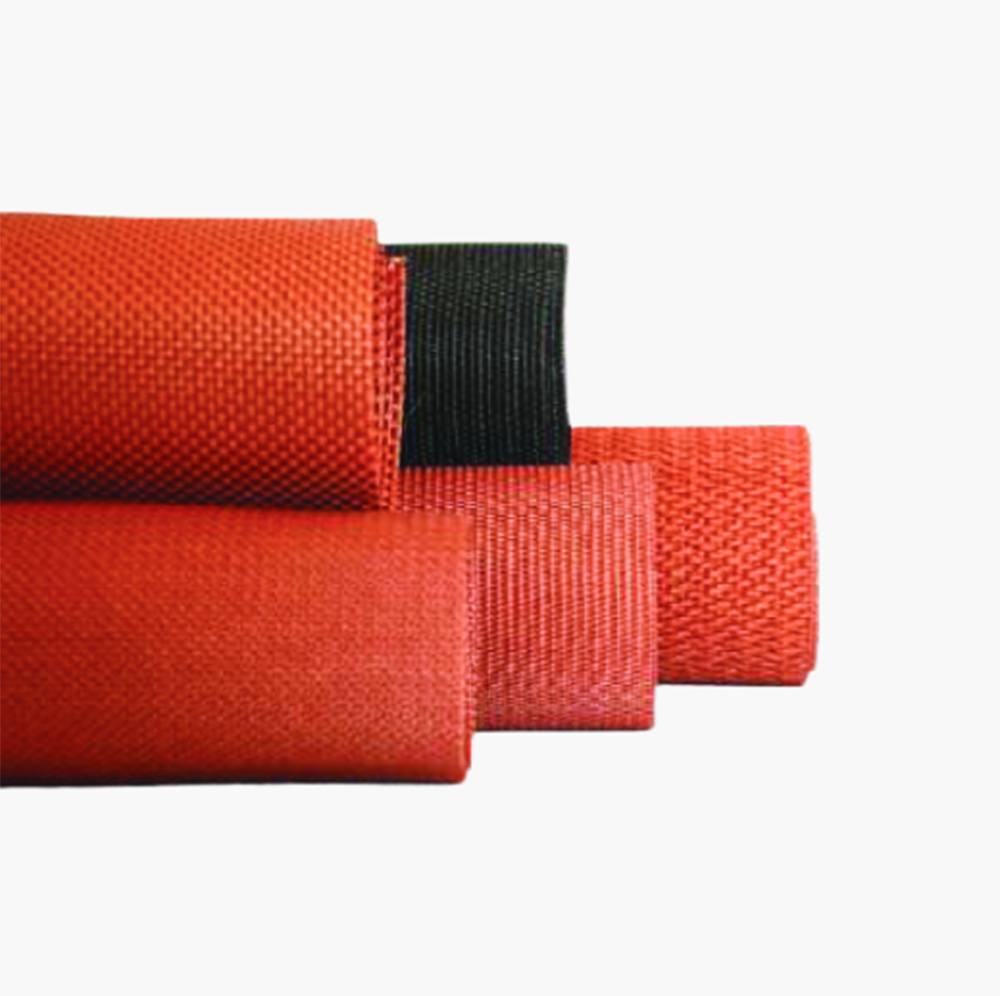
Case Study: Developing High-Tenacity Dipped Nylon Fabric for Deep-Sea Trawl Net Applications
An In-Depth Engineering Analysis on Textile Construction, Resorcinol-Formaldehyde-Latex (RFL) Encapsulation, and Hydrodynamic Drag Optimization
1. Executive Summary & Operational Context
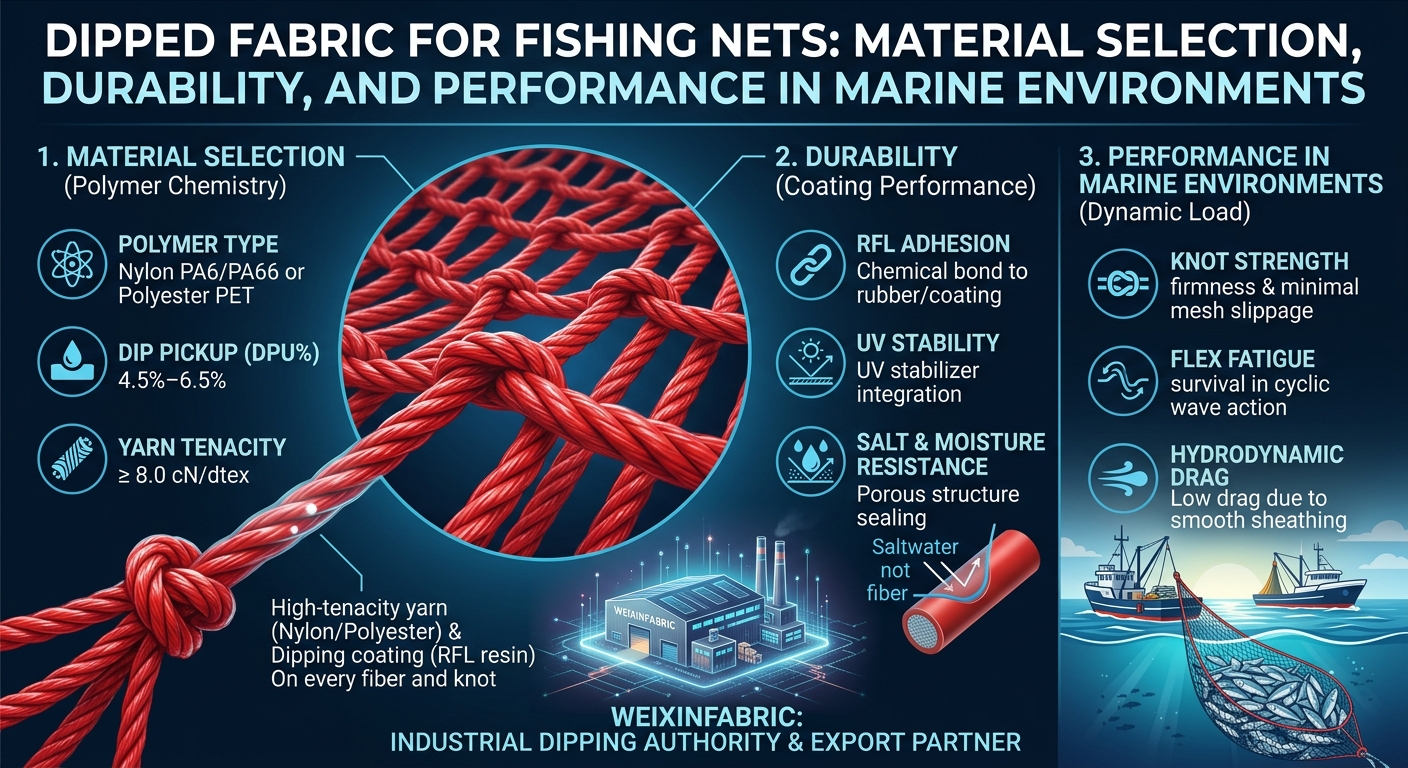
Commercial deep-sea trawling operations present one of the most mechanically grueling operating environments for industrial textiles. Trawl net codends and wing bodies deployed at ocean depths exceeding 500 meters face severe hydrodynamic drag, cyclic dynamic surge loads, sand-slurry seabed abrasion, and immense hydrostatic pressures. Standard un-dipped or improperly treated synthetic netting yarns rapidly exhibit mechanical fatigue, yarn-on-yarn friction breakdown, mesh distortion, and knot slippage, leading to costly gear structural failure and reduced catch efficiency.
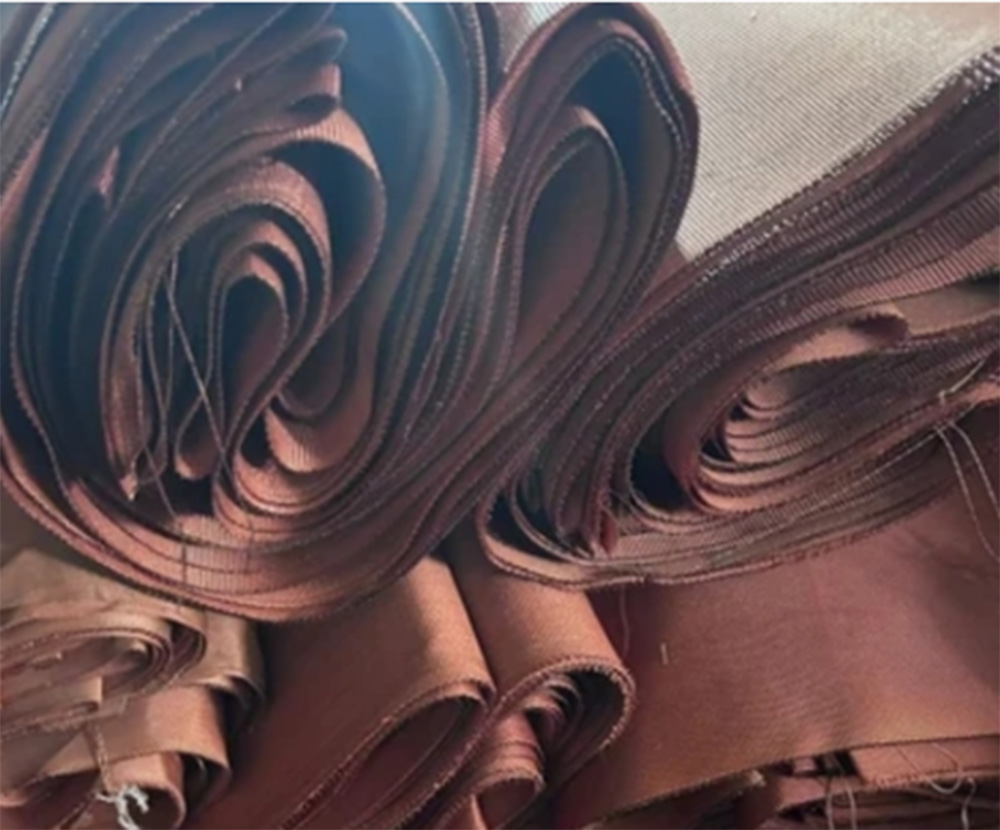
This case study demonstrates how Weixin Fabric—a leading Chinese manufacturer of high-tenacity industrial dipped fabrics and tire cord fabrics—engineered a custom high-tenacity dipped Nylon 66 (PA66) textile solution specifically tailored for deep-sea trawl netting. By combining high-tenacity polyamide fibers with balanced S/Z yarn twisting geometries and a proprietary cross-linked Resorcinol-Formaldehyde-Latex (RFL) surface encapsulation matrix, Weixin Fabric delivered a marine reinforcement fabric that enhances mesh stability, minimizes hydrodynamic towing drag, and significantly extends operational service life.
2. Technical Challenges in Deep-Sea Marine Environments
Oceanographic gear engineers face multifaceted physical degradation mechanisms when specifying industrial textiles for midwater and bottom trawling:
- Hydrodynamic Towing Drag: Water resistance increases exponentially with towing speed and net surface area. Bulky, rough yarns increase vessel fuel consumption and strain towing winches.
- Inter-Filament Frictional Wear: Continuous wave surges and turbulent towing action cause internal filament-on-filament abrasion within raw yarn bundles, weakening load-bearing cores.
- Seabed & Sand-Slurry Friction: Bottom trawl codends dragging along ocean floors encounter harsh sand particle abrasion, necessitating protective elastomeric outer sheaths.
- Saltwater Crystallization & UV Degradation: Evaporated seawater leaves micro-crystals between fiber bundles that act as internal cutting edges, while solar UV radiation triggers photo-oxidative polymer chain scission during deck handling.
3. Polymer Engineering & Fiber Architecture Selection
Selecting the optimal base polymer substrate dictates mechanical flexibility, wet tensile strength, and creep resistance. Un-dipped fibers lose structural integrity under continuous load, making high-tenacity Nylon 66 (PA66) the preferred primary substrate for heavy-duty trawl applications due to its higher melting point, superior hydrogen bonding, and lower dynamic creep rate compared to standard Nylon 6 (PA6) or Polyester (PET).
| Polymer Substrate | Tenacity (cN/dtex) | Elongation at Break | Wet Strength Retention | Primary Marine Application |
|---|---|---|---|---|
| Dipped Nylon 66 (PA66) | 8.5 – 9.2 | 18% – 22% | 90% – 95% | Deep-sea bottom trawling, heavy codends, pelagic borders |
| Dipped Nylon 6 (PA6) | 7.8 – 8.4 | 22% – 26% | 85% – 90% | General commercial gillnets, purse seines, aquaculture cages |
| Dipped HMLS Polyester (PET) | 7.2 – 7.8 | 12% – 16% | 100% | Low-drag rigid aquaculture netting, anti-predator barriers |
Yarn Construction & Twist Multiplier Dynamics
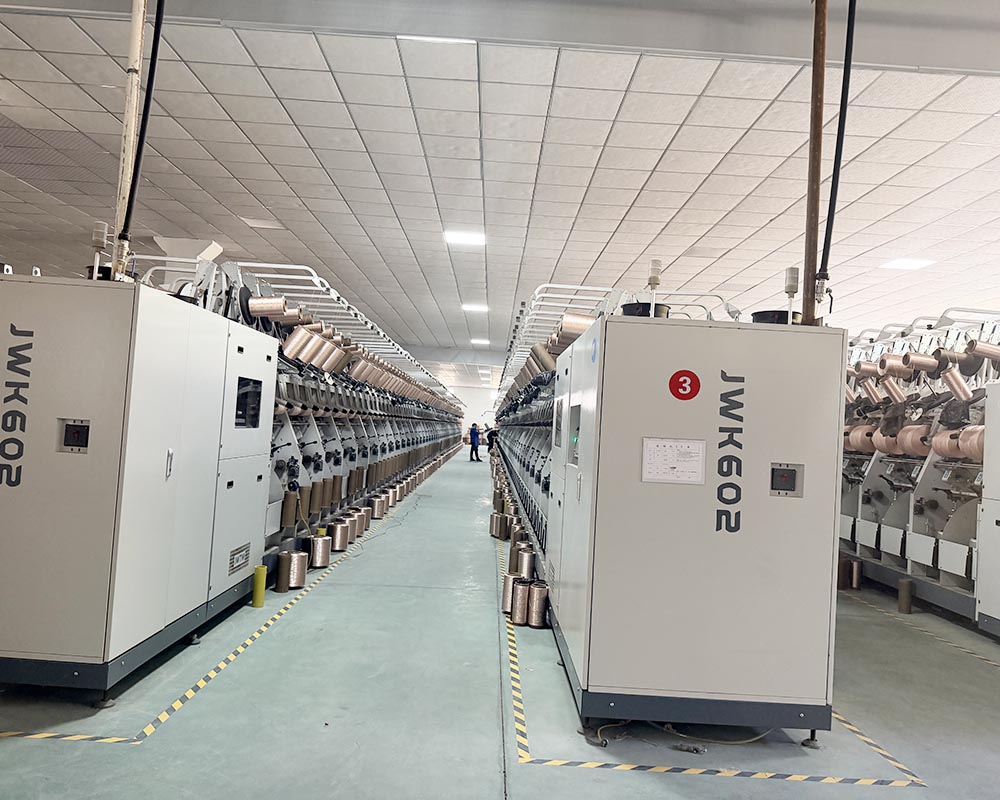
Continuous filament yarn bundles are engineered into compact structural cords using precision multi-stage twisting machinery. The twist level (Turns Per Meter - TPM) governs compactness and hydrodynamic profile:
Twist Multiplier Formula: TM = TPM × √(dtex / 1000) / 100
Weixin Fabric utilized a balanced S/Z construction (primary single-yarn S-twist combined with plied Z-twist cordage) to prevent cord torque and spiraling during deployment. Higher twist compactness minimizes water pickup and reduces boundary-layer fluid drag by yielding a round, smooth cord cross-section.
4. Advanced Chemical Dipping & Surface Encapsulation
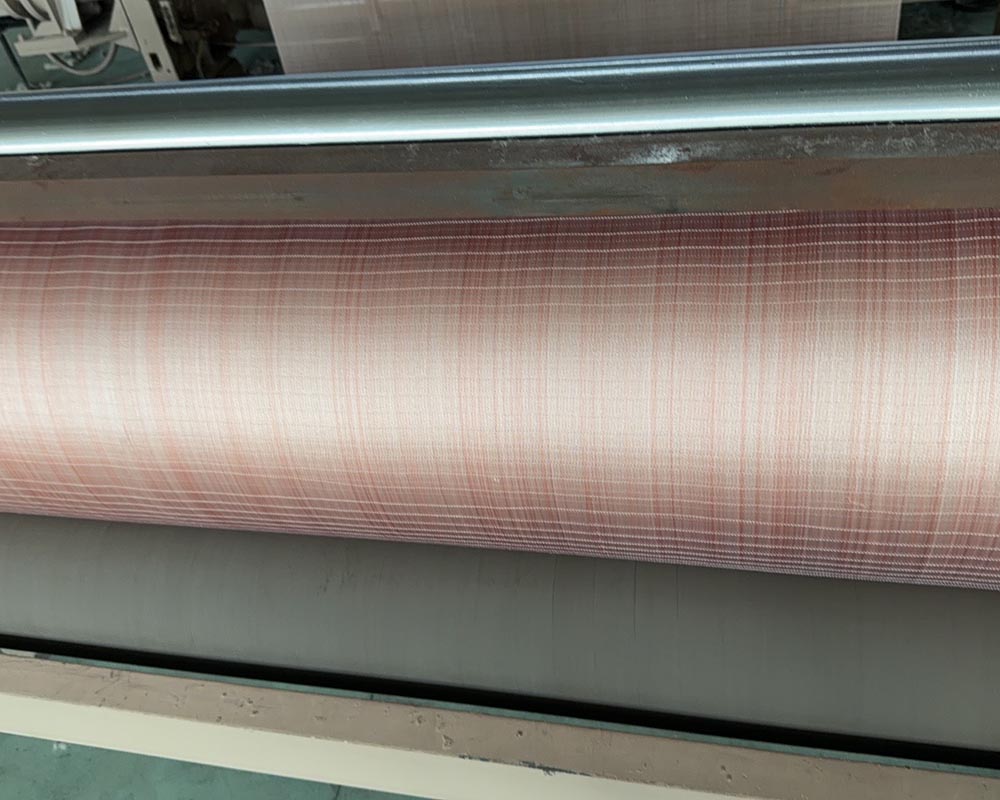
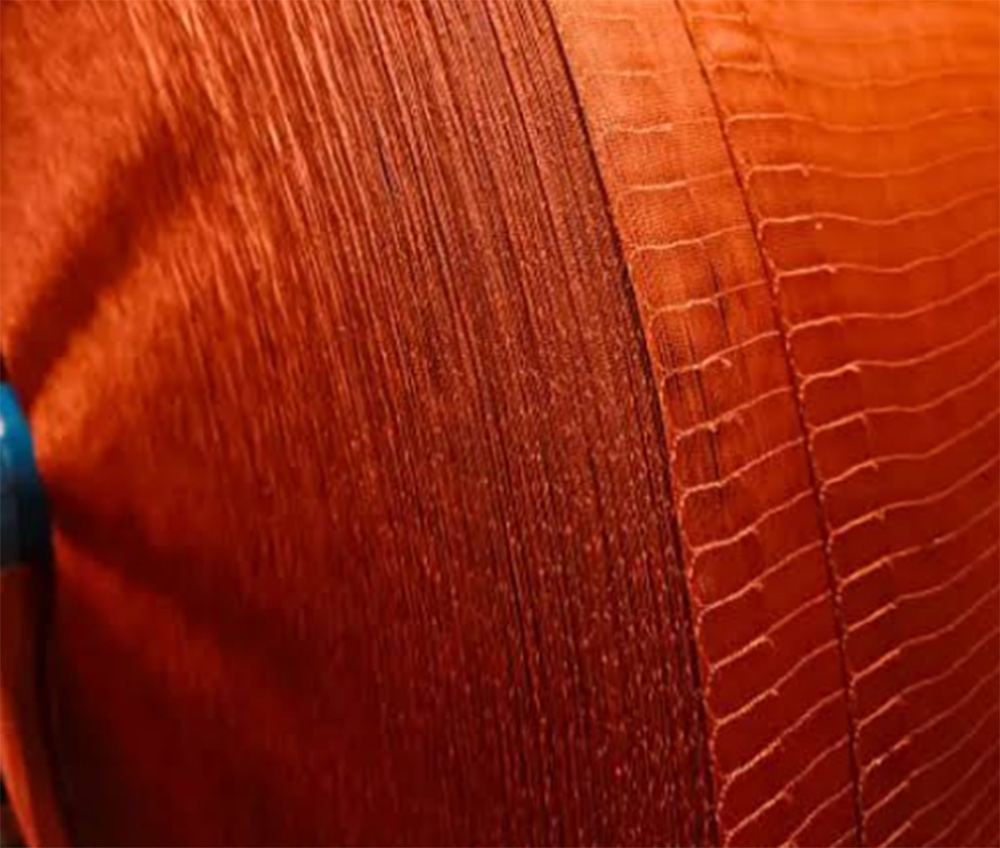
Raw synthetic filaments cannot withstand prolonged marine friction without specialized surface chemistry. Weixin Fabric applied a continuous aqueous chemical dipping process using a customized Resorcinol-Formaldehyde-Latex (RFL) resin matrix blended with specialized acrylic elastomers and Hindered Amine Light Stabilizers (HALS).
Key Coating Functions & Surface Chemistry:
- Filament Encapsulation: The RFL dip thoroughly penetrates continuous filament bundles, bonding individual fibers into a cohesive unit that eliminates internal yarn-on-yarn friction.
- Cross-Linked Hydrophobic Barrier: Creates a non-porous outer sheath that prevents seawater ingress, reducing net water logging weight by up to 25%.
- Knot & Cross-Point Stabilization: Computer-controlled multi-zone heating chambers thermo-fix the dip, locking mesh intersections permanently to prevent knot slippage during multi-ton fish lifts.
- UV & Anti-Fouling Protection: Dispersed carbon black within the latex matrix absorbs solar radiation, preventing photo-oxidative degradation during deck handling.
5. Hydrodynamic Drag Calculation & Mechanical Testing Results
Hydrodynamic drag force (FD) imposed on trawl netting submerged in ocean currents is evaluated using the standard hydrodynamic drag equation:
FD = ½ · ρ · v2 · CD · A
Where ρ represents fluid seawater density (1025 kg/m3), v is towing velocity in m/s, CD is the hydrodynamic drag coefficient, and A is the projected frontal surface area of the netting cordage.
By engineering a lower cord diameter while maintaining superior tensile breaking force through precision dipping and heat setting, Weixin Fabric reduced both the drag coefficient (CD) and projected area (A), producing an overall 18% reduction in hydrodynamic drag during flume tank testing.
Laboratory Verification & Standardized Testing
| Test Parameter | Standard Protocol | Raw Nylon 66 | Weixin Dipped Nylon 66 | Performance Improvement |
|---|---|---|---|---|
| Wet Breaking Strength | ISO 1805 / ASTM D2256 | 78.5 kN | 89.2 kN | +13.6% Tensile Strength |
| Taber Sand-Slurry Abrasion | ASTM D3884 modified | 1,200 cycles | 3,800 cycles | +216.6% Wear Lifespan |
| QUV Accelerated Weathering (1000h) | ASTM G154 / HALS | 62% strength retain | 94% strength retain | +32.0% UV Stability |
| Knot Slippage Under Dynamic Load | ISO 3790 dynamic pulse | Slippage observed | Zero slippage | Fully Stabilized |
6. Commercial Impact & Field Performance
Field deployments with commercial ocean trawling fleets operating in the North Atlantic and Pacific fishing grounds validated laboratory results:
- Reduced Operational Fuel Consumption: Trawlers equipped with Weixin Fabric dipped trawl netting recorded an average fuel savings of 6.5% to 8.2% per towing cycle due to lower hydrodynamic drag.
- Extended Net Replacement Cycle: Netting working service life increased from an average of 8 months to over 22 months before requiring structural repair or re-dipping.
- Consistent Mesh Geometry: Codends maintained pristine dimensional stability even under maximum catch loads exceeding 45 metric tons.
7. Why Partner with Weixin Fabric as Your Dipped Textile Expert
As an industry-leading Chinese manufacturer specializing in high-tenacity industrial dipped fabrics, tire cord fabrics, and customized marine reinforcement textiles, Weixin Fabric integrates advanced multi-stage twisting equipment, tension-controlled weaving looms, and computer-automated continuous chemical dipping lines with comprehensive laboratory testing.
Our engineering team offers tailored structural design across dip pick-up percentages (DPU %), resin hardness profiles, specialized color coding, linear densities (Denier/dtex), and yarn twist balances to meet exact global procurement specifications.