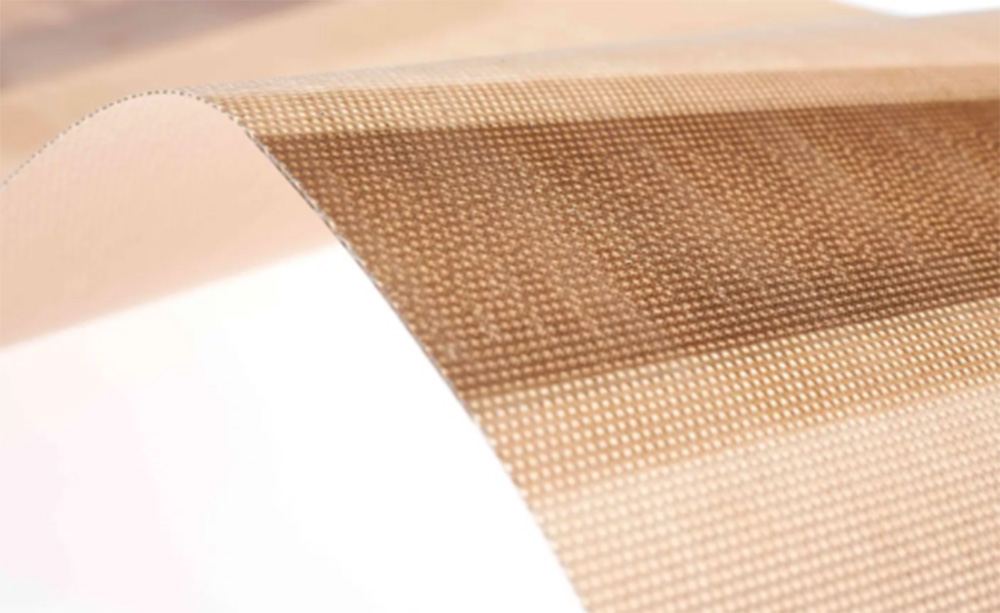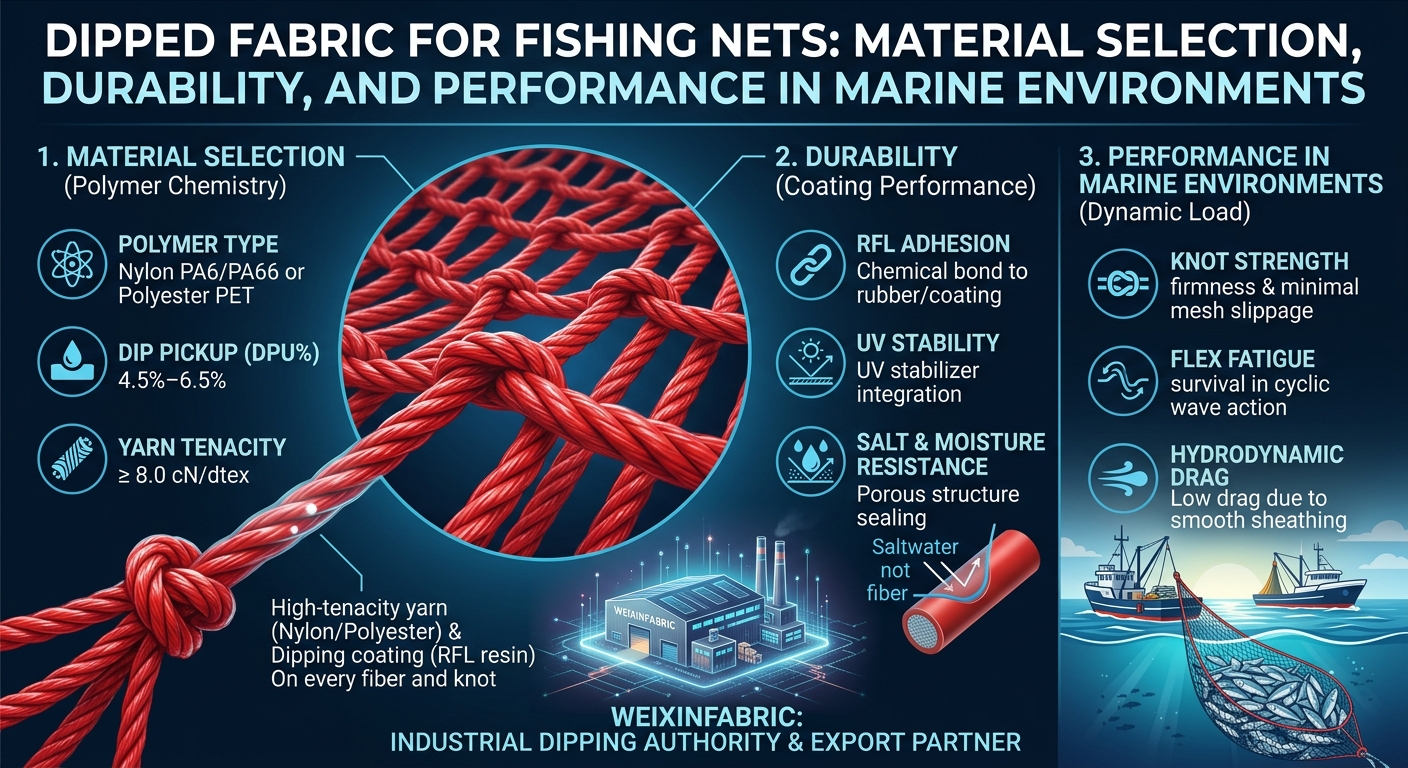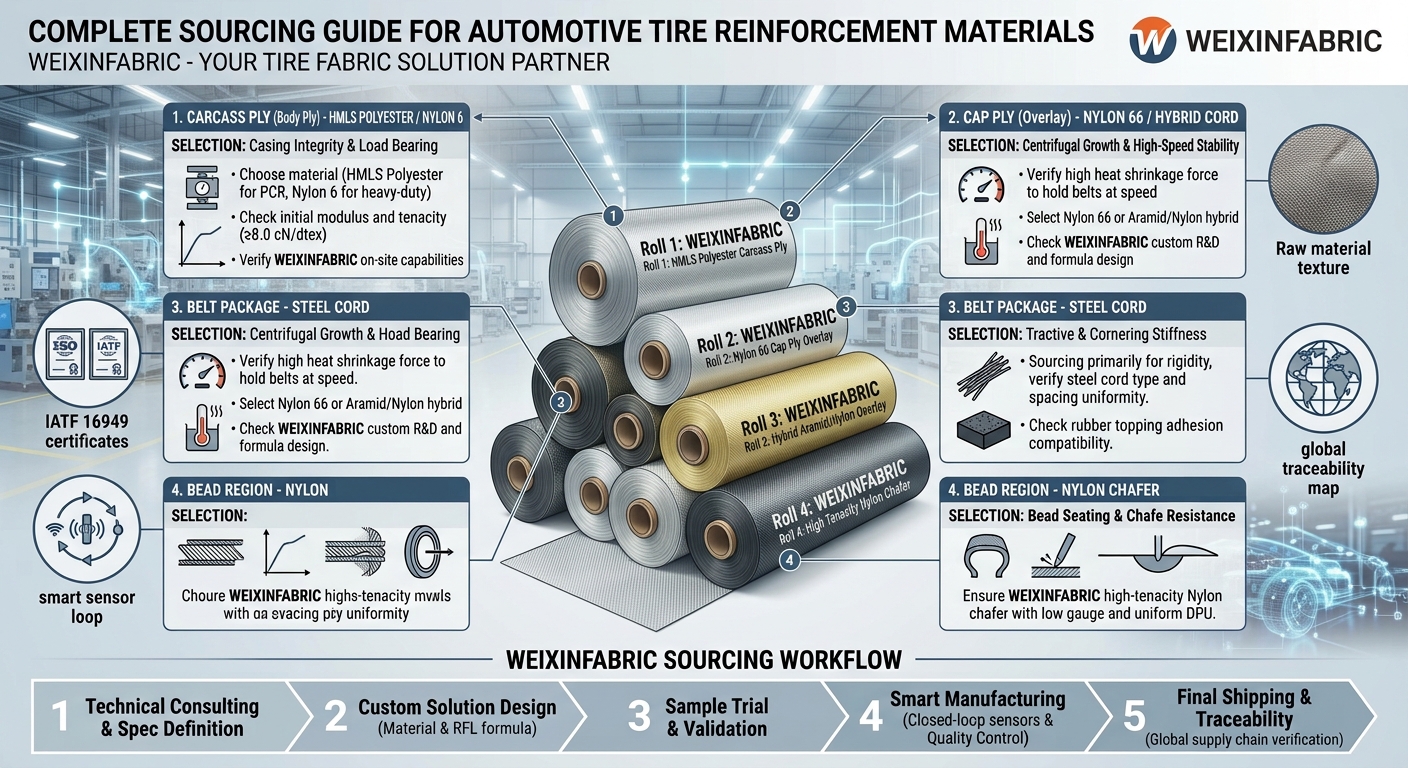
Dipped Fabric for Lightweight Conveyor Belts: Design Principles and Material Innovations
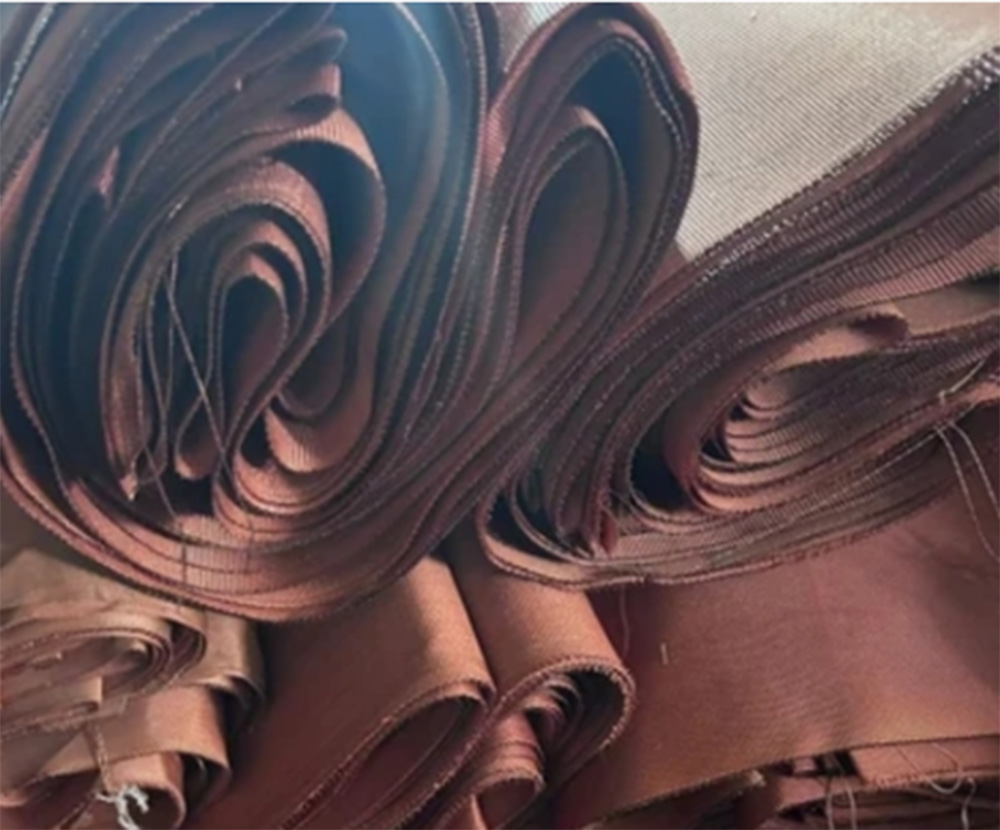
Dipped Fabric for Lightweight Conveyor Belts: Design Principles and Material Innovations
Technical Engineering & Industrial Textile Architecture Guide by Weixin Fabric
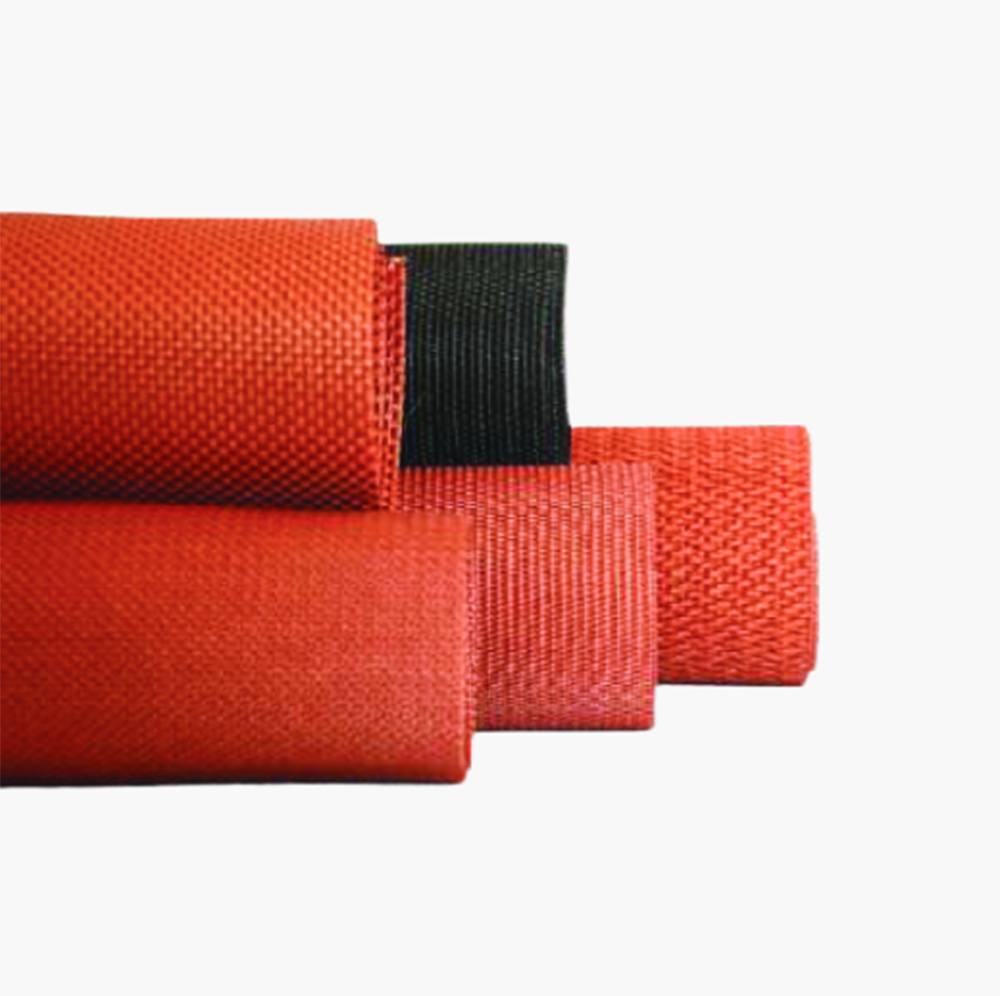
Executive Summary: Modern lightweight conveyor belt systems—widely deployed in automated logistics, express sorting hubs, food processing lines, electronics assembly, and light industrial manufacturing—require carcass reinforcement fabrics that deliver low longitudinal stretch, high lateral rigidity, minimal thermal shrinkage, and robust interlayer peel strength. Uncoated or sub-optimally treated synthetic fabrics suffer from belt curling, ply delamination, and rapid elongation under continuous flexural fatigue.
This technical white paper explores core structural design principles, synthetic polymer selection matrices, dipping adhesion chemistry, and manufacturing innovations required to produce high-performance dipped fabrics for lightweight conveyor belting. As an established industrial dipping authority and tire cord fabric specialist, Weixin Fabric engineers custom Nylon (PA6/PA66) and Polyester (EP/EE) dipped fabrics tailored for demanding automated belt systems worldwide.
1. Material Selection Matrix for Lightweight Conveyor Belt Carcasses
Selecting the optimal synthetic polymer combination for warp and weft yarns dictates the tensile load behavior, troughability, lateral stiffness, and impact resistance of the conveyor belt:
2. Dipping Chemistry & Interlayer Adhesion Mechanics
In lightweight belting (utilizing PVC, TPU, PU, or rubber covers), raw synthetic fibers cannot establish strong direct chemical bonds with cover polymers. Chemical dipping creates a durable molecular bridge:
Resorcinol-Formaldehyde-Latex (RFL) Formulations: Engineered RFL dipping baths react with functional polymer groups on synthetic yarns, forming a resilient cross-linked matrix that bonds seamlessly to elastomeric covers during vulcanization or lamination.
Isocyanate & Epoxy Activation Primers: High-modulus polyester (PET) yarns utilize dual-stage dipping with epoxy micro-emulsions and blocked polyisocyanates to activate inert fiber surfaces, securing peel strength values exceeding 10 N/mm.
Specialty Resin Sheathing for TPU & PVC Belts: Custom water-based polyurethane and acrylic resin dip formulations prevent ply delamination during continuous small-pulley flexing and high-frequency edge rubbing.
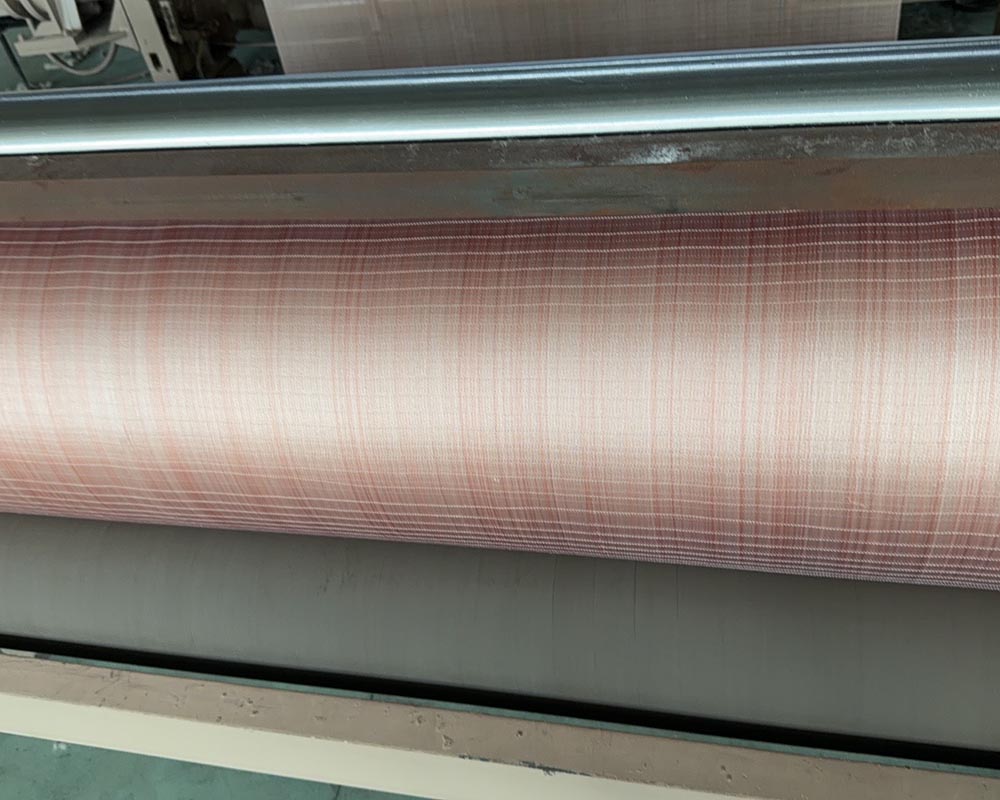
Dip Pick-Up (DPU %) Precision Control: Exact regulation of DPU percentage ensures total filament encapsulation without stiffening the fabric core, maintaining optimum belt flexibility and crease recovery.
3. Thermo-Fixation & Dimensional Stability Engineering
Lightweight conveyor belts must operate smoothly on automated rollers without belt snaking, warping, or stretching. Thermal processing controls yarn behavior under tension:
Controlled Heat-Setting (Stenter Processing): Passing dipped fabrics through multi-zone hot-air drying ovens under strict tension control locks the warp density and eliminates residual thermal shrinkage.
Low-Elongation Warp Tensioning: Pre-stretching high-tenacity yarns during the dipping phase yields a high initial modulus, keeping belt take-up stroke adjustments to a minimum throughout operational life.
Anti-Curling & Flatness Control: Precise balancing of warp and weft tension during thermo-fixation ensures flat laying properties essential for high-speed automated logistics belts and knife-edge transfers.
4. Material Innovations Driving Next-Generation Belting
Advancements in lightweight conveyor system automation require continuous textile structural innovation:
Energy-Saving Low-Friction Weaves: Incorporating low-drag bottom surface weaving patterns reduces slider bed friction, cutting motor power consumption by up to 15%.
Flame-Retardant & Anti-Static Dipping: Integrating conductive carbon micro-particles and halogen-free flame retardants into dip matrices ensures compliance with ISO 284 anti-static and EN 12882 safety standards.
Food-Grade Compliant Coatings: Formulating non-toxic dipping recipes compliant with FDA and EU food contact regulations for hygienic food processing belts.
5. Why Partner with Weixin Fabric for Industrial Dipped Fabrics
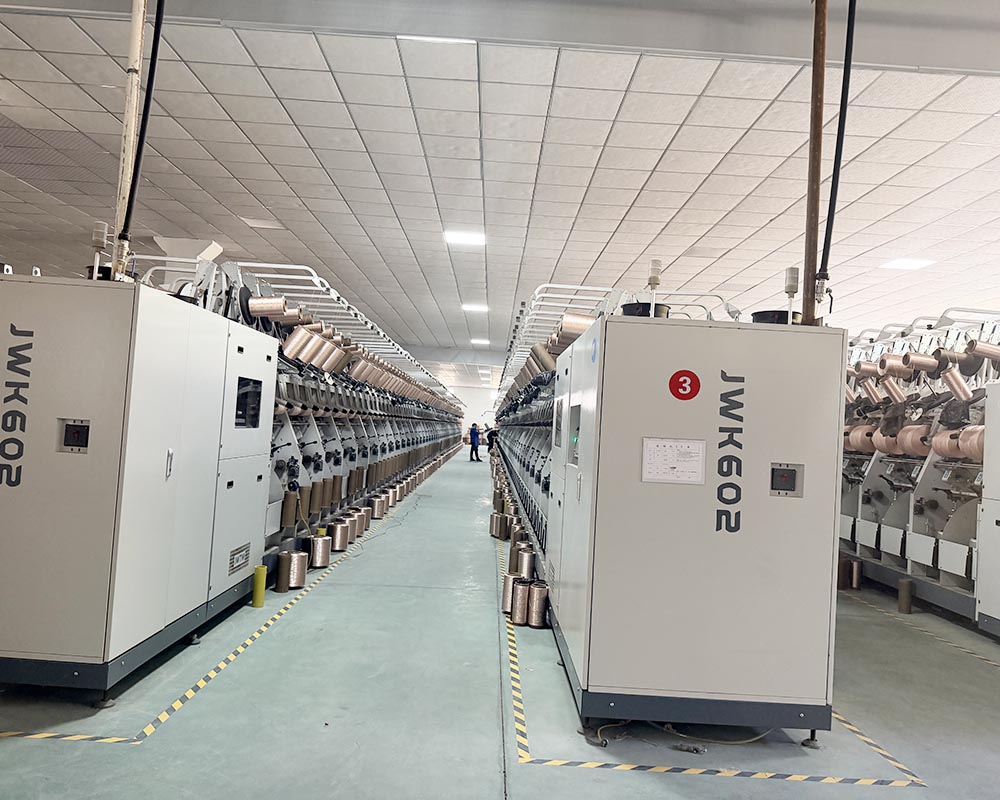
Weixin Fabric is a premier industrial fabric manufacturer in China, specializing in high-tenacity dipped fabrics, tire cord fabrics, and technical textiles. Operating computer-controlled dipping lines, precision tension-controlled weaving looms, and comprehensive testing laboratories, Weixin Fabric delivers tailored reinforcement solutions for conveyor belt manufacturers globally.
Our engineering team works directly with belting manufacturers to customize fabric weight, warp/weft density, DPU percentage, resin hardness, and roll dimensions to match exact production requirements.
Conclusion: Elevate Conveyor Belt Performance with Engineered Dipped Fabrics
Optimizing fabric design principles—polymer selection, RFL chemistry, and thermo-fixation—is essential for producing lightweight conveyor belts that deliver high tensile strength, low elongation, and extended service life. Partnering with Weixin Fabric ensures access to world-class dipped textiles engineered for performance excellence.
Contact our technical engineering team today to request technical datasheets, fabric samples, or custom project consultations.
Keywords:
dipped fabric for lightweight conveyor belts, conveyor belt dipped fabric design, EP fabric manufacturer, polyester nylon dipped fabric, RFL dipping chemistry conveyor belt, Weixin Fabric, Chinese industrial fabric factory, PVC belt carcass fabric supplier, TPU conveyor belt fabric innovation, low stretch conveyor fabric, anti static dipped industrial textile, tire cord fabric solution expert, monofilament weave conveyor fabric, belt delamination resistance coating, high tenacity dipped reinforcement fabric
Our Expertise – Carcass Fabric & Dipped Fabric Solutions
As a professional manufacturer and solution expert, we specialize in Carcass Fabric for Automotive Tires, Dipped Fabric for Conveyor Belts, Dipped Fabric for Fishing Nets, and Grade C Cord Fabric. With years of R&D and production experience, we provide high-strength, heat-resistant, and durable industrial fabrics tailored to global clients' specific requirements. Our products are widely used in tire reinforcement, conveyor belt carcass, fishing net manufacturing, and other industrial applications. Explore full product range →
Also check our Tire Cord Fabric, Conveyor Belt Dipped Fabric, and Fishing Net Dipped Fabric pages.