How to Choose the Right Carcass Fabric Based on Tire Type
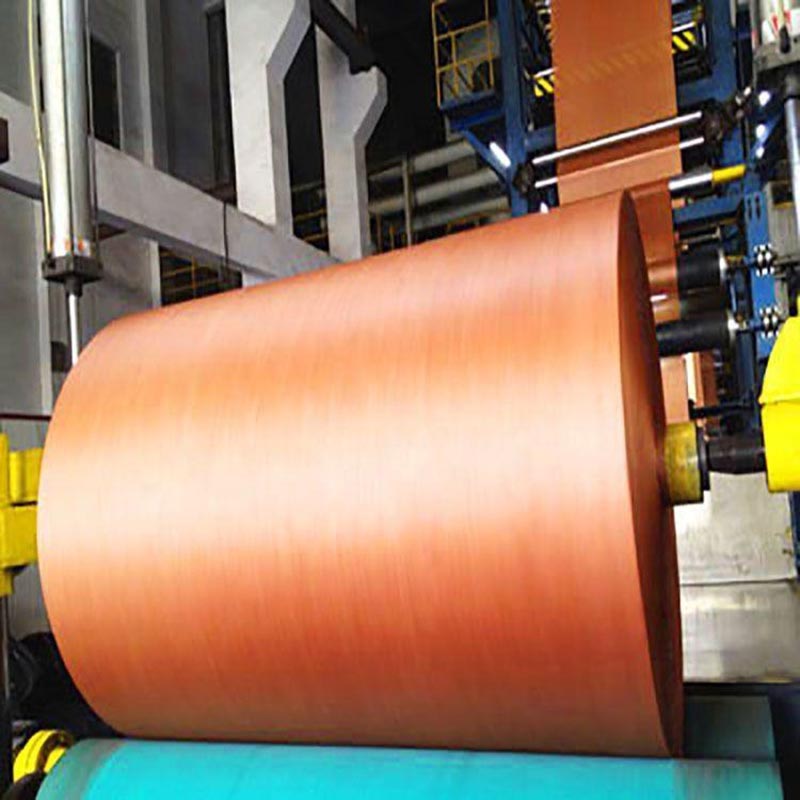
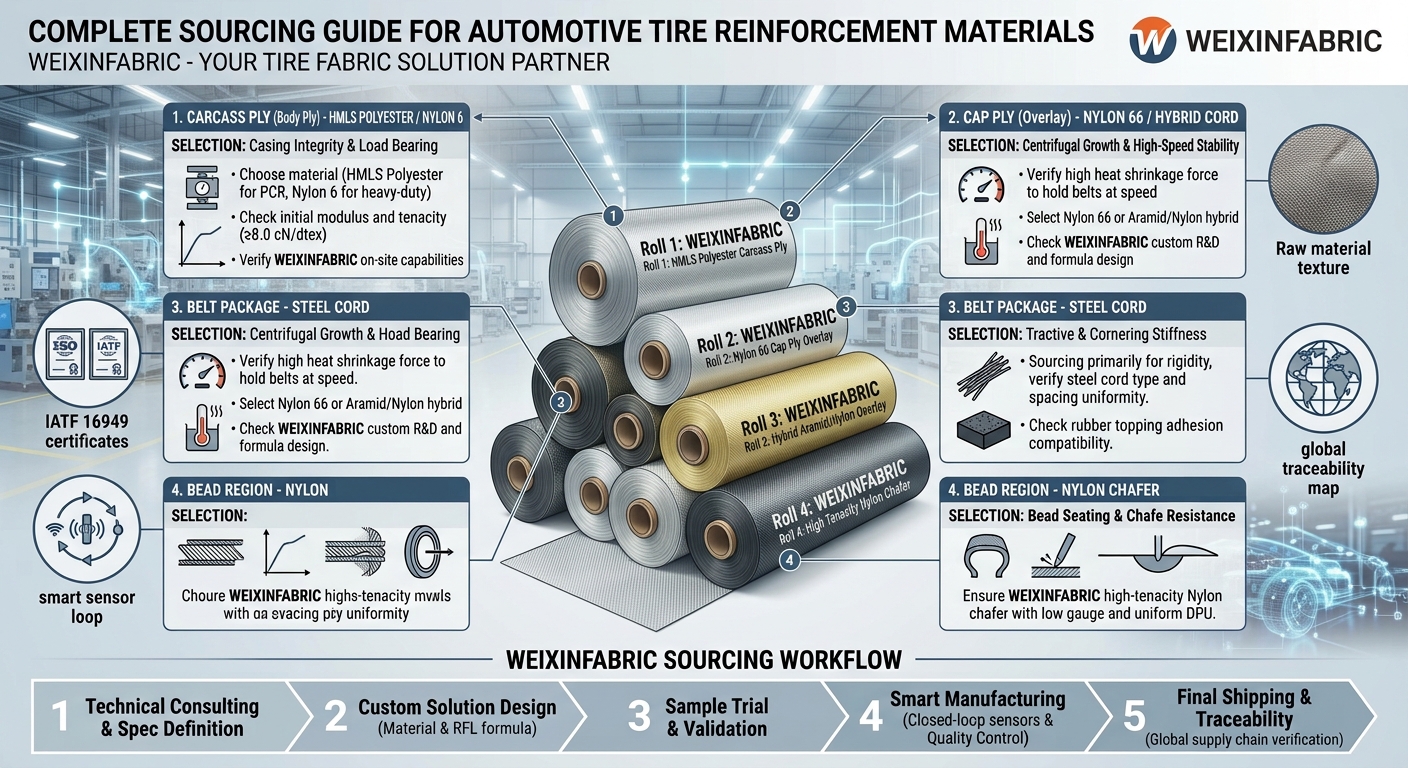
Selecting the appropriate carcass fabric is one of the most critical decisions in tire manufacturing. The carcass, or tire body, determines the tire's durability, load capacity, ride comfort, and resistance to impacts. As a professional carcass fabric for automotive tires supplier from China, we understand that matching the right fabric to the specific tire type is not just a technical requirement—it is the foundation of tire performance and safety.
Below is a practical guide on how to choose carcass fabric based on different tire categories.
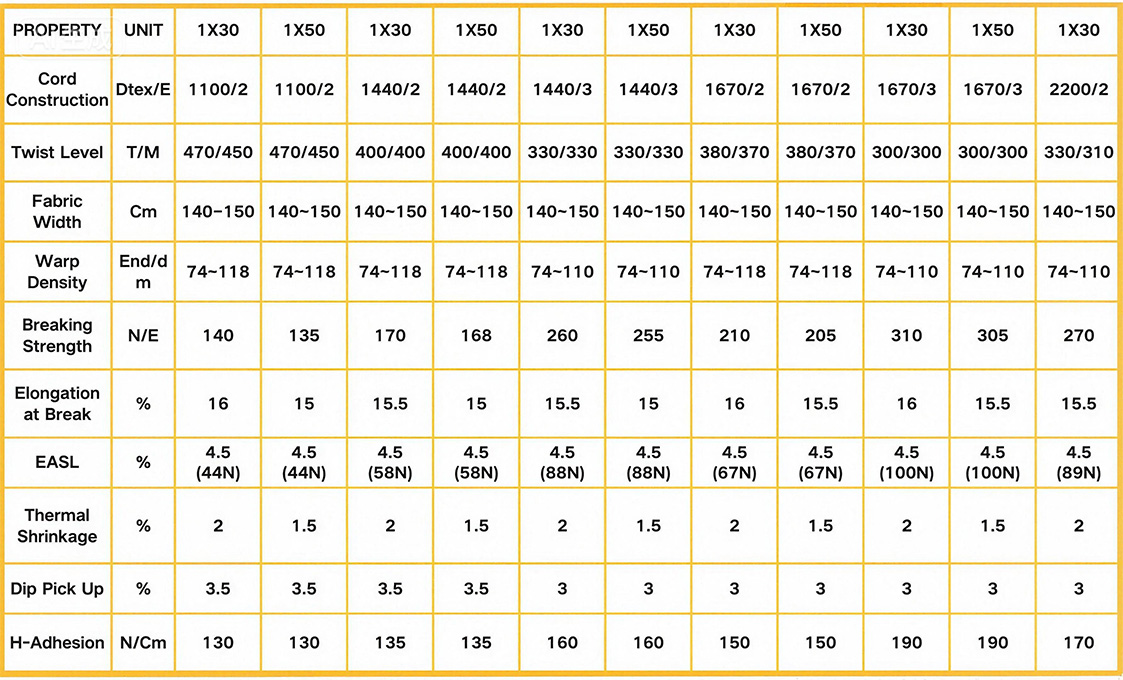
1. Understand the Two Main Carcass Fabric Types
Before diving into tire-specific selection, it is essential to know the two dominant materials used in passenger and light truck tire carcasses:
Polyester (PET) Fabric – Offers high strength, excellent dimensional stability, and good fatigue resistance. It is the most common choice for radial passenger car tires.
Rayon (Viscose) Fabric – Provides low shrinkage and high heat resistance. Often used in high-performance or European-style tires, but less common today.
Nylon 6 or Nylon 66 Fabric – Extremely high toughness and heat resistance. Used primarily for tire overlays, off-road tires, and bias truck tires, but also as carcass reinforcement in heavy-duty applications.
Note: Steel cord is used for belts, not the carcass ply in passenger radials, though in truck radial tires, all-steel carcass is standard.
2. Selection Guide by Tire Type
A. Passenger Car Radial Tires (PCR)
Recommended Carcass Fabric: High-modulus, low-shrinkage polyester (PET) — typically 1100dtex/2 or 1670dtex/2.
Why:
Provides a smooth ride due to its flexibility.
Excellent adhesion to rubber via RFL (resorcinol-formaldehyde-latex) dip treatment.
Good fatigue resistance under cyclic flexing.
What to avoid: Using nylon as the main carcass ply in PCR tires can cause flat-spotting during parking after high-speed driving.
B. High-Performance / UHP Tires (W, Y, Z speed ratings)
Recommended Carcass Fabric: Hybrid or high-tenacity PET with reduced shrinkage (HMLS – High Modulus Low Shrinkage polyester).
Why:
UHP tires generate high heat at sustained speeds. HMLS PET maintains structural integrity.
Lower growth under centrifugal force keeps the tire round at high speed.
Some manufacturers use a nylon carcass ply for extreme conditions, but PET remains dominant.
Tip: Use double polyester plies for reinforced sidewall stiffness in run-flat or track-day tires.
C. Light Truck & SUV Tires (LT)
Recommended Carcass Fabric: Heavy-denier PET (1670dtex/3 or 2200dtex/2) or, for severe duty, nylon 66.
Why:
Higher load capacity requires higher breaking tenacity (>7.5 cN/dtex for PET).
Nylon carcass is preferred for severe off-road use because it resists cutting and bruising.
For on-highway LT tires, PET offers a balance of durability and ride quality.
D. Truck & Bus Radial Tires (TBR)
Recommended Carcass Fabric: Steel cord only. Not fabric.
Important: For TBR tires, the carcass is almost exclusively all-steel. Steel cord provides the necessary burst strength, low growth, and heat dissipation for heavy loads. Polyester or nylon carcass is not suitable for highway truck radials except in very light-duty regional applications.
E. Bias-Ply Tires (Vintage, agricultural, some trailer tires)
Recommended Carcass Fabric: Nylon 6 or Nylon 66 — multiple plies (4, 6, or 8).
Why:
Bias tires rely on the fabric itself for strength and angle stability.
Nylon's high impact resistance and ability to absorb shocks are essential for farm or construction bias tires.
Rayon is occasionally used but less common now.
3. Key Fabric Parameters to Evaluate
When selecting a carcass fabric for any tire type, always evaluate:
| Parameter | Why It Matters |
|---|---|
| Denier/Dtex | Determines ply thickness and strength. Higher denier = heavier duty. |
| Breaking Tenacity | Higher tenacity means stronger, lighter plies. |
| Adhesion (H‑test) | Poor adhesion leads to ply separation — a critical failure. |
| Thermal Shrinkage | High shrinkage causes tire distortion during vulcanization and operation. |
| Green Strength | Important for tire building stability before curing. |
4. Why Partner with a Specialized Chinese Supplier
As a direct carcass fabric for automotive tires supplier in China, we offer:
Fully customized dipping processes (normal adhesion, heat-resistant, or high-modulus dip).
Strict quality control — tensile testing, adhesion testing, and dimensional stability checks per ASTM/ISO standards.
Cost efficiency — integrated production from yarn dipping to slitting and spooling.
Fast sampling for new tire development projects.
We supply polyester, nylon 66, and hybrid carcass fabrics to PCR, LTR, and bias tire manufacturers globally.
Summary Table
| Tire Type | Best Carcass Fabric | Typical Construction |
|---|---|---|
| Standard PCR | HMLS Polyester (PET) | 1100/2, 1670/2 |
| UHP / Performance | HMLS PET or hybrid | 1670/2, 2200/2 |
| Light Truck (LT) | Heavy PET or Nylon 66 | 1670/3, 2200/3 |
| TBR Highway | Steel cord (not fabric) | 7×7×0.20+1 etc. |
| Bias / Ag / Trailer | Nylon 6 or 66 | 840/2, 1260/2, 1680/2 |
Final Advice
Always match the fabric’s modulus, shrinkage, and adhesion level to the tire’s intended service. For passenger tires, polyester carcass is the industry standard. For any radial tire above load index 120 (single), switch to steel carcass. For bias and off-road applications, nylon remains unbeatable.
Need a custom carcass fabric solution? We are a reliable Chinese supplier of dipped carcass fabric for automotive tires. Contact us for technical data sheets and samples.
Our Expertise – Carcass Fabric & Dipped Fabric Solutions
As a professional manufacturer and solution expert, we specialize in Carcass Fabric for Automotive Tires, Dipped Fabric for Conveyor Belts, Dipped Fabric for Fishing Nets, and Grade C Cord Fabric. With years of R&D and production experience, we provide high-strength, heat-resistant, and durable industrial fabrics tailored to global clients' specific requirements. Our products are widely used in tire reinforcement, conveyor belt carcass, fishing net manufacturing, and other industrial applications. Explore full product range →
Also check our Tire Cord Fabric, Conveyor Belt Dipped Fabric, and Fishing Net Dipped Fabric pages.