Steel Cord Fabric vs Textile Cord Fabric: Application Differences in Truck and Passenger Tires
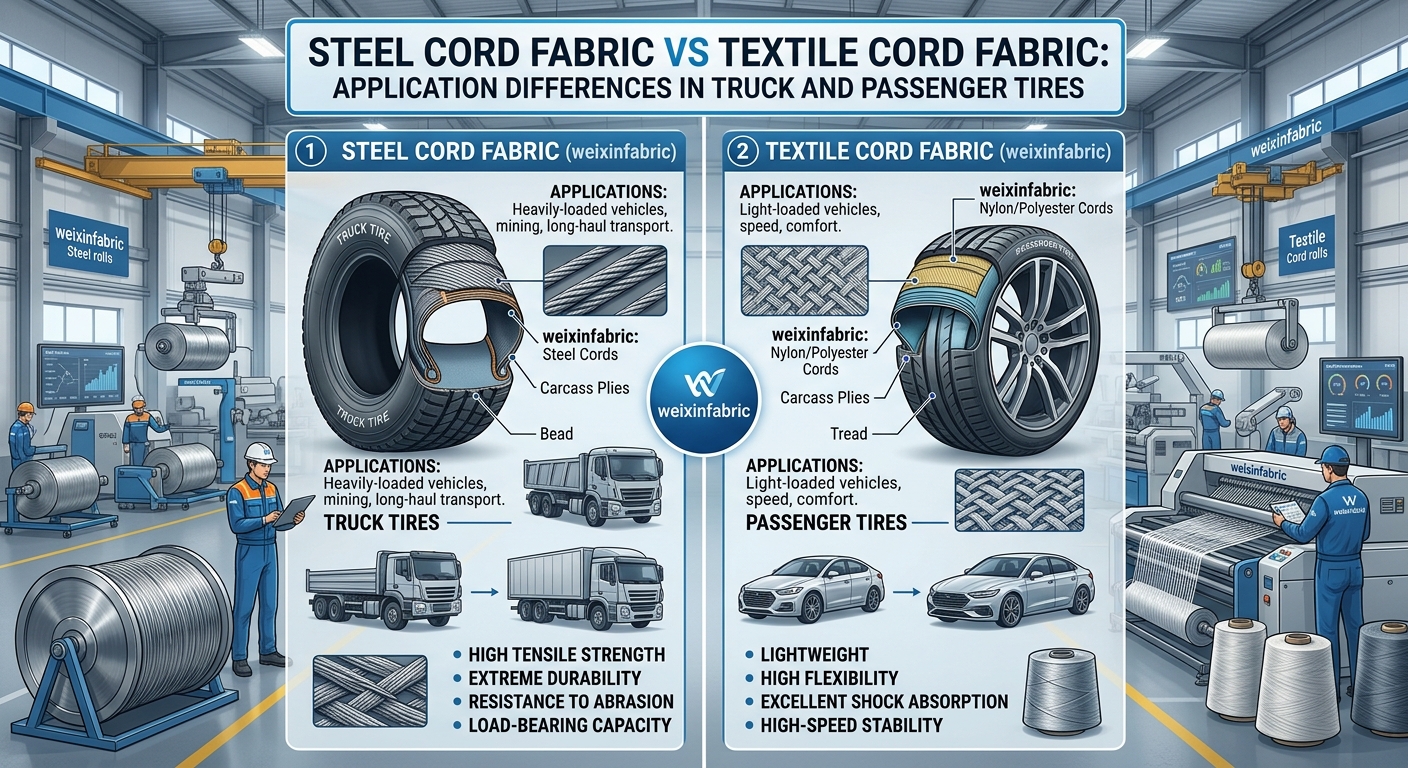
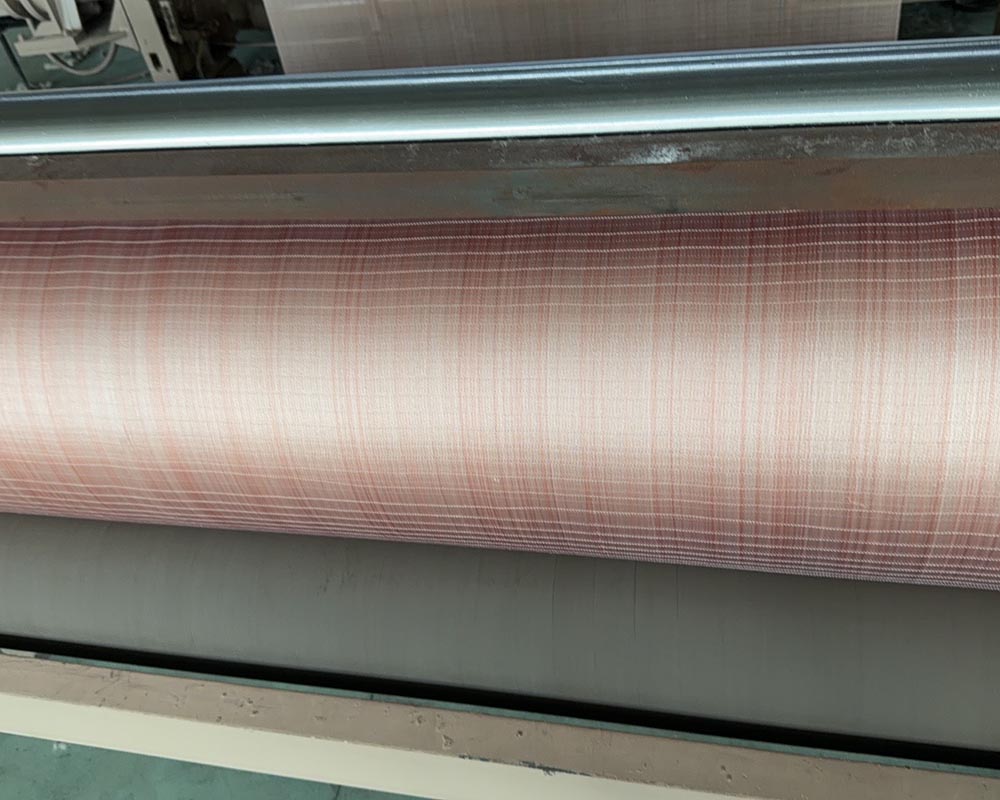
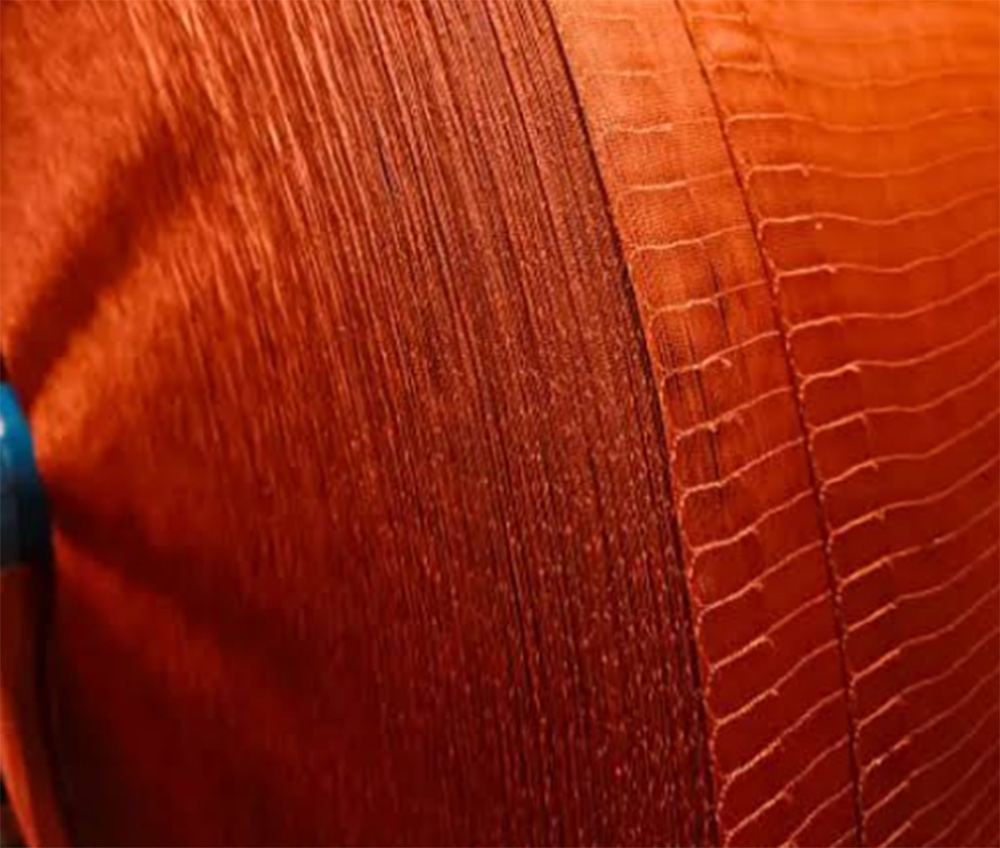
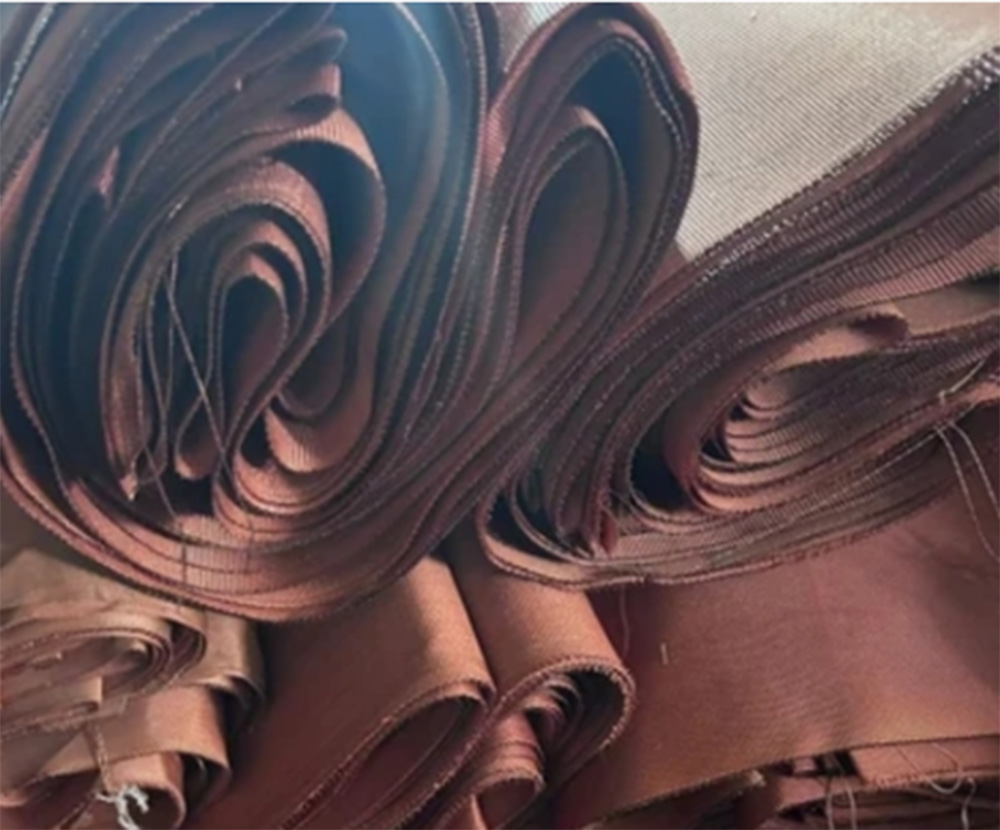
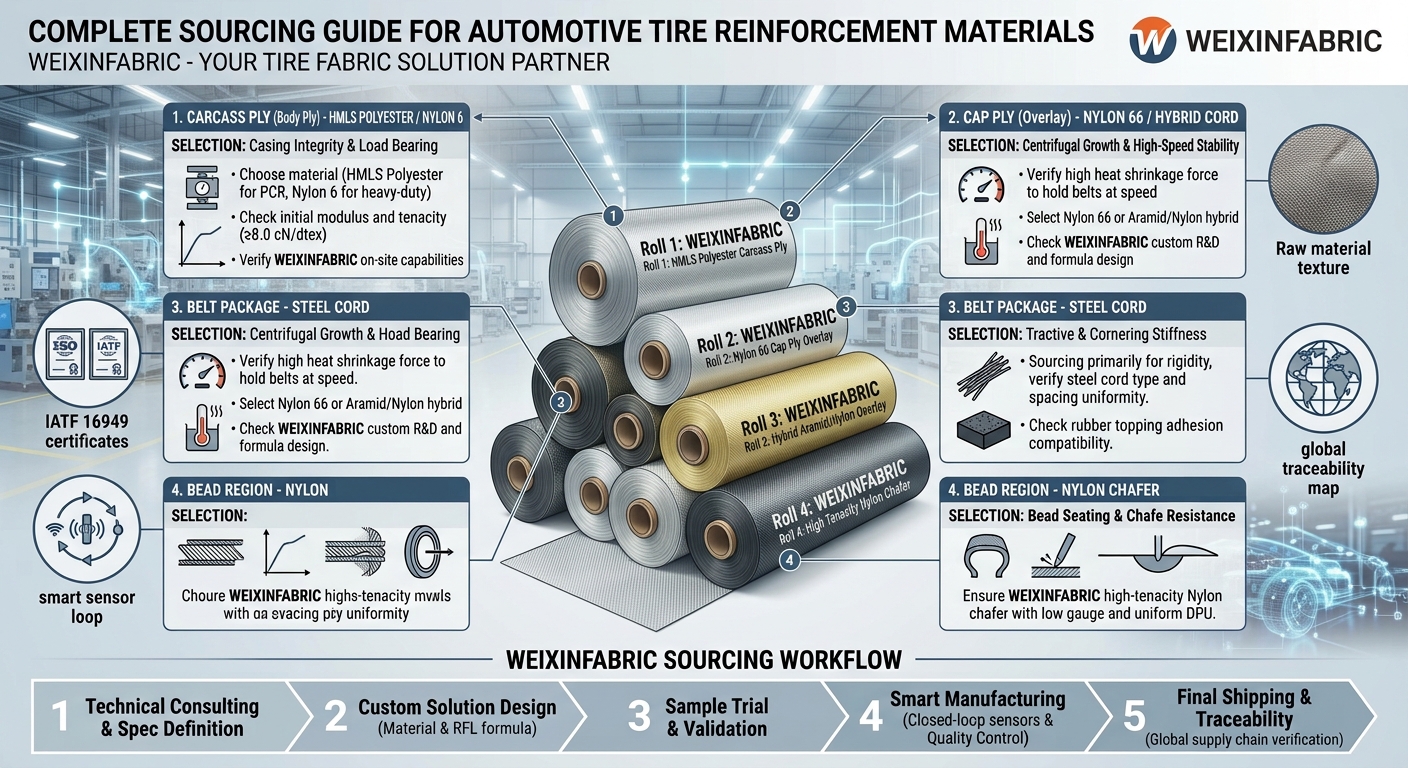
Structural Reinforcement Analysis & Engineering Comparison by Weixin Fabric In modern radial tire engineering, selecting the primary carcass and belt reinforcement materials directly determines tire load capacity, high-speed stability, weight, rolling resistance, and overall ride comfort. The industry relies on two primary reinforcement families: Steel Cord Fabric and Textile Cord Fabric (including HMLS Polyester, Nylon 6, Nylon 66, and Aramid blends). As a leading Chinese manufacturer specializing in high-tenacity dipped tire carcass fabrics, Weixin Fabric engineers customized textile reinforcement solutions for global tire makers. This technical analysis explores the critical application differences between steel and textile cord fabrics across All-Steel Truck and Bus Radial (TBR) tires and Passenger Car Radial (PCR) tires. Understanding the fundamental mechanical distinction between brass-coated steel cord wire and dipped synthetic textile cord is critical for carcass architecture design: The comparative table below outlines the core functional differences between Steel Cord Fabric and Textile Cord Fabric across primary performance vectors: The operational conditions of heavy-duty commercial transport and passenger mobility demand fundamentally distinct material architectures: Truck and Bus Radial (TBR) Tires: All-Steel TBR tires rely on a heavy single-ply steel wire carcass to handle high internal pressure, heavy wheel loads, and retreadability demands. However, modern TBR tires increasingly incorporate specialized Nylon or Polyester chafer fabrics and breaker strip textiles around the bead area to protect against rim chafe and prevent bead region fatigue failure. Passenger Car Radial (PCR) Tires: PCR tires utilize a hybrid structure—combining steel belt packages under the tread crown with textile cord fabric (HMLS Polyester or Nylon 66) for the carcass plies and zero-degree cap plies. Textile carcass plies provide the essential elasticity required to absorb road bumps, eliminate harshness, maintain precise sidewall contouring, and reduce fuel consumption. Weixin Fabric is an established pioneer in high-performance automotive tire textile reinforcements in China. Our state-of-the-art dipping lines produce certified Nylon 6, Nylon 66, and HMLS Polyester dipped carcass fabrics, chafer fabrics, and cap ply cords engineered to meet rigorous OEM requirements. By delivering exceptional rubber-to-fabric adhesion strength, precise width slitting, uniform cord density, and tailored heat-shrinkage profiles, Weixin Fabric enables global tire manufacturers to optimize tire building efficiency and elevate dynamic performance. While steel cord fabric remains irreplaceable for heavy-duty load support in commercial trucks, textile cord fabric is the undisputed champion for carcass comfort, efficiency, and dynamic durability in passenger vehicles. Partner with Weixin Fabric to source high-precision textile carcass solutions custom-tailored to your tire manufacturing line. Contact our technical engineering team today for technical data sheets, custom RFL dipping consultations, and factory sample evaluations.Steel Cord Fabric vs Textile Cord Fabric: Application Differences in Truck and Passenger Tires
1. Core Engineering Characteristics: Metallic vs. Polymeric Reinforcement
2. Comparative Technical Matrix: Steel Cord vs. Textile Cord
Performance Parameter Steel Cord Fabric Textile Cord Fabric (Polyester / Nylon) Tensile Strength & Load Capacity Ultra-high; supports extreme inflation pressures (8.0–9.0 bar) and heavy payload demands. High specific strength; engineered to support light to medium vehicle loads efficiently. Flex Fatiguing & Cyclic Endurance Prone to fretting fatigue under extreme sidewall deflection at low pressure. Exceptional flex-fatigue endurance over millions of cyclic deformations. Mass Density & Unsprung Mass High density (~7.85 g/cm³); increases total wheel assembly weight. Low density (~1.38 g/cm³ for polyester); significantly reduces unsprung mass and rolling resistance. NVH & Ride Comfort Rigid construction transmits road vibration and harshness directly to chassis. Superior vibration dampening, noise suppression, and compliance for smooth passenger transport. Primary Tire Application Zone TBR Single-ply Carcass & Working Belts; PCR Crown Steel Belts. PCR/LTR Radial Carcass Plies, Zero-degree Cap Plies, Chafer Fabrics.
3. Application Dynamics: Truck (TBR) vs. Passenger (PCR) Tires
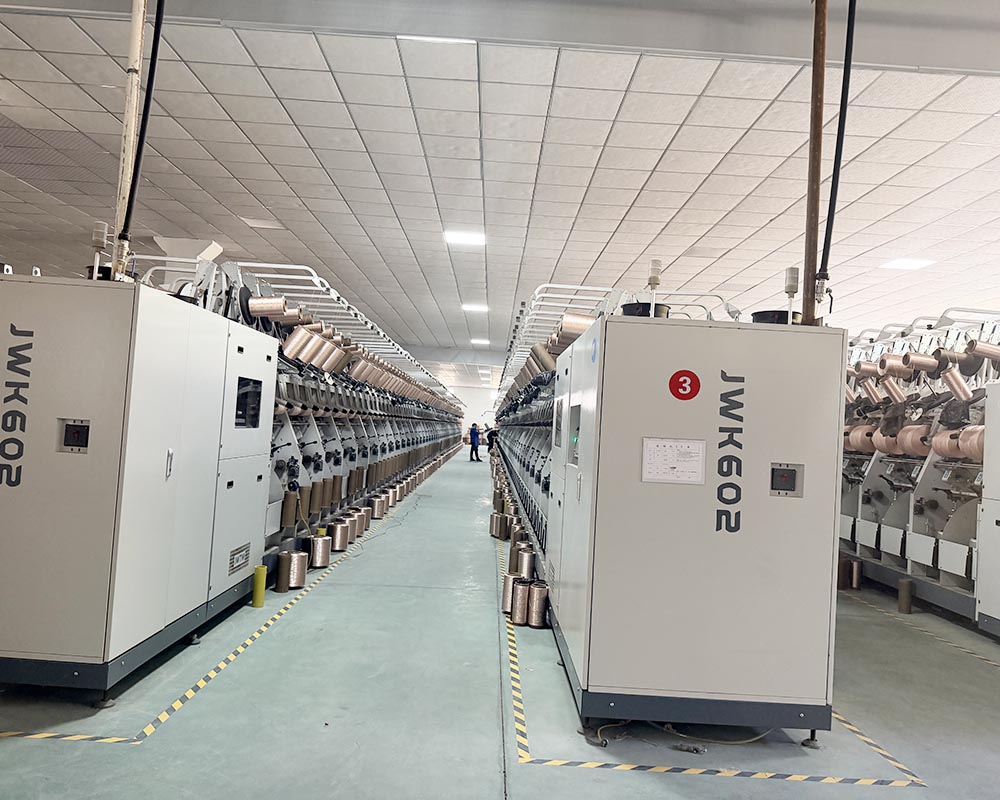
4. Why Choose Weixin Fabric for Textile Carcass Solutions
Conclusion: Engineering the Future of Tire Reinforcement
Our Expertise – Carcass Fabric & Dipped Fabric Solutions
As a professional manufacturer and solution expert, we specialize in Carcass Fabric for Automotive Tires, Dipped Fabric for Conveyor Belts, Dipped Fabric for Fishing Nets, and Grade C Cord Fabric. With years of R&D and production experience, we provide high-strength, heat-resistant, and durable industrial fabrics tailored to global clients' specific requirements. Our products are widely used in tire reinforcement, conveyor belt carcass, fishing net manufacturing, and other industrial applications. Explore full product range →
Also check our Tire Cord Fabric, Conveyor Belt Dipped Fabric, and Fishing Net Dipped Fabric pages.