The Art of Splicing Tire Carcass Fabric: Butt Seam vs Overlap Methods
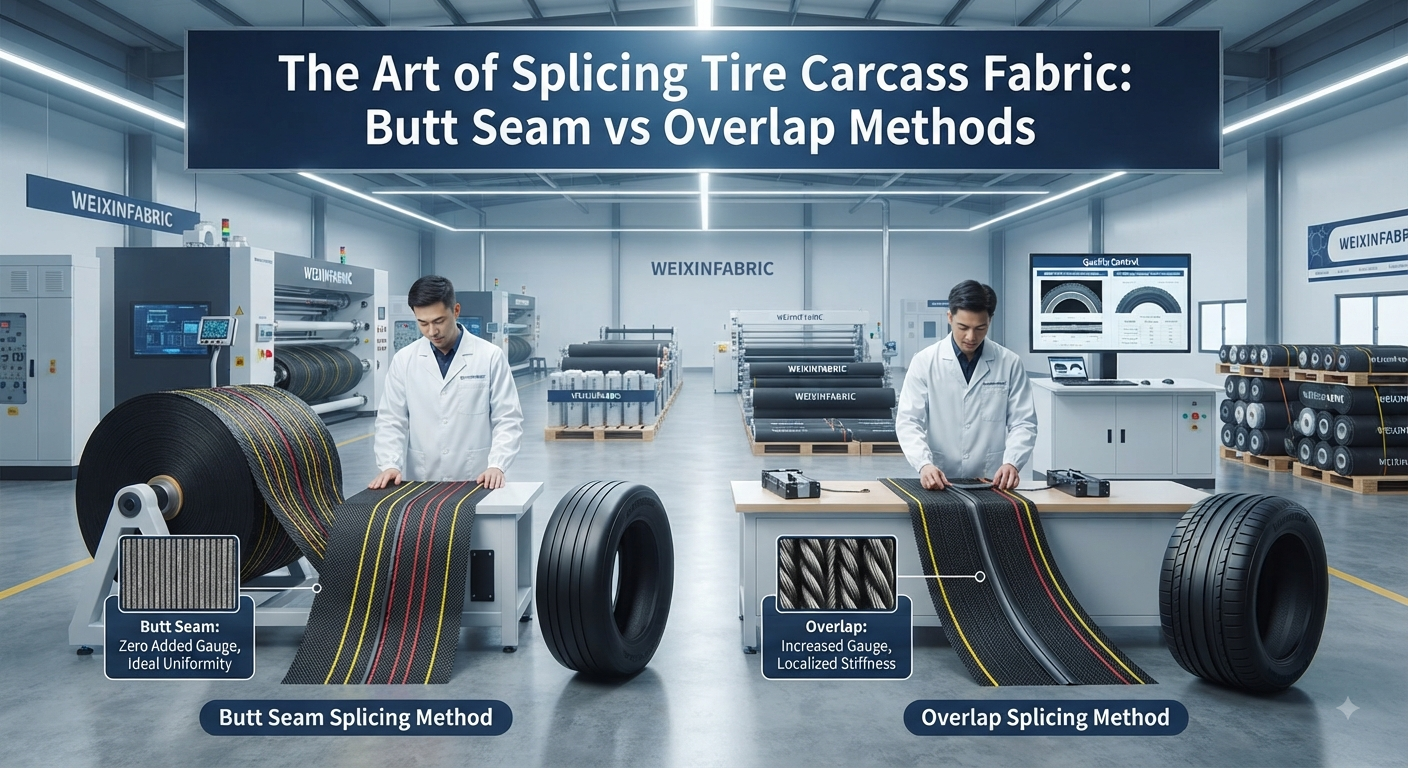
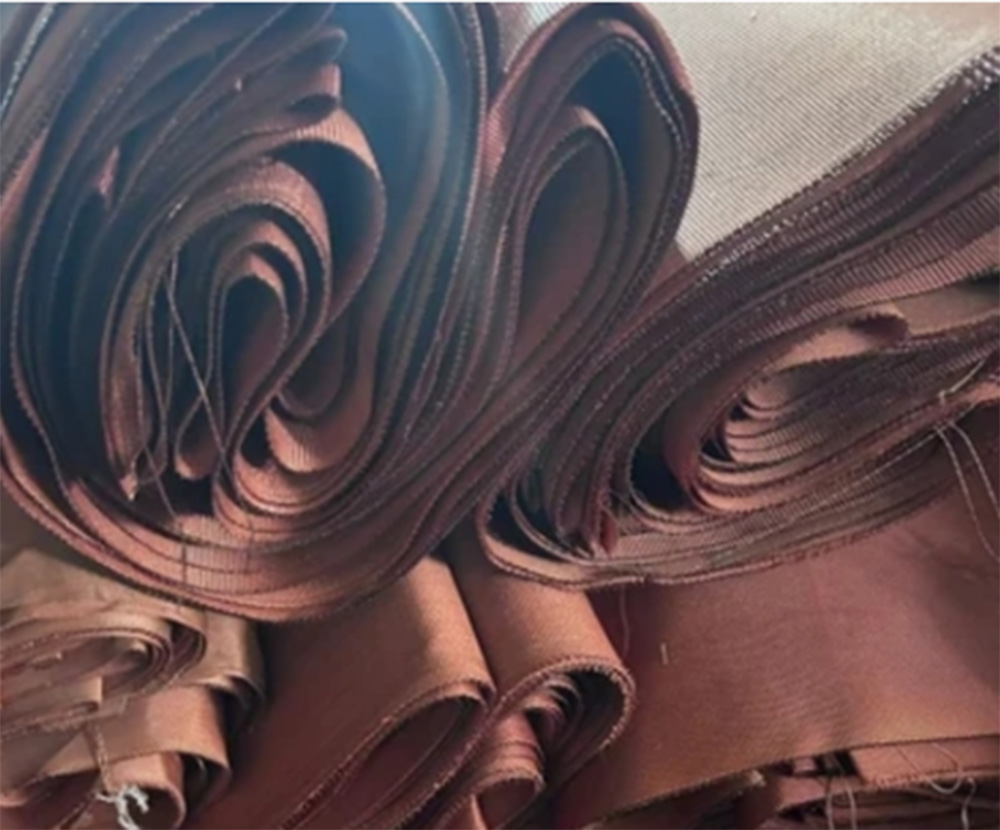
Precision Ply Splicing & Carcass Integrity Engineering by Weixin Fabric During automated green tire building, the continuous feeding of dipped tire carcass fabric plies requires joining fabric rolls seamlessly on the drum. The splicing technique executed at the ply joint plays a decisive role in determining tire radial force variation (RFV), dynamic balance, sidewall aesthetics, and structural fatigue life. Selecting between Butt Seam Splicing (Butt Joint) and Overlap Splicing (Lap Joint) represents a critical trade-off between mechanical joint strength and geometric uniformity. As a leading Chinese manufacturer specializing in high-tenacity Nylon 66 and HMLS Polyester tire carcass fabrics, Weixin Fabric engineers dipped fabrics optimized for high green tack, controlled stiffness, and superior splice integrity. This technical article provides a comprehensive evaluation of Butt Seam vs. Overlap splicing methods to guide tire production engineers and process managers. Fabric splicing is performed both during continuous calendering/dipping roll changes and during green tire assembly on the building drum. An ideal splice must meet three primary engineering objectives: Each splicing topology offers distinct physical characteristics and operational advantages. The comparative matrix below details the mechanical distinctions between Butt Seam and Overlap methods: Choosing the correct splicing method depends directly on tire category, ply material, and building machinery precision: Passenger Car Radial (PCR) High-Performance Tire Carcass: Butt seam splicing is the preferred standard for premium UHP passenger tires. By keeping ply gauge uniform across 360 degrees, butt splicing prevents sidewall undulation and ensures smooth ride comfort at ultra-high speeds. Commercial Truck/Bus Radial (TBR) & Heavy Off-Road Carcass: Overlap splicing (with controlled lap widths typically between 3mm to 10mm) remains widely utilized for heavy-duty multi-ply carcass structures, where absolute green shear hold and high inflation pressure resistance take priority. To maximize splice reliability across both Butt Seam and Overlap operations, Weixin Fabric incorporates specialized processing controls during carcass fabric production: Strict Edge Straightness and Weft Stability: Precision trimming ensures razor-sharp, distortion-free fabric edges that mate perfectly during automated butt splicing. Optimized RFL Dip Formulation: Our proprietary Resorcinol-Formaldehyde-Latex dipping chemistry enhances compound-to-cord auto-hesion, providing superior green tack strength and preventing splice opening during green tire shaping. Mastering the art of fabric splicing is essential to achieving defect-free tire manufacturing and superior high-speed dynamic performance. Operating advanced manufacturing facilities in China, Weixin Fabric delivers fully certified Nylon 66 and HMLS Polyester carcass fabrics tailored for seamless integration with modern automated tire building lines. Contact our engineering experts today for detailed technical specifications, dipped fabric samples, and tailored consultation on optimizing carcass ply splicing in your production facilities.The Art of Splicing Tire Carcass Fabric: Butt Seam vs Overlap Methods
1. Engineering Fundamentals of Carcass Fabric Splicing
2. Comparative Mechanics: Butt Seam vs Overlap Splicing
Splicing Parameter Butt Seam Method (Edge-to-Edge) Overlap Method (Lap Joint) Joint Geometry & Thickness Single-ply gauge (1.0x thickness); flush alignment without double-layer bump. Double-ply gauge (1.8x–2.0x thickness); distinct step-down profile. Radial Force Variation (RFV) Optimal; eliminates localized weight/stiffness spikes and sidewall bulges. Moderate; overlap line can create minor sidewall indentations. Unvulcanized Shear Strength Requires high-precision ultrasonic cutting and high-tack rubber compound. High initial mechanical bond due to wide contact surface area. Automation Compatibility Ideal for advanced automated servocontrolled tire building machinery (TBM). Standard method for semi-automatic and legacy tire building systems.
3. Application Guidance for Tire Manufacturers
4. How Weixin Fabric Optimizes Splicing Performance
Conclusion: Partner with Weixin Fabric for Advanced Carcass Solutions
Our Expertise – Carcass Fabric & Dipped Fabric Solutions
As a professional manufacturer and solution expert, we specialize in Carcass Fabric for Automotive Tires, Dipped Fabric for Conveyor Belts, Dipped Fabric for Fishing Nets, and Grade C Cord Fabric. With years of R&D and production experience, we provide high-strength, heat-resistant, and durable industrial fabrics tailored to global clients' specific requirements. Our products are widely used in tire reinforcement, conveyor belt carcass, fishing net manufacturing, and other industrial applications. Explore full product range →
Also check our Tire Cord Fabric, Conveyor Belt Dipped Fabric, and Fishing Net Dipped Fabric pages.