Understanding Breaking Strength and Elongation in Tire Cord Fabrics
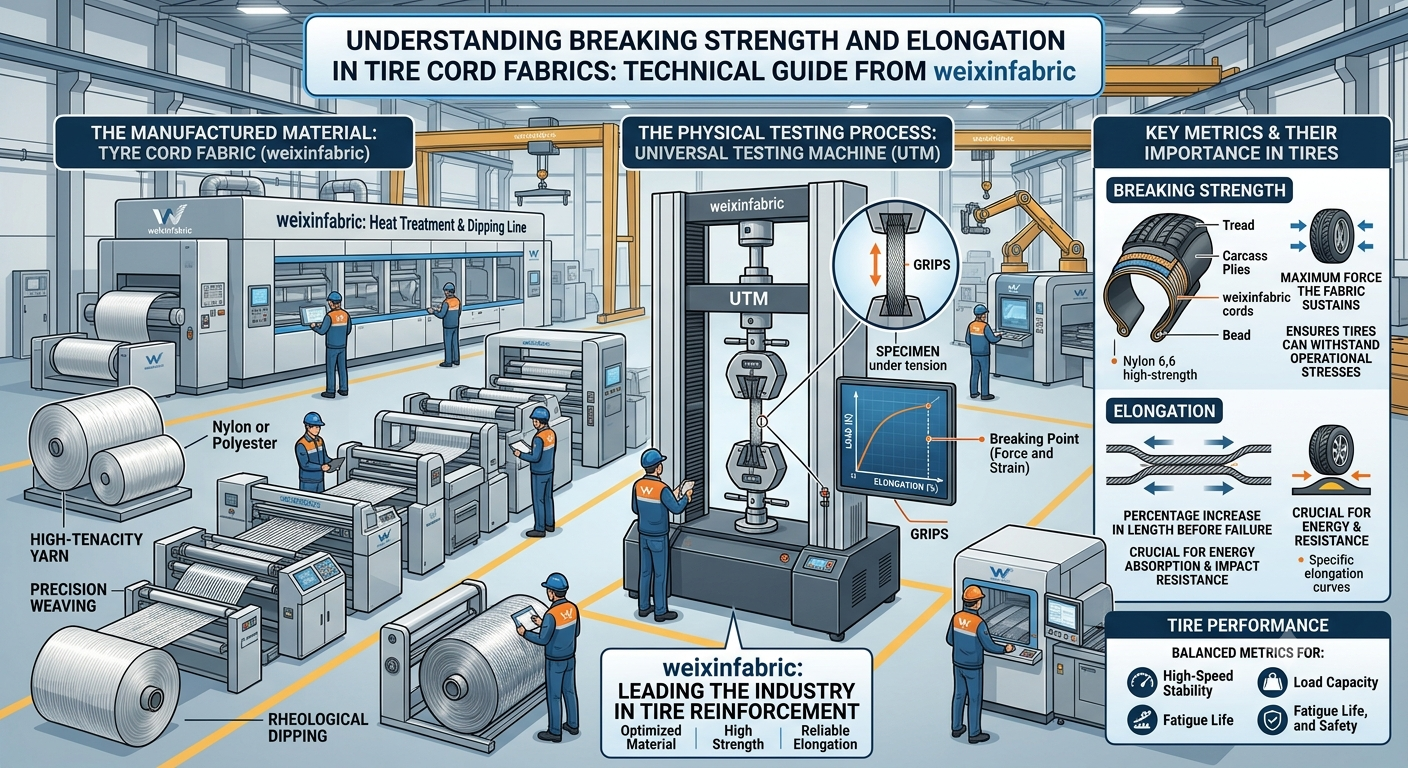
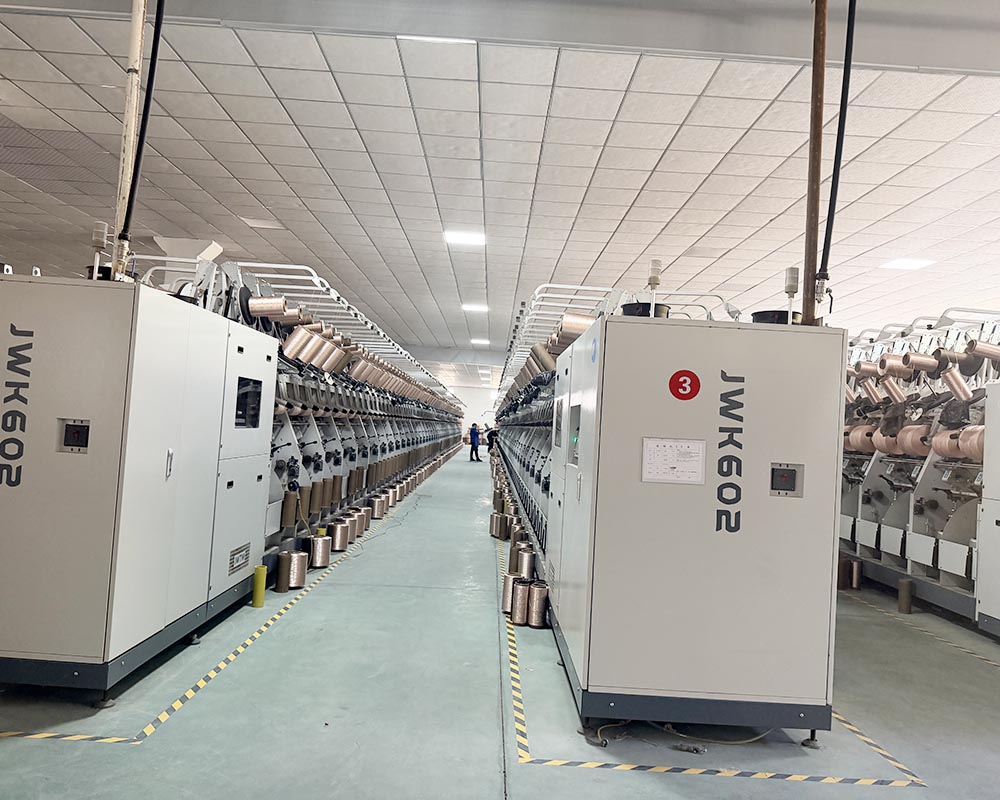
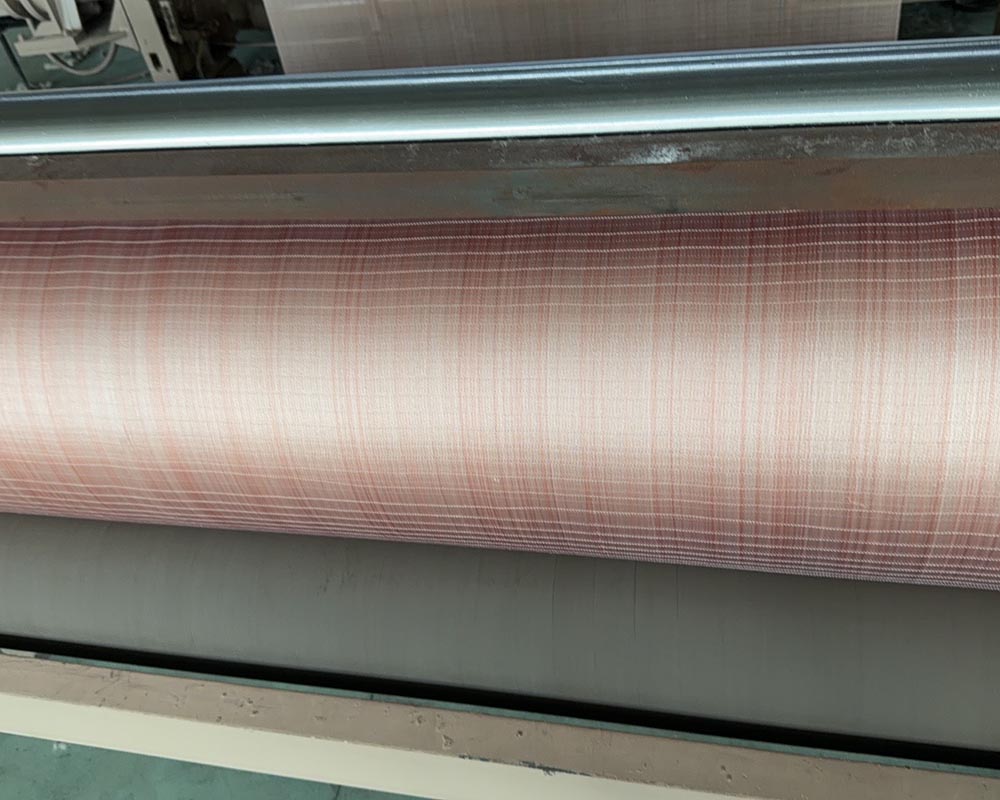
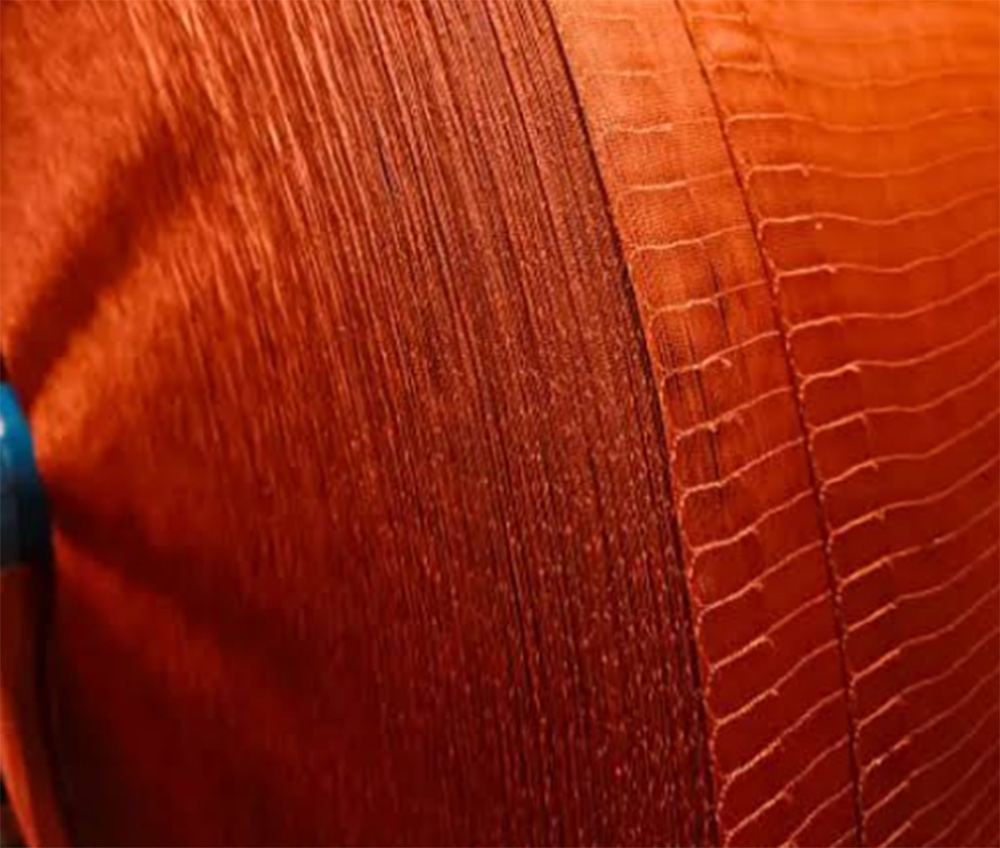
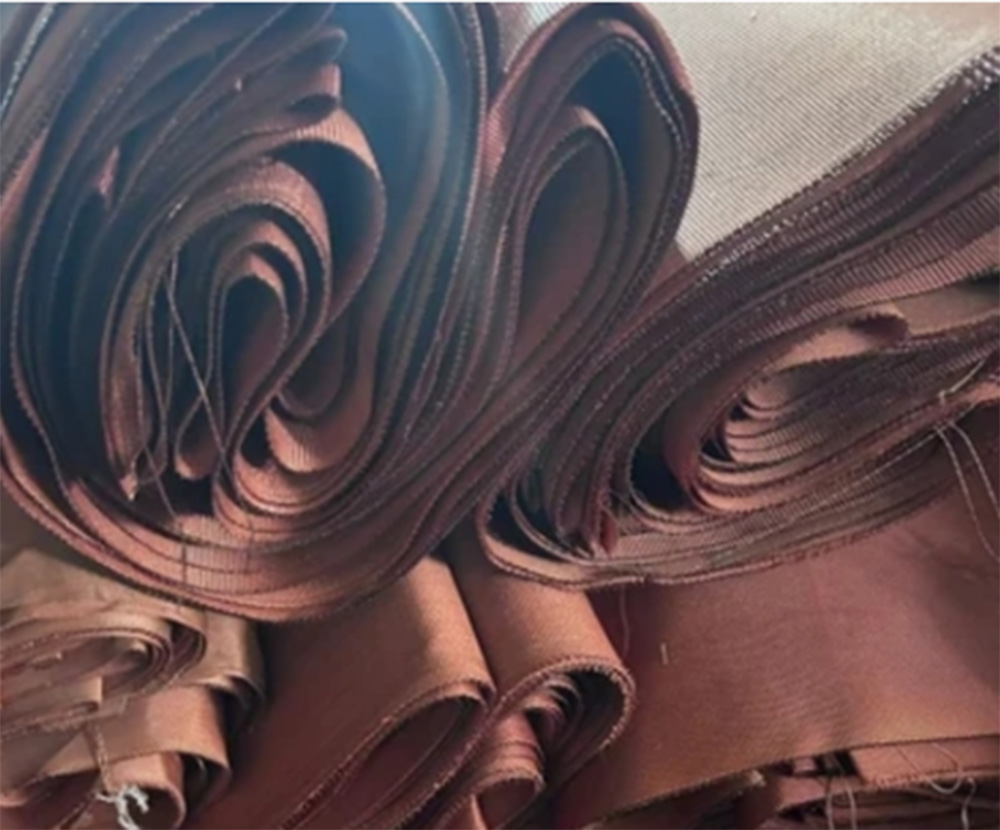
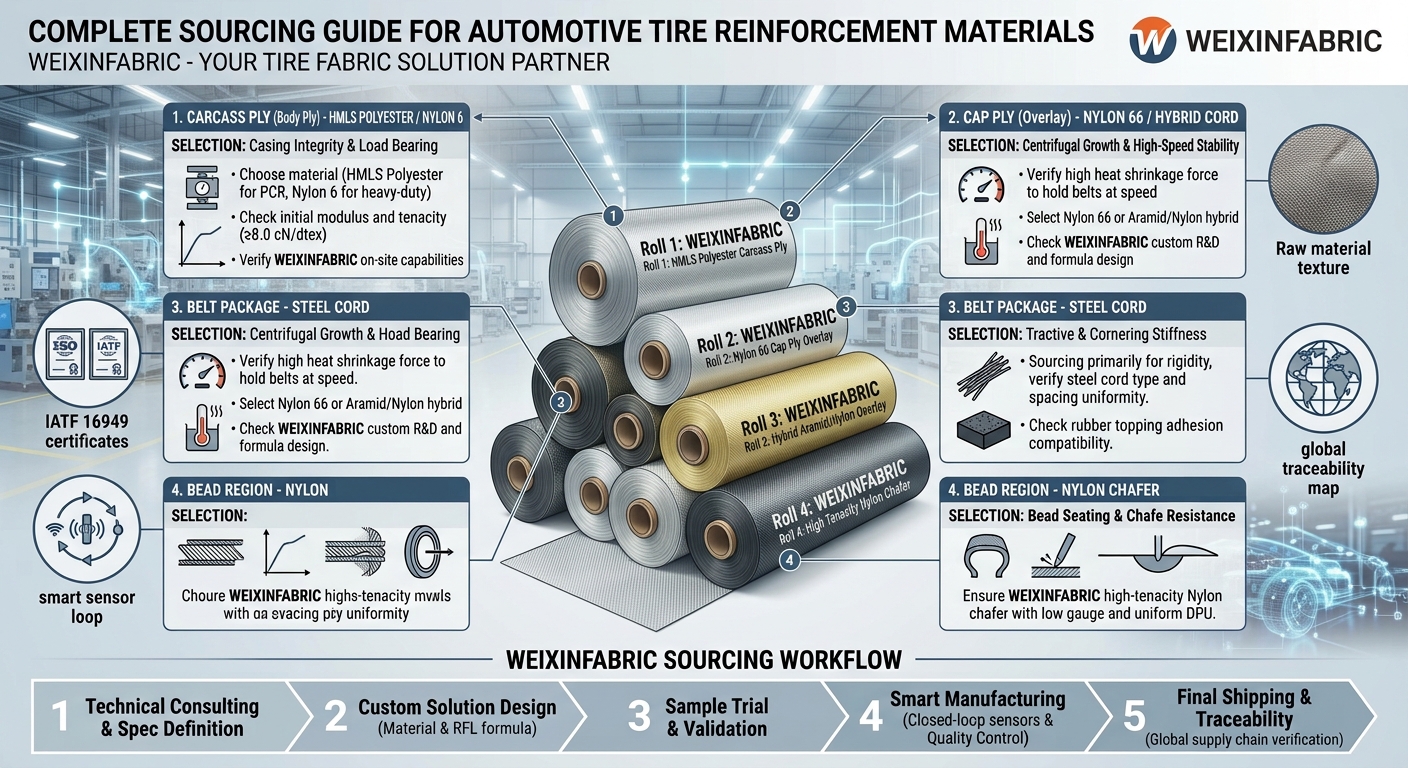
Tensile Mechanics & Polymer Reinforcement Engineering by Weixin Fabric In high-speed automotive and commercial transportation engineering, pneumatic tires operate under severe mechanical stresses, continuous centrifugal forces, and extreme inflation pressure. The internal structural framework—the carcass ply—bears primary responsibility for maintaining tire geometry, absorbing road impacts, and resisting sudden burst conditions. Within this reinforcement matrix, two viscoelastic properties govern structural performance: breaking strength (ultimate tensile strength) and elongation behavior. Evaluating breaking strength and tensile elongation is not simply about measuring maximum ultimate force; it requires a comprehensive micro-mechanical analysis of tensile tenacity (cN/tex or g/denier), Elongation at Specified Load (EASL), and thermal stress recovery. As a premier Chinese manufacturer specializing in high-tenacity automotive tire carcass fabrics, Weixin Fabric combines precision polymer processing, direct cabling technology, and advanced heat-setting thermal dipping to engineer cords with optimal modulus and elongation balance. This paper provides an expert technical breakdown of breaking strength and elongation dynamics in tire carcass reinforcement. To optimize carcass design for passenger car radial (PCR) or truck/bus radial (TBR) tires, tire development engineers assess several distinct tensile mechanical parameters defined under international testing standards such as ASTM D885 and ISO 2062: Different synthetic fibers offer unique tensile strength and elongation profiles. The engineering matrix below details how material selection influences structural carcass performance: Raw yarn properties alone do not determine final fabric performance. During thermal processing and RFL dipping, the application of precise tension, temperature, and exposure time adjusts the internal crystalline structure of synthetic polymers: A. Hot-Stretch Processing: Applying controlled axial tension at high temperatures aligns molecular polymer chains parallel to the fiber axis, dramatically increasing tensile tenacity while suppressing unwanted thermal elongation. B. Thermal Normalization: A secondary lower-tension zone allows stress relaxation within the cord core, setting the exact target EASL % and guaranteeing consistent shrinkage behavior during tire curing and vulcanization. At Weixin Fabric, fully automated computer-controlled dipping lines maintain warp tension within a +/- 1.0% tolerance, ensuring predictable elongation values across the entire fabric roll. Achieving the optimal ratio between breaking strength and elongation directly translates to superior tire engineering performance: Preventing Sidewall Bulging & Creep: Fabrics engineered with controlled low EASL prevent gradual permanent deformation under continuous internal inflation pressure, eliminating unsightly sidewall bulges and tread flat-spotting. Maximizing Impact Burst Resistance: High breaking strength combined with adequate elongation enables the tire carcass to deform elastically upon striking obstacles (such as potholes or rocks) without localized cord breakage or impact failure. Understanding breaking strength and elongation dynamics is critical for designing lightweight, high-speed, and ultra-durable automotive tires. Operating advanced manufacturing facilities in China, Weixin Fabric supplies global tire OEMs with custom-engineered Nylon 66 and HMLS Polyester carcass fabrics tailored to exact tensile and strain requirements. Contact our technical engineering team today to request product data sheets, mill test reports, or customized tensile optimization testing for your tire manufacturing lines.Understanding Breaking Strength and Elongation in Tire Cord Fabrics
1. Decoupling Tensile Metrics: Breaking Strength vs. Elongation Parameters
2. Comparative Tensile Mechanics: Polymer Selection Matrix
Reinforcement Fiber Type Tenacity & Breaking Strength Profile Elongation & Modulus Characteristic Target Automotive Application High Tenacity Nylon 66 Ultra-high breaking force; high energy absorption. Higher elasticity & high fatigue recovery under strain. High-impact passenger carcass plies, aircraft & off-road tires. HMLS Polyester (PET) High tensile strength with minimal thermal decay. High initial modulus; ultra-low EASL & low thermal shrinkage. Dimensional stability for high-speed radial passenger carcass. Rayon / Hybrid Cords Consistent strength at high operating temperatures. Extremely low thermal growth; rigid modulus. Ultra-high-performance (UHP) premium tire carcasses.
3. Controlling Strength-Elongation Balance via Precision Dipping
4. Practical Impact on Tire Performance and Safety
Conclusion: Partner with Weixin Fabric for Technical Reinforcement
Our Expertise – Carcass Fabric & Dipped Fabric Solutions
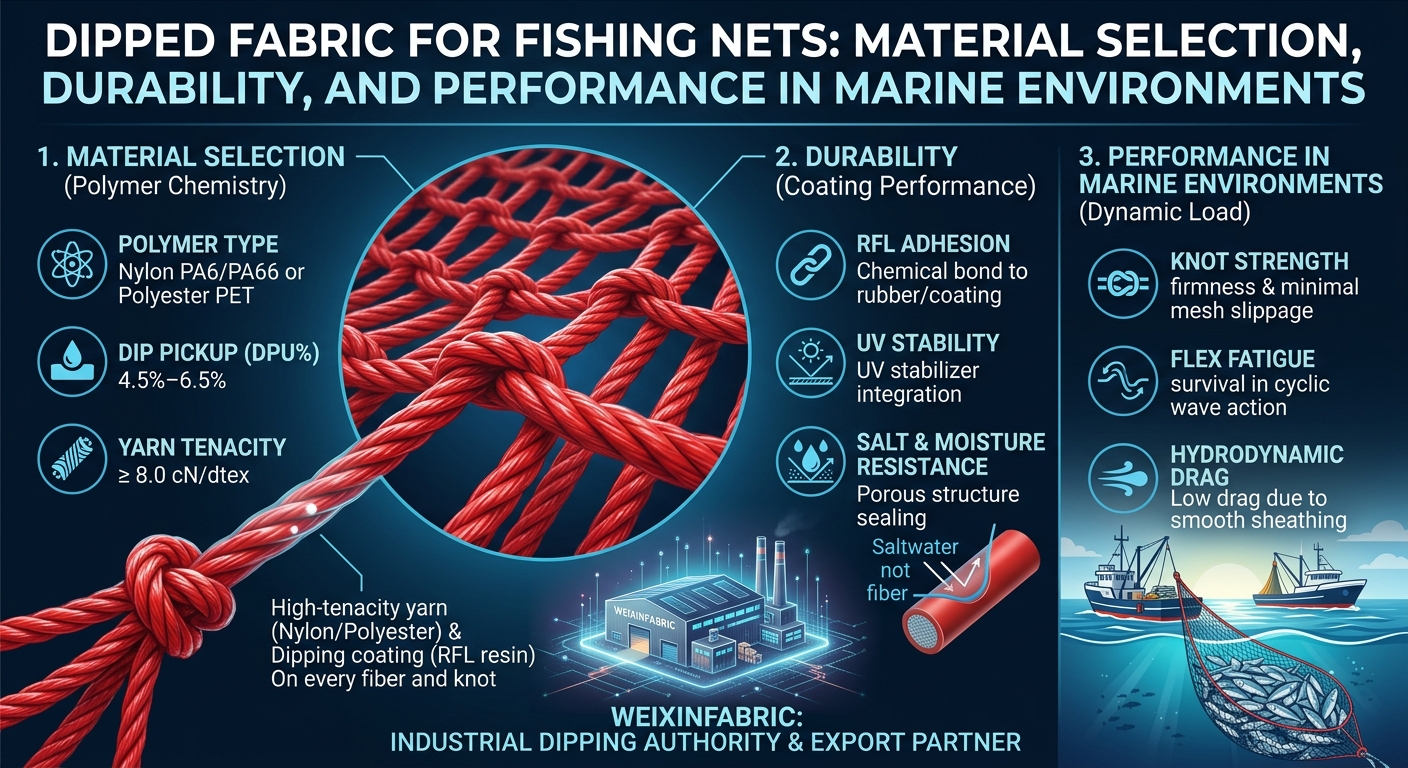
As a professional manufacturer and solution expert, we specialize in Carcass Fabric for Automotive Tires, Dipped Fabric for Conveyor Belts, Dipped Fabric for Fishing Nets, and Grade C Cord Fabric. With years of R&D and production experience, we provide high-strength, heat-resistant, and durable industrial fabrics tailored to global clients' specific requirements. Our products are widely used in tire reinforcement, conveyor belt carcass, fishing net manufacturing, and other industrial applications. Explore full product range →
Also check our Tire Cord Fabric, Conveyor Belt Dipped Fabric, and Fishing Net Dipped Fabric pages.