Polyester vs. Nylon for Carcass Fabric: Which Offers Better Dimensional Stability?
When selecting reinforcement materials for tyre carcass, conveyor belts, or industrial rubber goods, the debate between polyester (PET) and nylon (polyamide 66) is perennial. Both are high-tenacity industrial yarns, but their response to heat, moisture, and tension varies dramatically. For engineers and procurement specialists, dimensional stability — the ability to maintain shape, length, and strength under operational stress — is often the deciding factor. This article provides an evidence-based comparison to help you choose the optimal carcass fabric for your application.
1. Defining Dimensional Stability in Carcass Fabrics
Dimensional stability refers to a fabric’s resistance to thermal shrinkage, moisture-induced expansion, and creep under load. In a tyre or belt, poor stability leads to growth (circumference increase), waviness, and uneven stress distribution. For carcass fabric — the structural backbone — stability is governed by yarn polymer chemistry, dipping process (RFL treatment), and construction (twist/weave).
2. Polyester (PET) Carcass Fabric: The Low-Shrinkage Champion
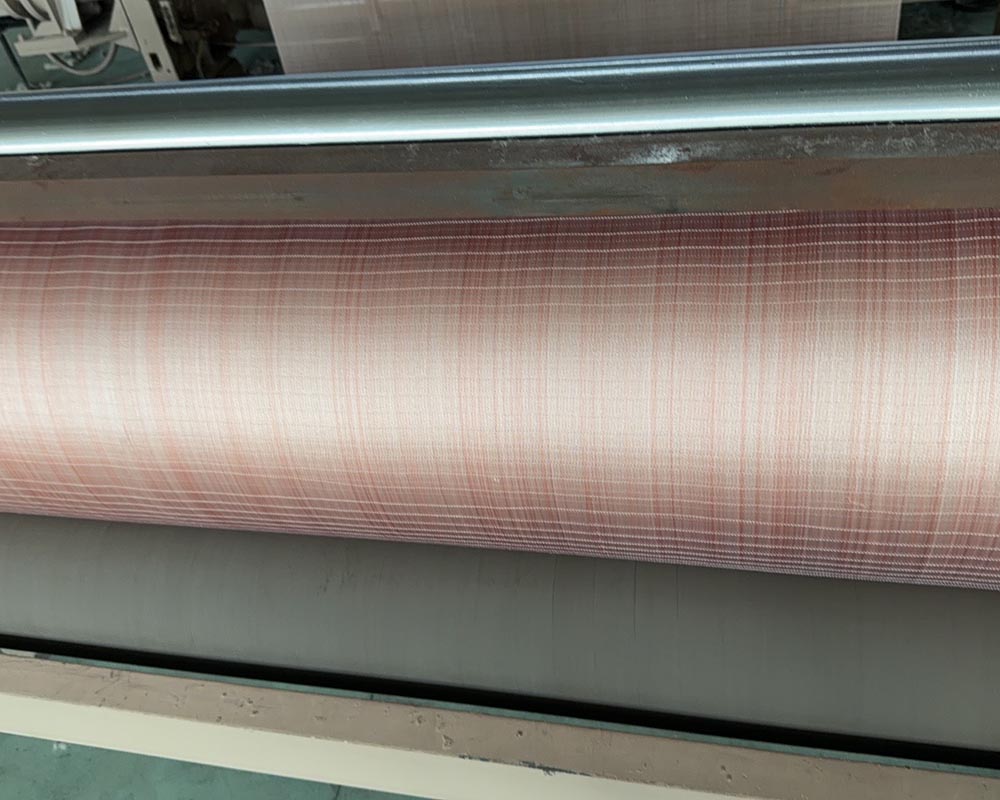
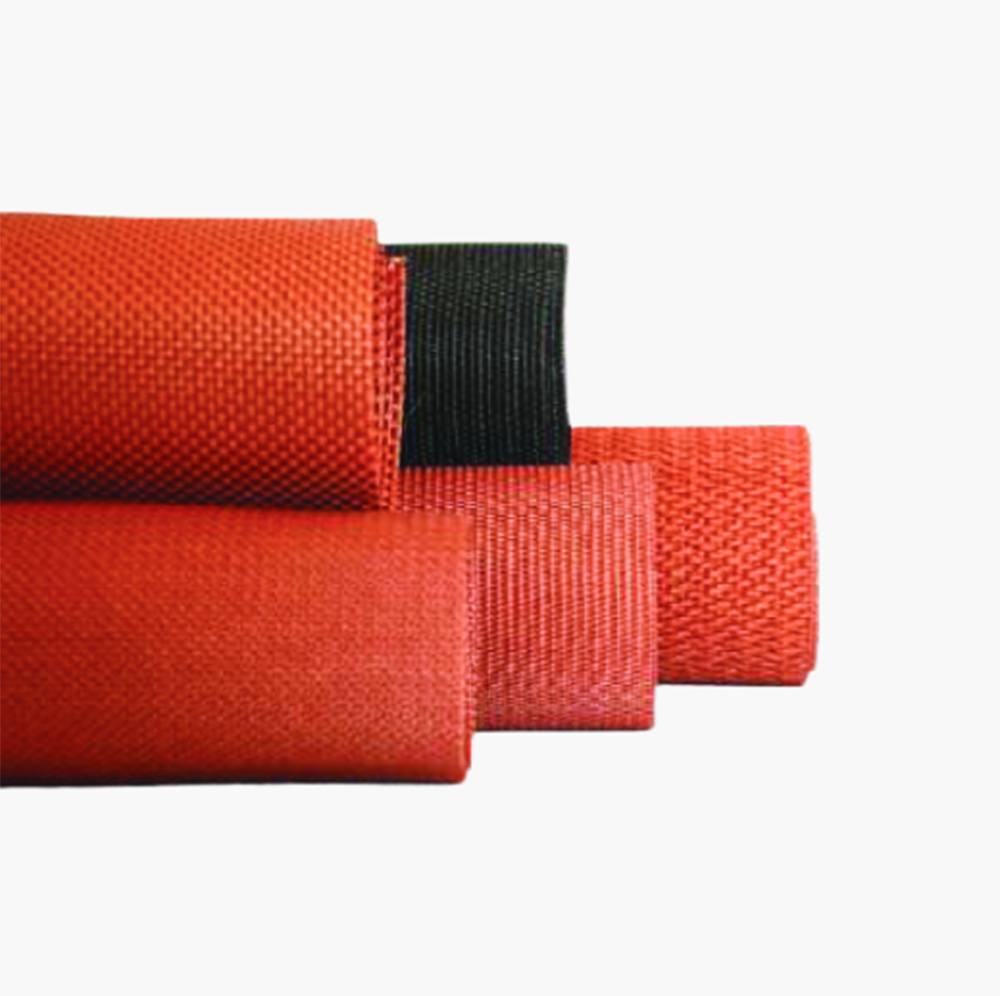
High-modulus low-shrinkage (HMLS) polyester has become the industry standard for radial tyre carcass and many conveyor belts. Polyester offers exceptional dimensional stability at elevated temperatures due to its high glass transition temperature and low creep tendency.
- Thermal shrinkage: Typically ≤2.5% at 180°C (HMLS grade), ensuring minimal belt/tyre growth.
- High initial modulus: Provides excellent resistance to elongation under load, maintaining precise shape.
- Low moisture absorption: <0.5% — no strength loss or dimensional change in humid conditions.
3. Nylon (Nylon 66) Carcass Fabric: High Toughness but Compromised Stability
Nylon 66 offers superior impact resistance and fatigue endurance, but its dimensional stability lags behind polyester. Nylon absorbs moisture (up to 3-4%), causing swelling and strength reduction. Its thermal shrinkage is also higher (~6-8% at 180°C), which can lead to growth issues unless carefully compensated.
- Higher thermal shrinkage: Requires post-cure inflation control in tyres.
- Moisture sensitivity: Wet strength retention ~85% vs. 100% for polyester.
- Excellent flexibility: Superior for high-impact applications where stability is secondary.
4. Head-to-Head: Dimensional Stability Parameters
| Property (Dipped Fabric) | Polyester (HMLS) | Nylon 6.6 | Winner (Stability) |
|---|---|---|---|
| Hot air shrinkage (177°C, 2min) | ≤2.5% | 6.0% – 8.0% | ✅ Polyester |
| Moisture regain (%) | 0.4% | 3.5% – 4.0% | ✅ Polyester |
| Initial Modulus (cN/dtex) | 85 – 100 | 35 – 50 | ✅ Polyester |
| Wet strength retention | ~100% | ~85% | ✅ Polyester |
| Creep under constant load | Very low | Moderate | ✅ Polyester |
| Fatigue resistance (flex) | Good | Excellent | ✅ Nylon |
✅ Polyester Advantages (Stability Focus)
- Minimal tyre/belt growth → better high-speed performance.
- Consistent dimensions in tropical/humid environments.
- Superior belt tracking for long conveyor systems.
⚠️ Nylon Limitations (Stability)
- High shrinkage requires complex post-cure adjustment.
- Moisture leads to flat-spotting and dimension changes.
- Lower modulus reduces structural rigidity.
5. Application-Based Recommendations
🚗 Radial Tyre Carcass → Polyester (HMLS) is Preferred
Modern passenger and truck radial tyres overwhelmingly use polyester carcass fabric because dimensional stability directly affects tyre uniformity, ride comfort, and fuel efficiency. Polyester’s low growth keeps the tyre round and reduces vibration at high speeds.
🏭 Heavy-Duty Conveyor Belts → Polyester for Stability, Nylon for Impact
For long-distance, high-speed belts, polyester (EP fabric) ensures low elongation and stable tracking. In impact-loaded belts (primary crusher feeds), nylon’s toughness is valuable, but at the cost of greater stretch — often solved by using polyester/nylon hybrids.
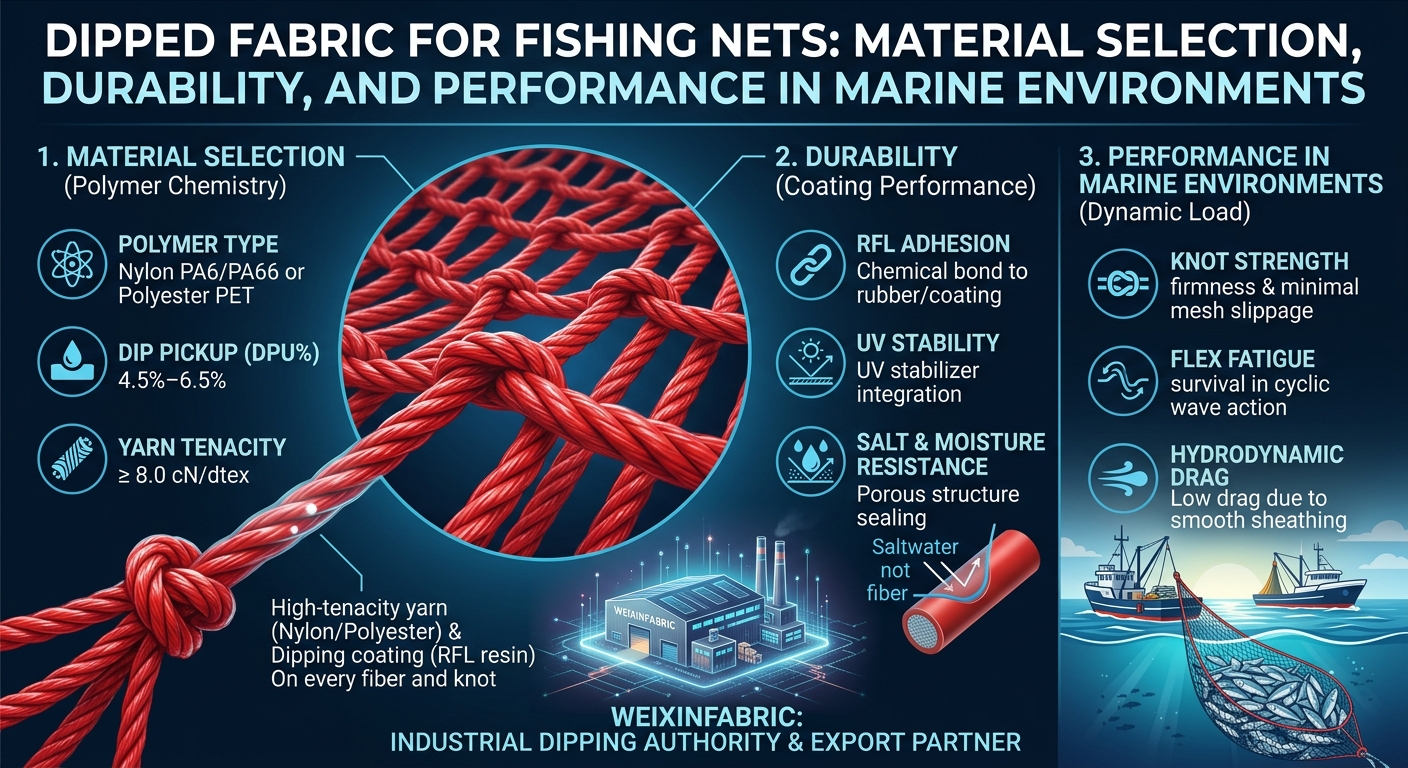
🎣 Fishing Nets & Marine → Nylon remains superior
Though dimensional stability is lower, nylon’s outstanding knot strength, abrasion resistance, and elastic recovery make it ideal for nets — but note: moisture absorption causes temporary length change, which may affect net dimensions when wet.
6. Why Weixin Fabric Leads in High-Stability Carcass Materials
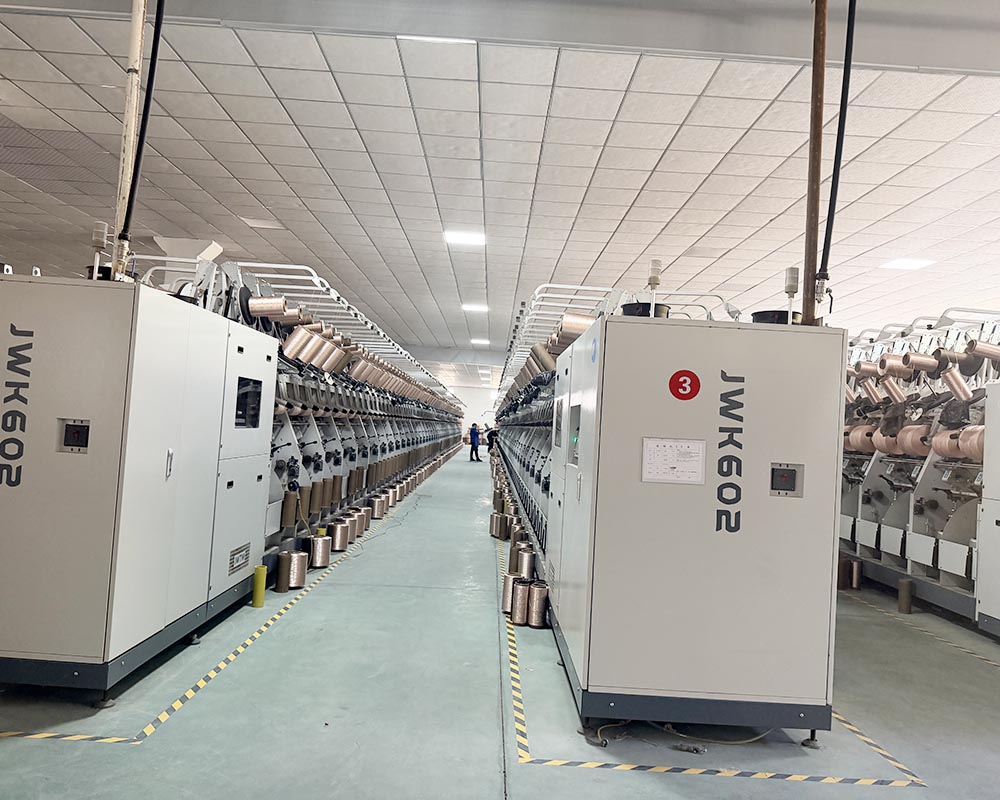
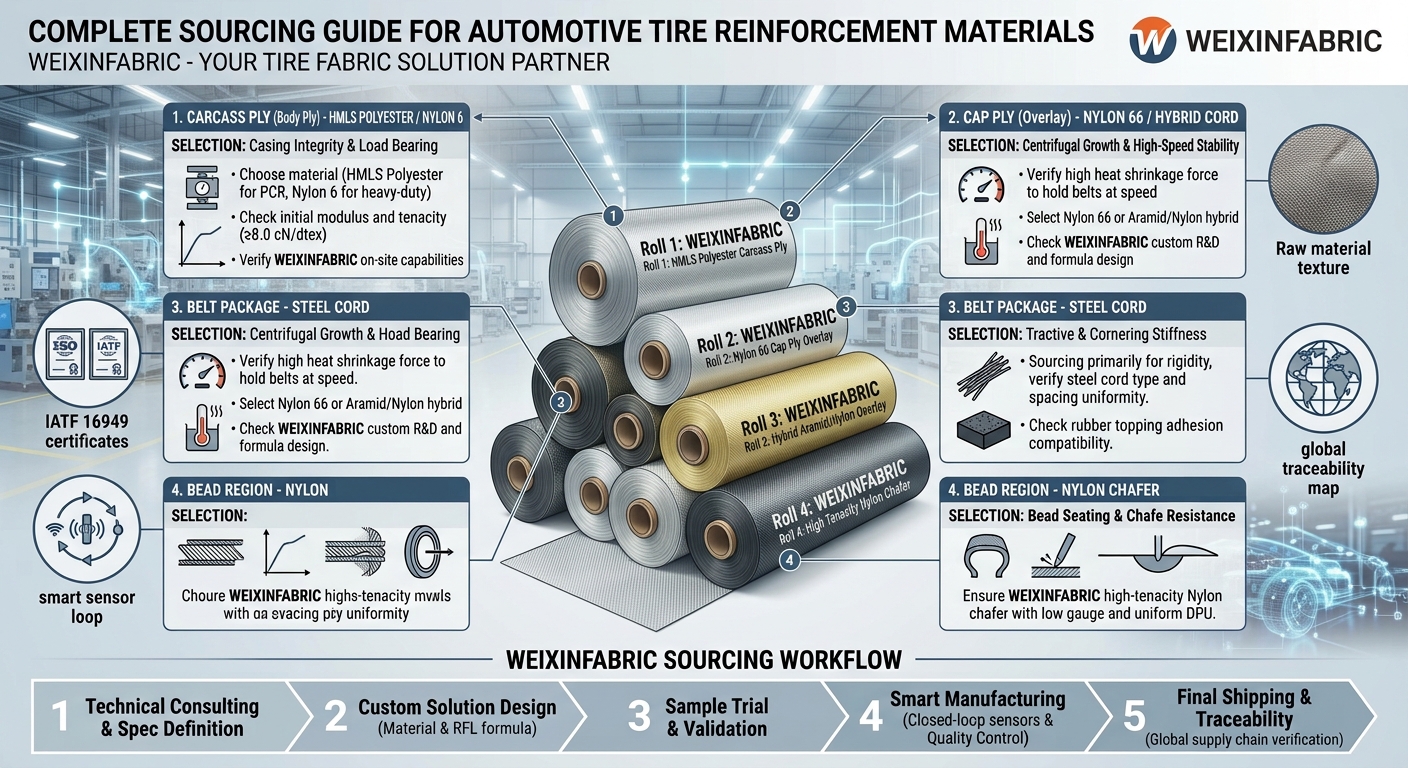
As a specialized manufacturer of dipped fabric for tyres and industrial reinforcement, Weixin Fabric offers both HMLS Polyester tyre cord and Nylon 66 dipped fabric, but for applications where dimensional stability is critical, our HMLS polyester carcass fabric is unmatched. We control:
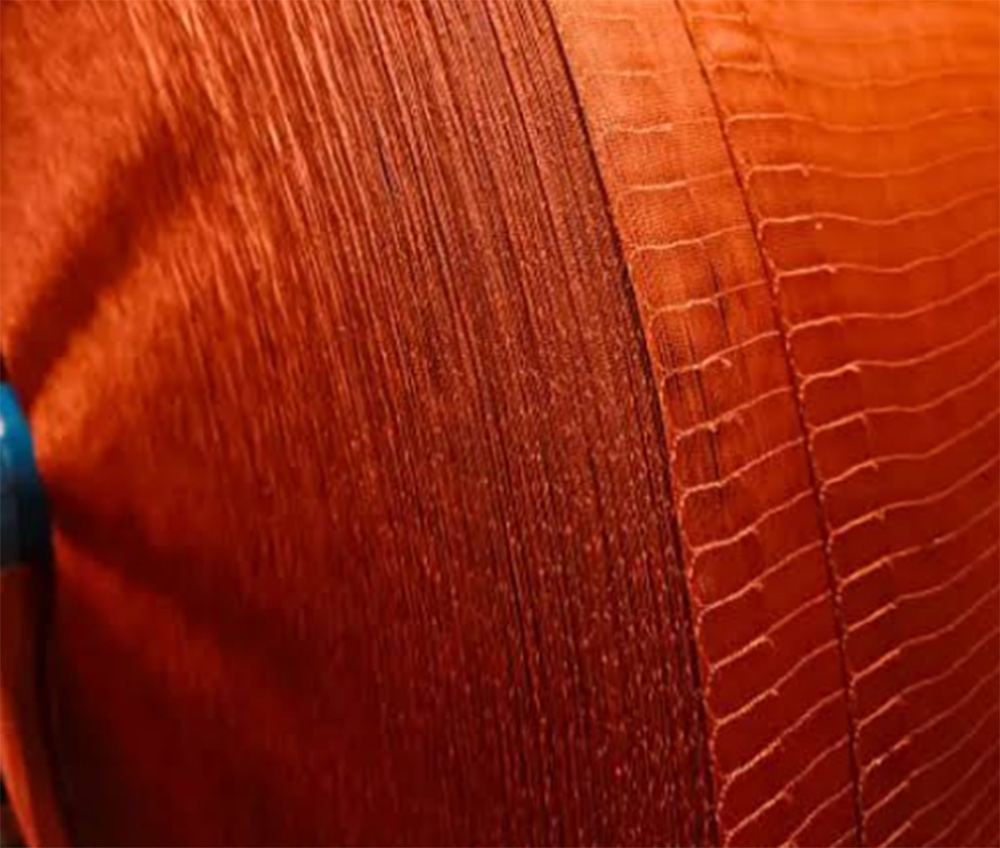
- Virgin polymer source (FDY / HMLS chips) for consistent modulus.
- Precision RFL dipping with adhesion promoters that survive heat aging.
- 100% tension uniformity monitoring — no shrinkage variation.
- Custom weave and twist to match your rubber compound.
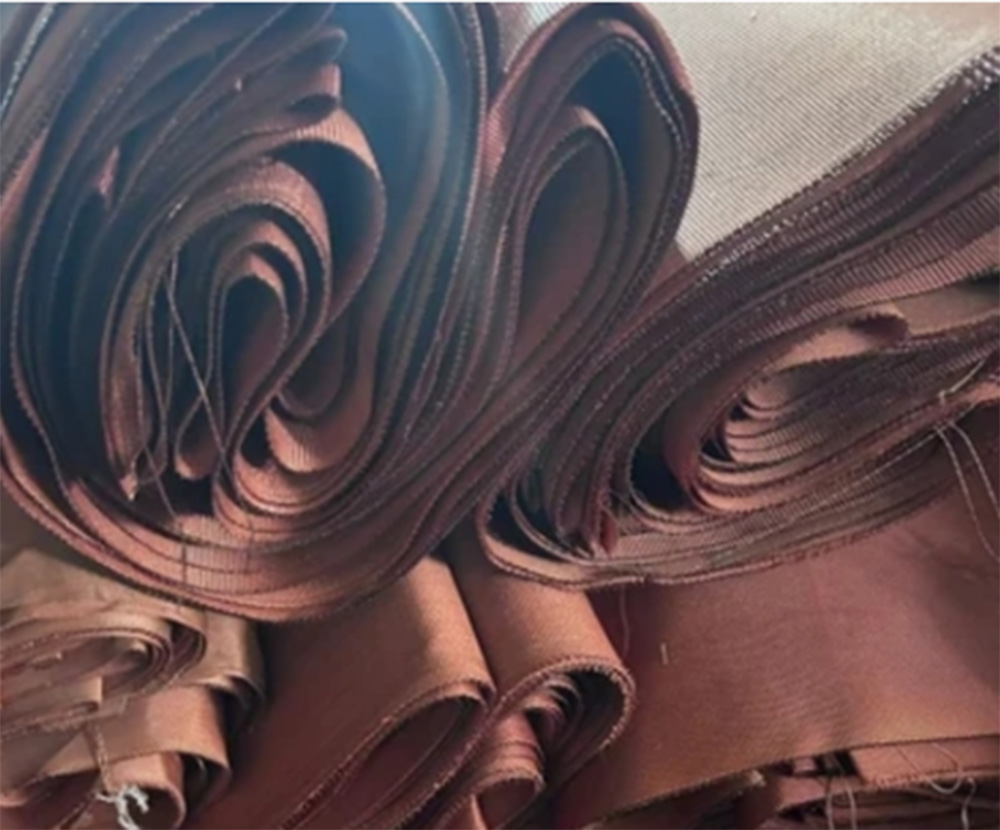
Every roll of Weixin carcass fabric undergoes shrinkage, adhesion, and tensile testing per ASTM/ISO standards. For tyre and belt manufacturers seeking the best dimensional stability, polyester from Weixin is the engineered answer.