WEIXIN INTERNATIONAL | TECHNICAL INSIGHT
High-Tenacity Polyester vs. Nylon Carcass Fabrics: How to Choose for Heavy-Duty Radial Tires
An Engineering Guide to Selecting Optimal Framework Materials for Commercial & Heavy-Duty Radial Tires
Executive Overview: Framework Reinforcement in Modern Radial Tires
In the heavy-duty radial tire industry (including Commercial Truck & Bus Radials [TBR], Off-The-Road [OTR], and high-load industrial radial tires), the carcass fabric serves as the primary load-bearing backbone. Selecting the optimal tire cord fabric directly influences structural integrity, dimensional stability, fatigue resistance, heat dissipation, and long-term operating costs.
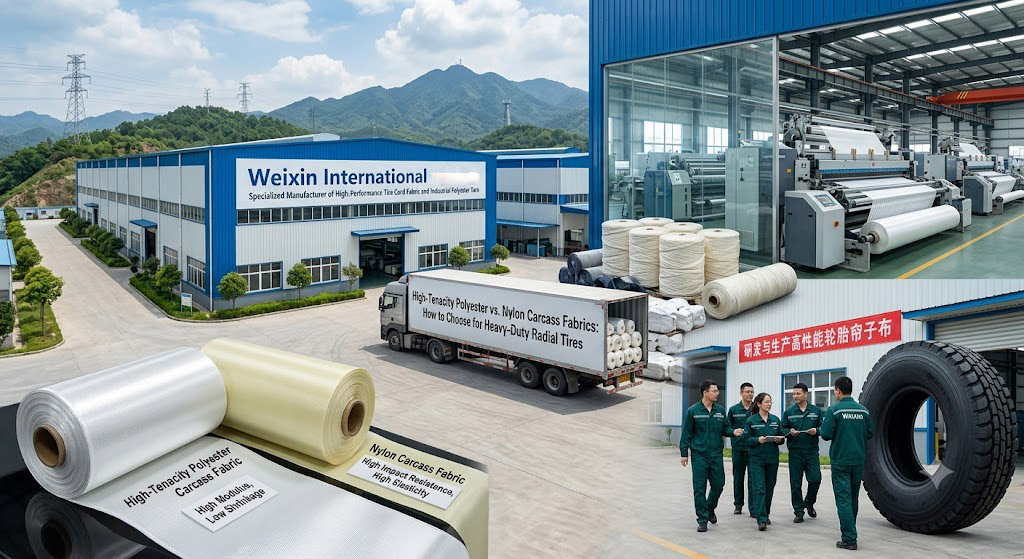
As a global leader in high-performance tire cord fabrics and industrial polyester yarns, Weixin International (www.weixinfabric.com) specializes in R&D and advanced manufacturing of high-tenacity reinforcement materials. This technical paper delivers a comprehensive comparative analysis between High-Tenacity Polyester (PET) Carcass Fabrics and Nylon (PA6 / PA66) Carcass Fabrics to guide tire engineers, procurement specialists, and fleet managers in making data-driven decisions.
Key Material Properties & Mechanical Performance Comparison
1. Tensile Strength & Modulus Dynamics
Nylon (PA6 and PA66) exhibits high ultimate tensile strength and exceptional energy absorption under dynamic impact. However, Nylon has a lower initial modulus, making it prone to elongation under continuous mechanical load and inflation pressure.
High-Tenacity Polyester (PET) delivers a significantly higher initial modulus and low creep under high tension. This superior dimensional stability prevents tire growth, ensures consistent crown footprint, and maintains uniform tread wear during extended heavy-haul operations.
2. Thermal Stability & Heat Generation
Heavy-duty radial tires experience severe internal heat buildup due to continuous flexing and heavy payload conditions.
- Nylon Fabrics: Vulnerable to thermal growth (flat-spotting phenomenon when cooling down after long runs) due to lower glass transition temperature ($T_g$).
- High-Tenacity Polyester Fabrics: Possess superior heat resistance and thermal stability, maintaining structural rigidity and resisting heat-induced mechanical degradation even under sustained elevated operating temperatures.
3. Dimensional Stability & Flat-Spotting Resistance
One of the primary advantages of high-tenacity polyester dipped tire cord fabric is its resistance to temporary deformation ("flat-spotting"). Nylon fibers tend to absorb ambient humidity and undergo thermal contraction changes when parked under load, whereas high-tenacity PET retains its shape and structural profile.
Comparative Matrix: High-Tenacity PET vs. Nylon Fabrics
| Performance Parameter | High-Tenacity Polyester (PET) | Nylon (PA6 / PA66) |
|---|---|---|
| Initial Modulus | Very High (Superior dimensional control) | Moderate (Higher growth under load) |
| Tensile Strength | High | Very High |
| Fatigue & Impact Resistance | Excellent (Engineered filament treatments) | Outstanding |
| Thermal Creep & Flat-Spotting | Negligible (Extremely stable) | Moderate to High |
| Moisture Absorption | Very Low (< 0.4%) | Moderate to High (4.5% - 8.5%) |
| Adhesion Strength (RFL Dipping) | Excellent with Weixin specialized dip technology | Excellent |
| Cost-Efficiency | High ROI / Highly Cost-Effective | Higher material cost |
Selection Criteria for Heavy-Duty Radial Applications
1. When to Choose High-Tenacity Polyester (PET) Fabrics
Polyester carcass fabrics are the industry standard for tire applications requiring strictly maintained dimensions, fuel efficiency, and uniform wear under sustained load. Choose PET for:
- Long-Haul Commercial Truck & Bus Radials (TBR): Prevents tire carcass expansion, reducing rolling resistance and uneven tread wear.
- Passenger & Light Truck (PLT) Radials: Delivers smooth ride quality without cold flat-spotting noise and vibration.
- High-Performance Industrial Yarns & Fabrics: Applications requiring high modulus, low shrinkage, and resistance to environmental moisture.
2. When to Choose Nylon Fabrics
Nylon remains highly beneficial where extreme dynamic impact absorption and maximum burst resistance are prioritized over dimensional stability. Choose Nylon for:
- Off-The-Road (OTR) & Mining Tires: Exposed to severe impact loads, sharp rocks, and harsh terrain.
- Agricultural & Heavy Earthmover Tires: Where deep sidewall flexing and extreme mechanical strain require high ultimate elongation.
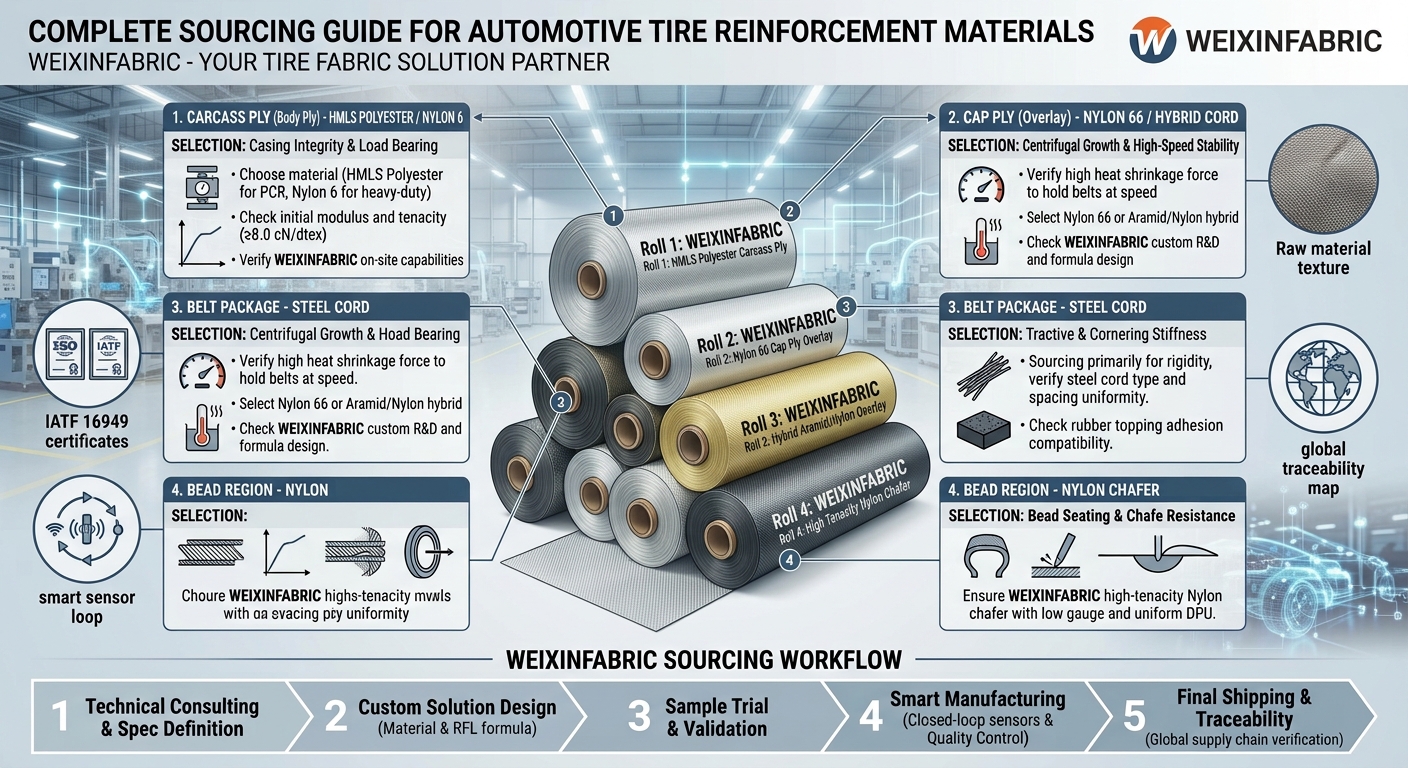
- Cap Ply Reinforcement: Used in high-speed tire crown layers to contain centrifugal forces.
Why Weixin International is Your Trusted Reinforcement Partner
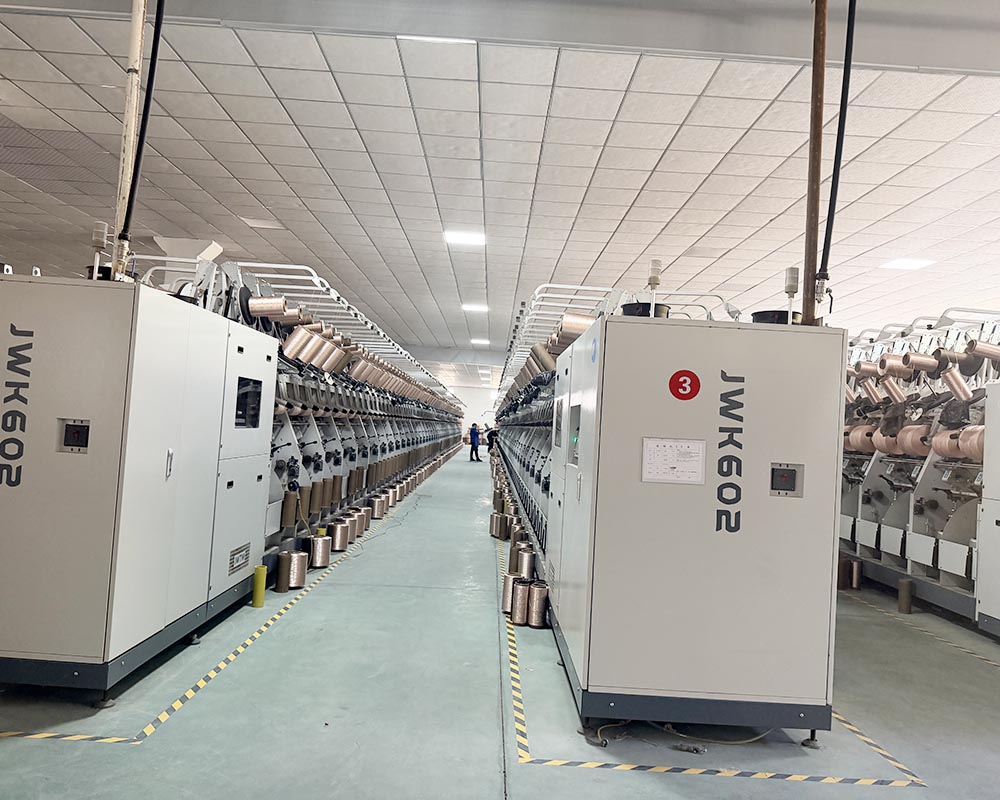
As a specialized manufacturer based in China, Weixin International combines decades of research, advanced extrusion technology, and state-of-the-art dipping lines to produce top-tier tire carcass fabrics and industrial yarns. Our product portfolio includes:
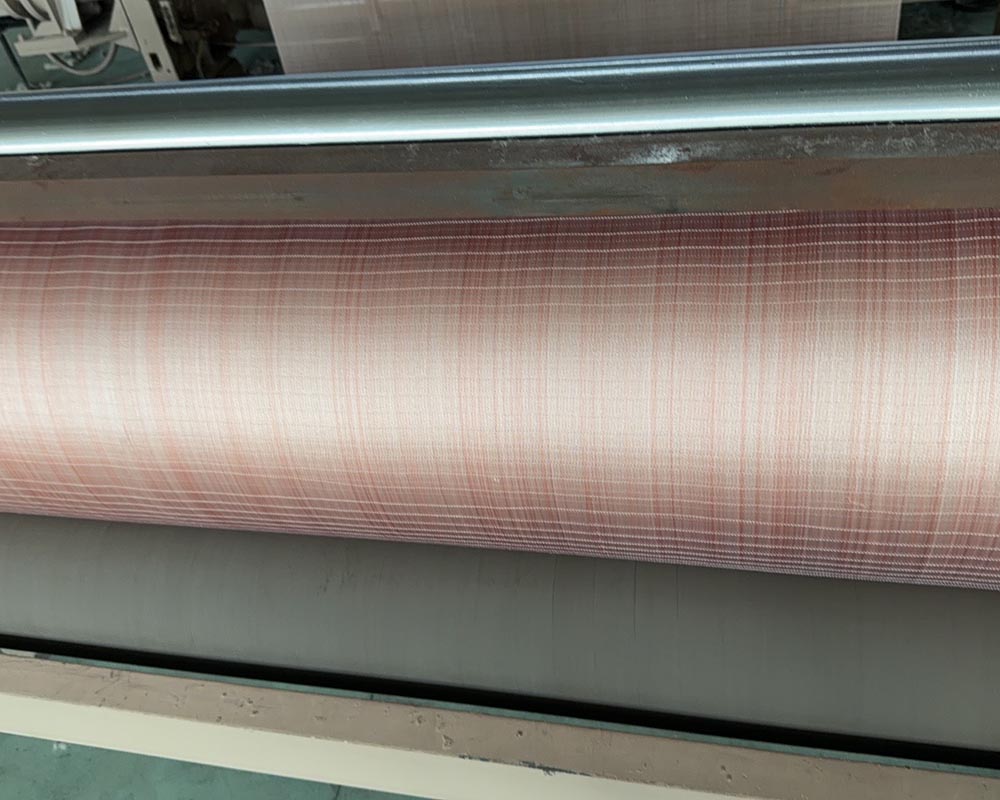
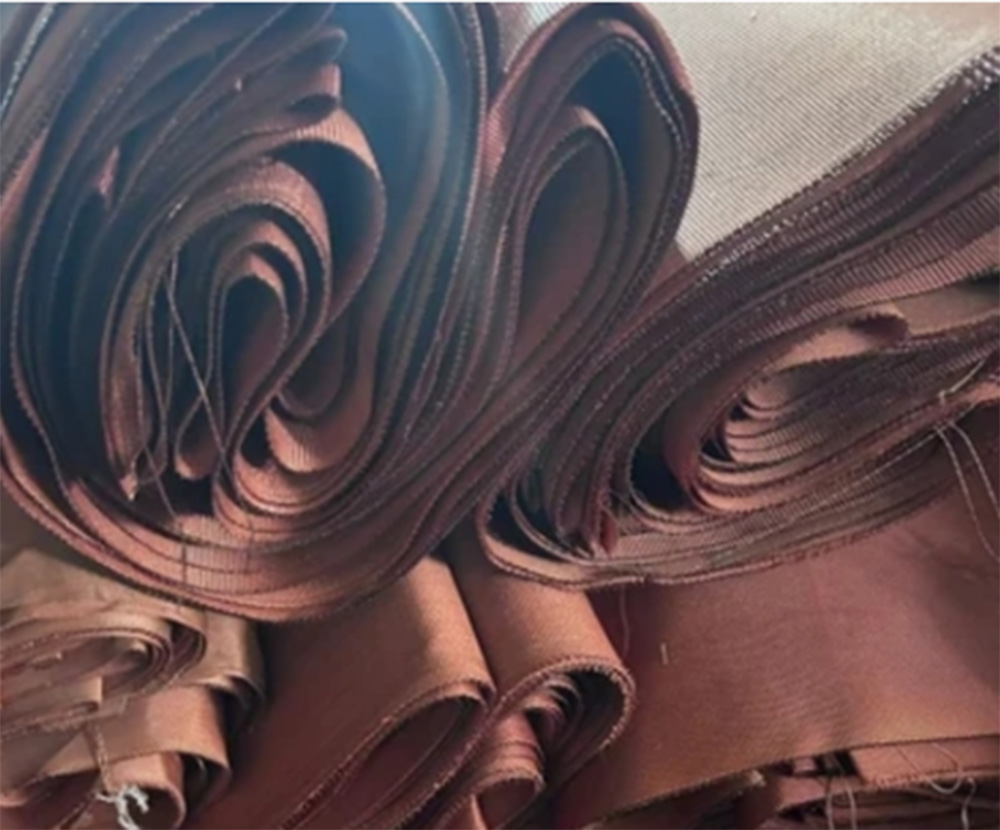
- High-Tenacity Polyester Dipped Tire Cord Fabrics: High modulus, low shrinkage (HMLS) yarns engineered for maximum carcass durability.
- Nylon 6 & Nylon 66 Dipped Fabrics: High-impact reinforcement with optimized RFL resin adhesion.
- Industrial High-Tenacity Polyester Yarns: Custom-engineered filament yarns for belts, hoses, and heavy industrial applications.