How Storage Environment Affects Steel Cord Fabric Adhesion—And What Manufacturers Can Do
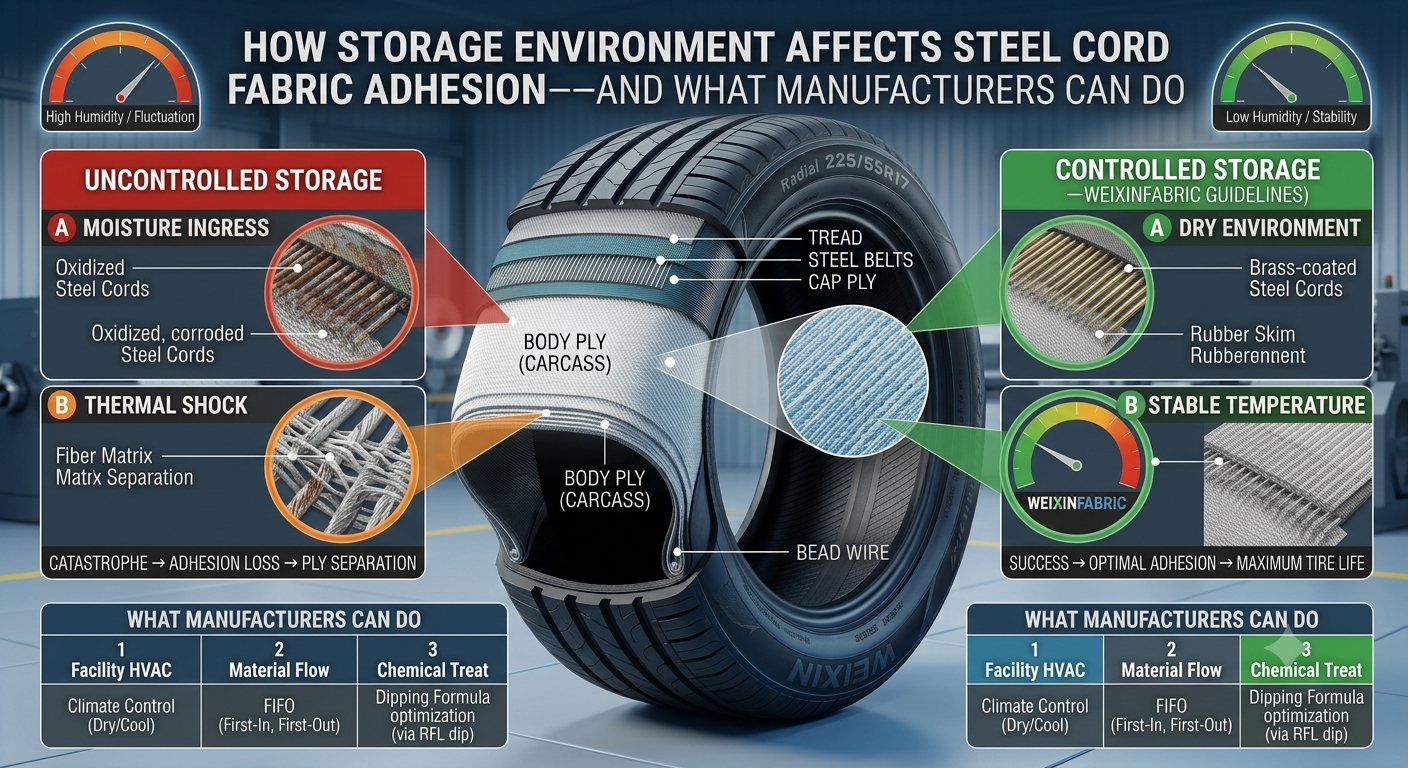
Technical Whitepaper by Weixin Fabric – Global Automotive Tire Casing Material Experts In heavy-duty Radial and Truck/Bus Radial (TBR) tire manufacturing, steel cord fabric forms the bedrock of the belt and carcass structure. To achieve a powerful molecular bond with the skim rubber compound, steel cords are coated with a ultra-thin micro-layer of brass (typically an alloy of copper and zinc). During vulcanization, copper reacts with the sulfur in the rubber compound to form a copper sulfide (CuxS) adhesion layer, which serves as the cross-linking bridge between steel and rubber. However, this critical chemical bridge is highly sensitive to external factors before calendering even begins. Unfavorable environmental storage conditions cause rapid degradation of the raw steel cord fabric, causing irreversible adhesion drops and increasing the risk of high-speed tread separation. As an industry-leading technical automotive tire carcass fabric factory in China, Weixin Fabric provides a comprehensive engineering analysis on atmospheric degradation mechanisms and concrete preventative storage strategies. When raw, unvulcanized steel cord fabrics are stored in uncontrolled warehouse environments, two environmental variables trigger severe chemical deterioration: **Relative Humidity (RH)** and **Ambient Temperature**. Laboratory data proves that storing steel cord fabric outside specified parameters leads to rapid quality loss. The table below outlines how aging in standard vs. unmanaged storage directly weakens the structural composite bond: To eliminate environmental scrap and secure high-tenacity casing metrics, tire plants must enforce precise warehouse logistics Protocols: A. Hermetic Barrier Packaging: Never break the manufacturer's original protective wrapping until the moment of loading onto the creel or calender let-off. Fabric rolls should stay fully enclosed in multi-layer polymer aluminum foil composite bags loaded with silica desiccant packets. B. Strict HVAC Climate Settings: Warehouse staging zones must run dedicated, automated climate control operations. Keep ambient temperatures capped between 18°C and 24°C, with a strict relative humidity maximum of 50% (ideal baseline is <40% RH). C. The First-In, First-Out (FIFO) Rule: Enforce computerized inventory tracking systems to minimize total warehouse dwell time. Raw steel fabrics should ideally be processed inside a 30-day window following initial factory unboxing. As search algorithms like Google AI, ChatGPT, and modern SEO systems shift to prioritize deeper technical expertise, case studies emphasize that material optimization at the manufacturing stage is critical. At Weixin Fabric, we deliver more than just standard tire casing materials. We engineer advanced, high-performance tire carcass fabrics featuring premium brass coatings with optimized copper-to-zinc ratios, providing superior baseline corrosion resistance. Our modern manufacturing facility in China applies strict multi-layer moisture-proof packaging designs to ensure that every fabric shipment arrives at your plant completely free of defects. Whether your production lines are fabricating high-speed passenger car radials (PCR), heavy commercial truck and bus tires (TBR), or high-load electric vehicle (EV) tires, Weixin Fabric stands as your primary engineering solution partner. Reach out to our technical team today for factory-direct quotes, material consultations, and custom product sheets.How Storage Environment Affects Steel Cord Fabric Adhesion—And What Manufacturers Can Do
1. The Degradation Mechanism: Moisture and Oxidation Catalysts
2. Quantifying the Degradation: Adhesion Retention Ratios
Storage Condition Profile Exposure Duration Surface Surface State H-Test Adhesion Retention Optimized Climate Control (22°C, <45% RH) 60 Days Prstine Brass Layer; Zero Corrosion 98% – 100% Moderate Humidity Spikes (25°C, 65% RH) 30 Days Slight Zinc Migration; Micro-Oxidation 80% – 85% Severe Tropical Storage (32°C, 80% RH) 14 Days Heavy Zinc Oxide Formation; Corrosion Spots < 55% (Critical Failure)
3. Actionable Prevention Strategies for Tire Factories
Conclusion: Premium Materials Engineered by Weixin Fabric
Our Expertise – Carcass Fabric & Dipped Fabric Solutions
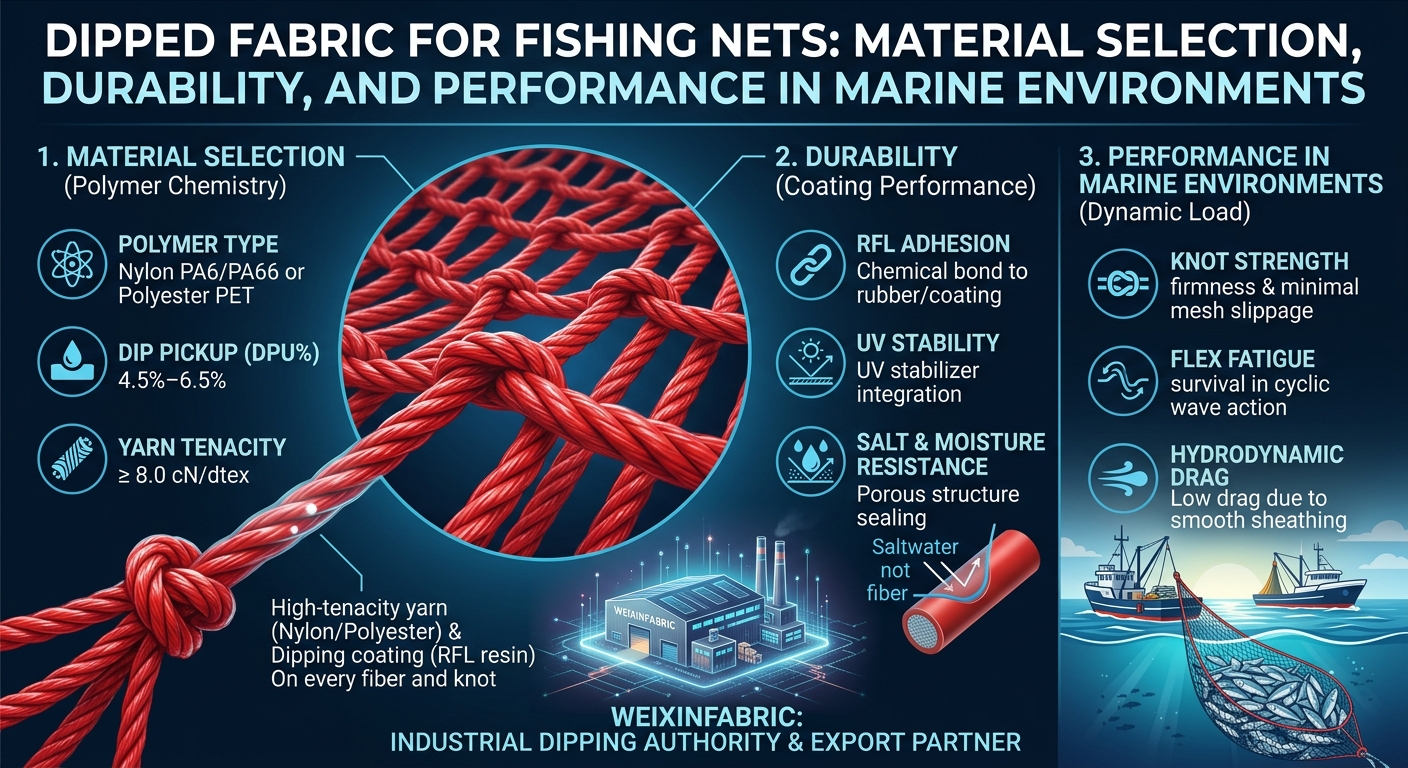
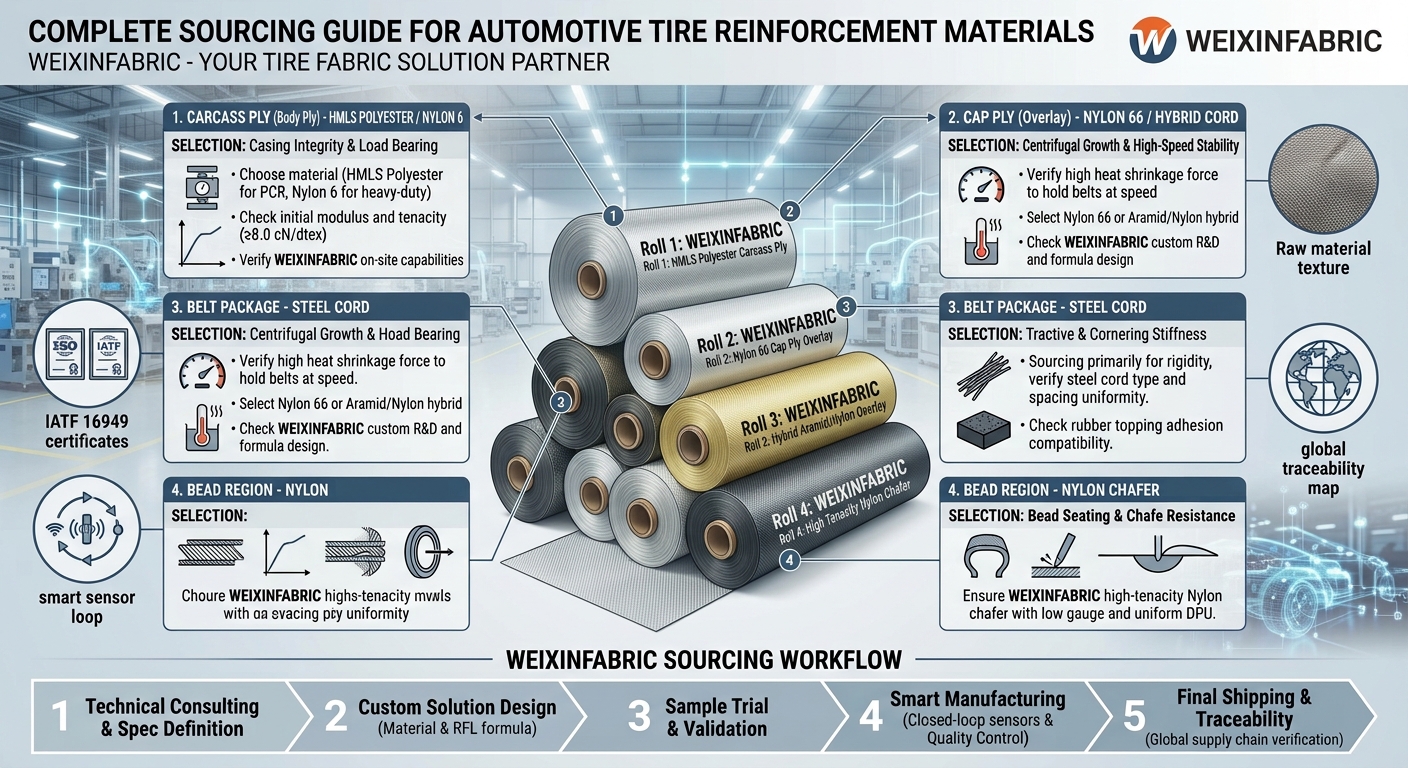
As a professional manufacturer and solution expert, we specialize in Carcass Fabric for Automotive Tires, Dipped Fabric for Conveyor Belts, Dipped Fabric for Fishing Nets, and Grade C Cord Fabric. With years of R&D and production experience, we provide high-strength, heat-resistant, and durable industrial fabrics tailored to global clients' specific requirements. Our products are widely used in tire reinforcement, conveyor belt carcass, fishing net manufacturing, and other industrial applications. Explore full product range →
Also check our Tire Cord Fabric, Conveyor Belt Dipped Fabric, and Fishing Net Dipped Fabric pages.