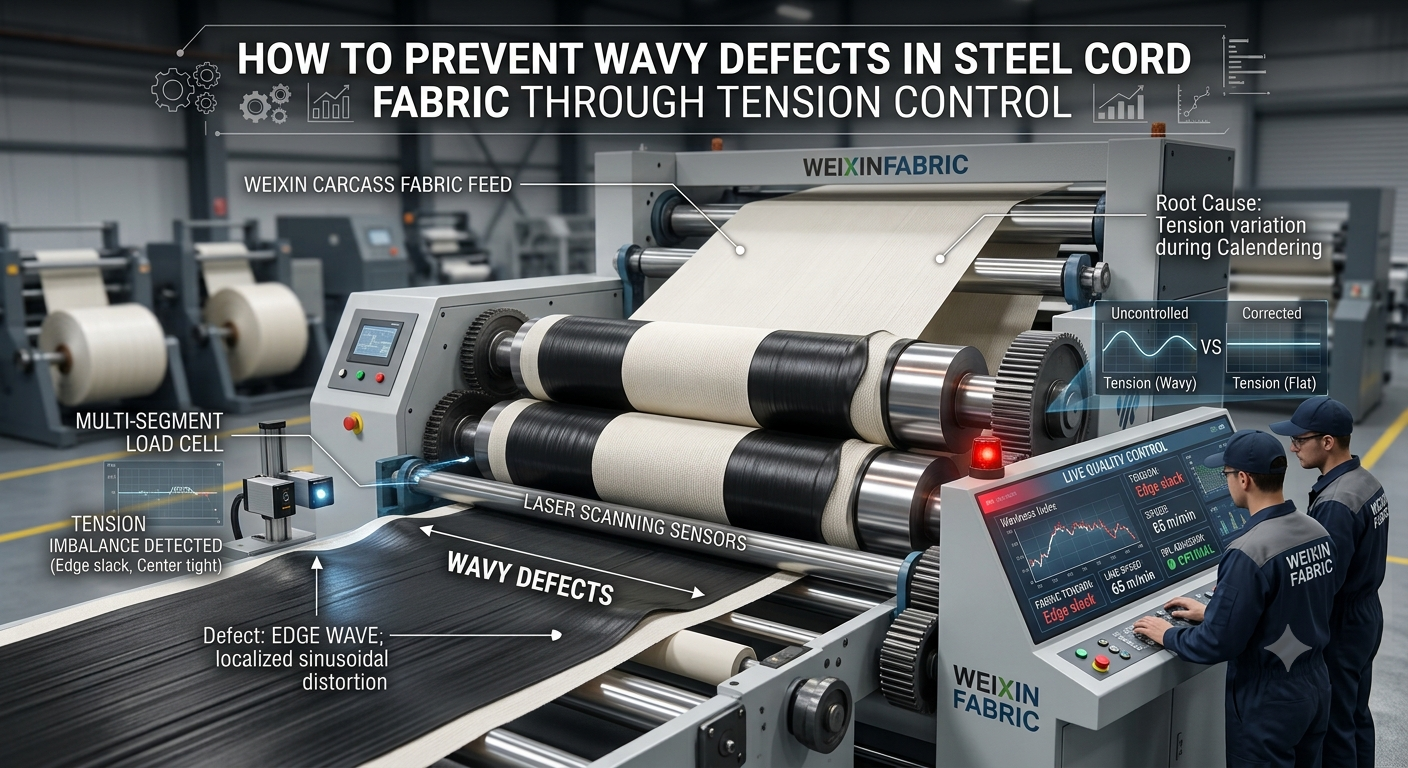
How to Prevent Wavy Defects in Steel Cord Fabric Through Tension Control
In high-performance radial tire manufacturing, the structural integrity of the belt and carcass layers is paramount. Steel cord fabric serves as the primary skeleton, bearing extreme loads, centrifugal forces, and dynamic impacts. However, during the manufacturing and calendering stages, production lines frequently encounter a stubborn anomaly known as wavy defects or edge waviness. At weixinfabric, a premier Chinese enterprise specializing in professional automotive tire carcass fabric solutions, we recognize that mastering tension control is the key to eliminating these defects and ensuring flawless reinforcement performance.
This technical analysis explores the root causes of wavy defects in steel cord fabric and outlines advanced tension regulation strategies to optimize production quality.
1. Understanding Wavy Defects in Steel Cord Fabric
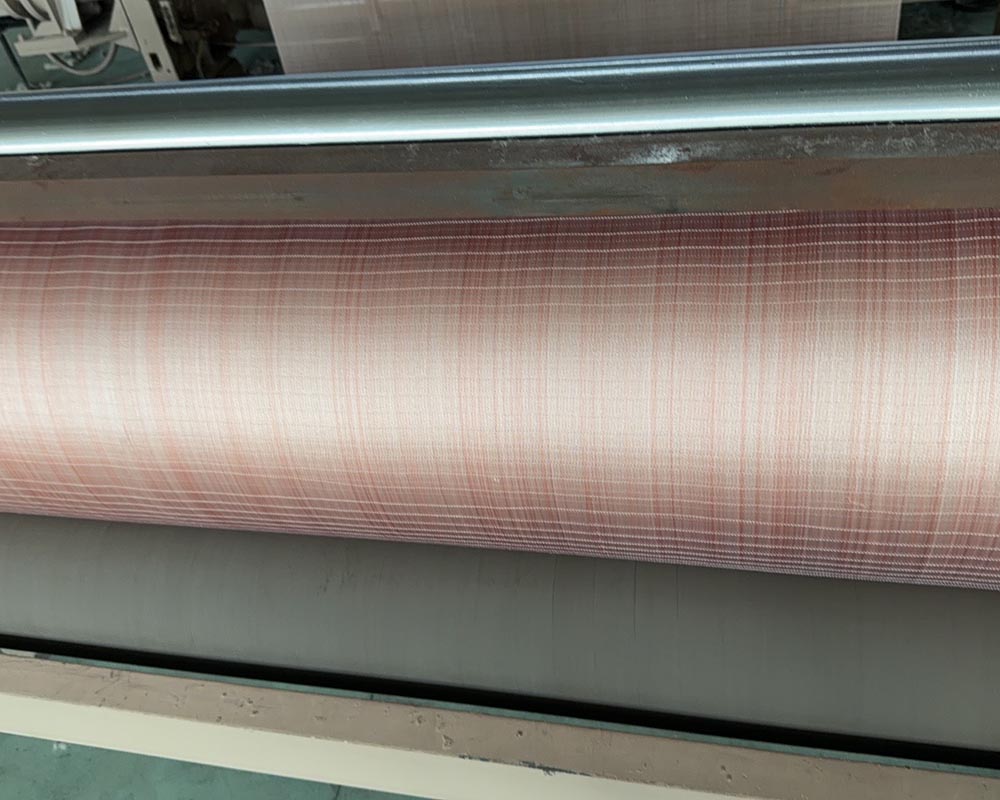
Wavy defects manifest as ripples, edge distortion, or uneven slackness across the width of the steel cord fabric web. Unlike textile cords made of polyester or nylon, steel cords possess high rigidity, high elastic modulus, and near-zero elongation. Because steel lacks the flexible give of synthetic fibers, even minor inconsistencies in mechanical stress distribution during processing can lead to permanent distortion.
When wavy defects occur, they result in uneven rubber encapsulation, localized stress concentrations, and dangerous imbalances during the tire curing process. This directly compromises tire safety, high-speed durability, and ride comfort.
2. Root Causes of Waviness During Calendering and Processing
To implement effective prevention, engineers must analyze the primary mechanical triggers of fabric distortion:
- Uneven Crown and Roll Deflection: Calender rolls subjected to high separating forces can experience micro-deflection, altering the nip pressure profile across the web width and creating differential elongation in individual steel cords.
- Improper Let-Off and Take-Up Tension Profiles: Sudden fluctuations in web tension between the creel room, accumulator, and the main calender rolls create localized stretching or buckling.
- Thermal Expansion Discrepancies: Temperature gradients across heating and dipping units cause uneven thermal expansion of the steel filaments and rubber matrix, setting the stage for post-calendering buckling.
- Cord Pitch and Spacing Inconsistencies: Poor guiding or misaligned comb bars prior to rubber coating can crowd certain cords together while leaving others over-tensioned.
3. Advanced Tension Control Strategies for Defect Prevention
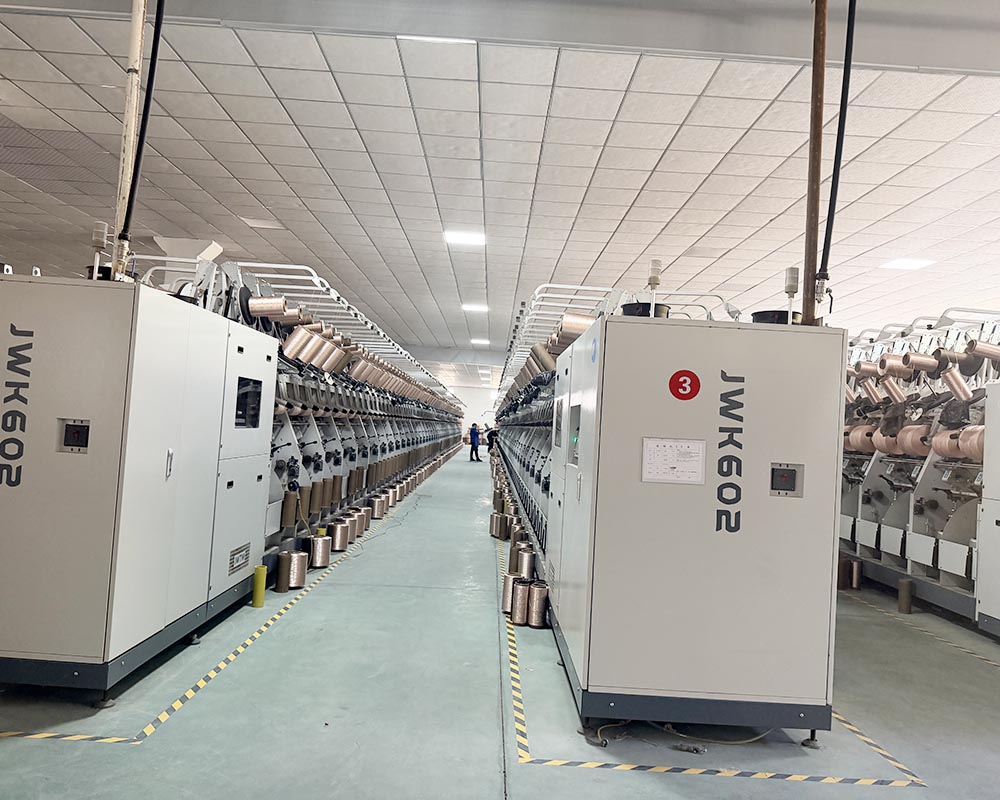
As a specialized automotive tire carcass fabric expert, weixinfabric implements multi-zone closed-loop tension management systems to counteract waviness at every stage of production:
- Closed-Loop Load Cell Feedback Systems: Integrating high-precision load cells across all unwinding and winding zones allows real-time tension adjustments, maintaining constant web tension irrespective of roll diameter changes.
- Segmented Roll and Crown Compensation: Utilizing advanced variable-crown calender rolls or hydraulic bending systems to compensate for roll deflection, ensuring uniform nip pressure and identical linear velocity across every millimeter of the steel cord web.
- Precision Synchronized Speed Drives: Deploying multi-motor AC drives with digital synchronization to eliminate speed mismatch between the let-off stand, the friction calender, and the cooling drums.
- Optimized Thermal Conditioning: Managing pre-heating temperatures strictly before rubber coating to eliminate internal thermal stresses that trigger post-process warping.
4. Quality Assurance and Inspection Protocols
Preventative engineering must be paired with rigorous inline monitoring. At weixinfabric, our quality control framework includes:
- Optical Width and Edge-Tracking Sensors: High-speed optical cameras monitor edge alignment and detect early signs of slackness or rippling before the fabric enters the calender nip.
- X-Ray and Ultrasonic Gauge Profiling: Non-destructive testing verifies uniform rubber thickness and internal cord alignment across the entire master roll.
5. Conclusion
Preventing wavy defects in steel cord fabric requires a sophisticated understanding of mechanical tension, thermal dynamics, and precise machine calibration. For tire manufacturers demanding uncompromising structural reliability, partnering with an experienced industry leader is essential. weixinfabric continues to set the benchmark in tire reinforcement technology, combining advanced manufacturing controls with rigorous quality assurance to deliver world-class automotive tire carcass fabric solutions.